Google Cloud Goes All-In on AI Agents and Next-Gen Chips
Google just made its biggest bet yet on agentic AI. At Google Cloud Next, the company rolled out a wave of updates designed to help businesses automate more work with less human oversight — and unveiled two powerful new chips to fuel it all.
The message from Google was clear: the future of enterprise AI isn’t just about chatbots and search. It’s about AI agents that can handle complex tasks on their own.
The “Agentic Enterprise” Is Google’s New North Star
Google Cloud CEO Thomas Kurian laid it out plainly. Agentic AI is where the company sees everything heading. The goal isn’t just smarter tools — it’s fully autonomous systems that handle real business workflows without constant hand-holding.
Google already reports that 75% of its Cloud customers use AI in some capacity. But given how deeply AI is baked into products like Docs, Sheets, and Gmail, that figure isn’t exactly shocking. Still, Google is pushing further, chasing what it calls the “agentic enterprise.”
Agentic AI refers to software agents — essentially smart bots — that can complete tasks independently. Think of them as highly capable digital workers that read context, make decisions, and execute actions across different apps. For coding, scheduling, and workplace automation, these agents are already changing how teams operate.
The Gemini Enterprise Agent Platform Ties It All Together
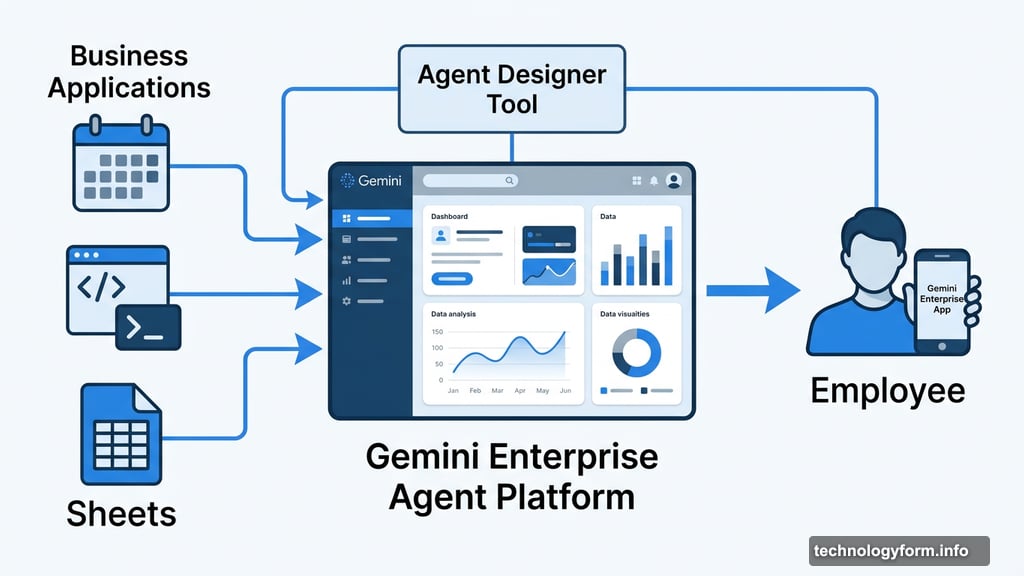
So how does Google plan to bring this to its business customers? Meet the Gemini enterprise agent platform.
This is the behind-the-scenes engine that businesses can use to manage all their AI agents in one place. Employees get access through the Gemini enterprise app, which includes a new agent designer tool. That tool lets you schedule and coordinate tasks across different applications — without needing an engineering degree to set it up.
It’s Google’s answer to the growing ecosystem of agentic tools like Anthropic’s Claude Code and OpenAI’s Codex. Companies are racing to build platforms that don’t just assist workers but actively automate whole chunks of their operations. Google wants its enterprise stack to sit at the center of that shift.
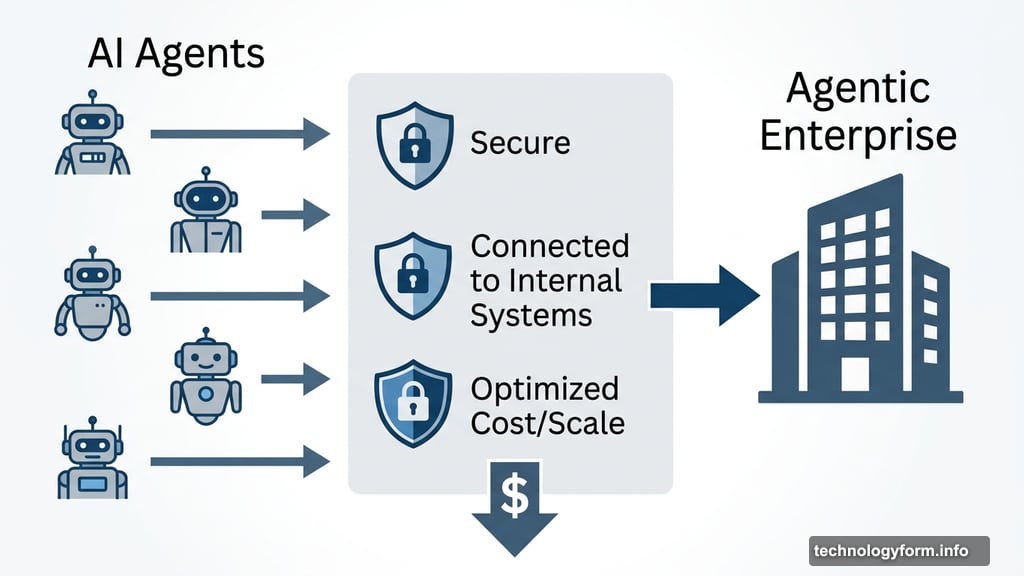
Kurian emphasized that these updates focus on three priorities: keeping AI processes secure, connecting agents to internal business systems, and optimizing the performance, cost, and scale of how those agents actually run. That last point matters more than it sounds. Running hundreds of AI agents across a large organization gets expensive fast, so efficiency is the name of the game.
Two New Chips Built for Serious AI Workloads
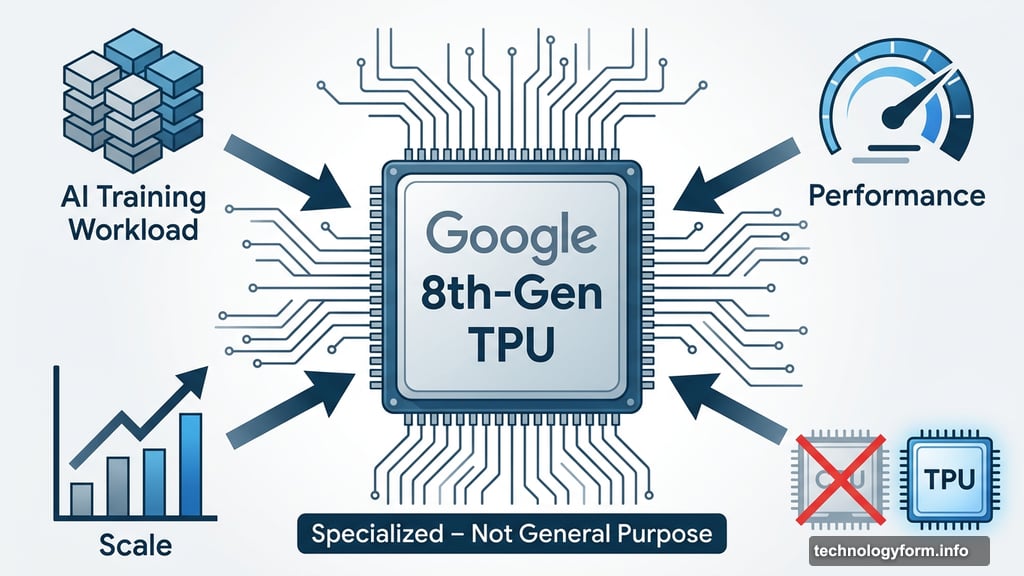
Beyond the software announcements, Google also unveiled two brand-new eighth-generation TPUs — specialized chips designed purely for heavy AI computing. These are not general-purpose processors. They exist for one reason: making AI faster and more powerful.
The first chip, the TPU 8T, is built for training AI models. Google says it delivers three times the processing power compared to the seventh-generation Ironwood chip. That’s a significant leap for companies building and refining large AI models.
The second chip, the TPU 8I, focuses on inference — meaning the process of running an already-trained AI model to generate outputs. It comes with an 80% improvement in SRAM memory, and a single system can pack about 11,152 chips. That kind of scale is built for enterprise customers running AI at a massive level, not for everyday consumer use.
Together, these chips signal that Google isn’t just selling AI software tools. It’s building the underlying infrastructure to run AI at a scale that few competitors can match right now.
Why This Matters Beyond the Tech Headlines
What Google announced at Cloud Next isn’t just a product update — it’s a strategic statement. The company is betting that businesses will increasingly want one integrated platform to build, deploy, manage, and scale AI agents. And Google wants that platform to be its own.
The competition is fierce. Microsoft, Amazon, and a growing list of AI-native startups are all chasing the same enterprise customers. But Google’s combination of purpose-built hardware and a unified agent management platform gives it a strong hand to play.
For businesses evaluating where to invest in AI infrastructure, these announcements raise the stakes. The gap between companies using AI casually and those building genuine agentic workflows is starting to widen. Google is making it clear which side it wants its customers to be on.
Whether the Gemini enterprise platform delivers on that promise in practice is something we’ll learn as businesses start putting it to work. But the direction is unmistakable. Google Cloud is done treating AI as a feature add-on. It’s the whole product now.