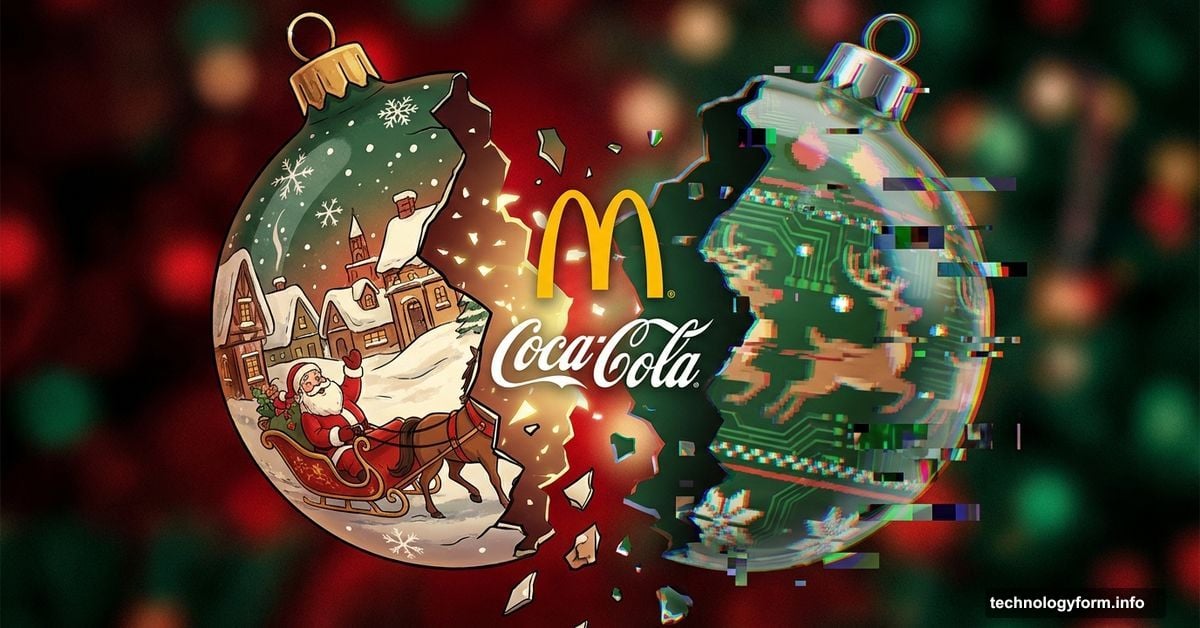
McDonald’s and Coca-Cola Just Killed Holiday Magic With AI Ads
Two billion-dollar corporations decided AI would handle their Christmas commercials this year. Spoiler alert: nobody’s happy about it.
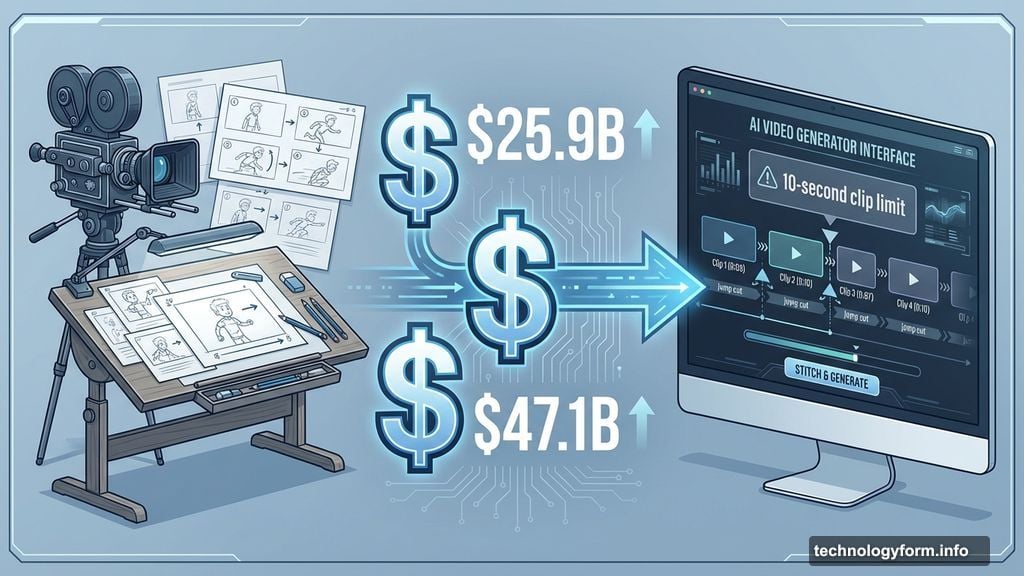
McDonald’s pulled in $25.9 billion in 2024. Coca-Cola made $47.1 billion. Yet both chose to flood our holiday feeds with AI-generated slop instead of hiring real animators. Now they’re facing massive backlash from customers who expected better.
Let’s break down what went wrong and why this matters beyond just bad advertising.
McDonald’s Ad Looked Like A Budget Nightmare
The McDonald’s commercial ran for only 30 seconds in the Netherlands. But it bombed so hard the company scrubbed it from their social pages.
The spot features holiday disasters set to a parody of “It’s the Most Wonderful Time of the Year.” Except nothing about it feels wonderful. The text barely reads. Fine details look wrong. Plus, those jerky jump cuts scream “AI video generator with 10-second clip limits.”
The marketing agency behind it, The Sweetshop Film, actually bragged about using various AI tools to create it. That post? Also deleted. But the damage was done.
Hard cuts between short clips expose a fundamental AI video limitation. Most generators can’t produce footage longer than 10 seconds. So creators stitch clips together and hope nobody notices. We noticed.
Coca-Cola’s Polar Bears Have That Plastic AI Look
Coca-Cola remade its iconic 1995 “Holidays Are Coming” ad with AI. A Coke truck drives through winter landscapes while forest animals wake up and follow it to a lit Christmas tree.
Sure, it’s more polished than McDonald’s disaster. But the AI tells on itself immediately.
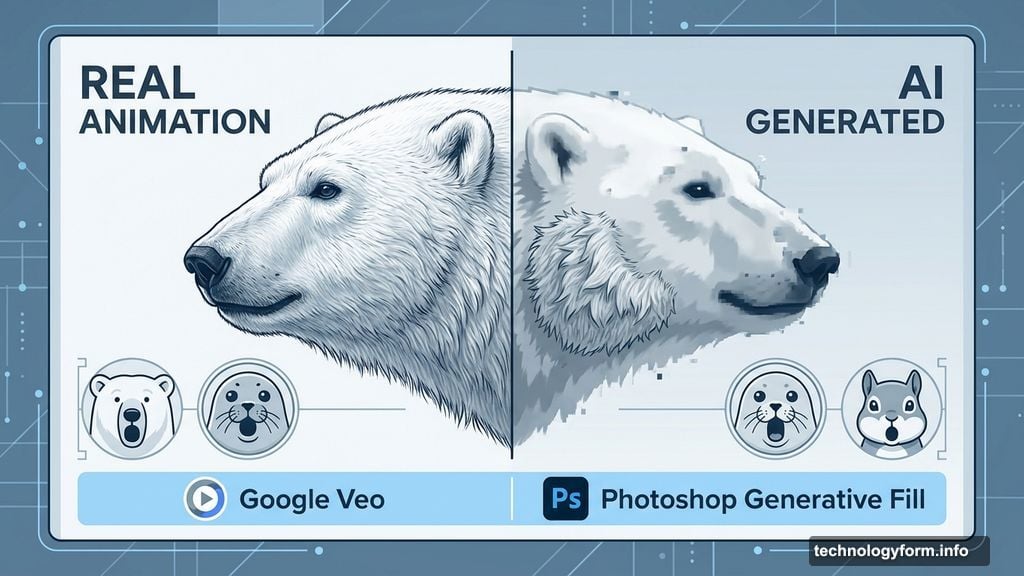
The animals look wrong. Their fur has some detail up close, then gets blurry and undefined toward the back. Real animators would’ve caught that inconsistency. AI generators struggle with fine details and consistency across an object.
Take the mama polar bear. Her fur is shaggy on her cheek but weirdly smooth on her head. No polar bear’s coat works that way. Plus, all the animals make identical surprised faces with perfect circle mouths. That’s classic AI behavior.
Behind-the-scenes footage shows someone clicking through different AI variations of a sea lion’s nose. You can also spot what looks exactly like Photoshop’s generative fill. And there’s a clear glimpse of Google’s Veo video generator interface.
Coca-Cola went all-in on AI after partnering with OpenAI in 2023. Their advertising agency, Publicis Group, even bragged about winning the account with an “AI-first strategy.” So this won’t be their last AI commercial, regardless of customer complaints.
AI Labels Are The Bare Minimum
Coca-Cola did one thing right. They added “Created by Real Magic AI” in the corner of their video.
That disclosure matters. It’s the difference between using AI and lying about it. Many brands and creators skip labels because they’re scared of backlash. But here’s a wild idea: if you’re afraid to admit you used AI, maybe don’t use it.
Social media platforms try to flag AI content automatically. Those systems aren’t perfect. So we need human transparency. As AI images and videos become indistinguishable from reality, honest labeling becomes our only defense against deception.
Some brands still won’t admit their AI use. Mariah Carey and Sephora both faced accusations this year. Neither confirmed or denied. That’s worse than just owning it.
Models and Photographers Lost Work
This isn’t Coca-Cola and McDonald’s first rodeo. AI in advertising has been building momentum all year.
Vogue ran a Guess ad in June featuring an AI-generated model. Real models spoke out about AI stealing their jobs. Then J.Crew got caught using “AI photography” a month later. Toys R Us made headlines with a bizarre AI giraffe commercial.
The difference? Toys R Us was honest. Their president said, “We weren’t going to hire a giraffe.” Fair point.
But Coca-Cola and McDonald’s absolutely could’ve hired real animators, designers and illustrators. Those jobs went to AI instead. Not because AI does better work. Because executives see “cutting-edge efficiency” and dollar signs.
Amazon just laid off thousands of workers, partially citing AI automation. Creative professionals face similar threats. Not because AI generators are ready to replace human talent. But because companies will use any excuse to cut costs.
Why This Actually Matters
It’s easy to dismiss these commercials as just another corporate blunder. Bad ads happen. Move on.
Except this represents something bigger. These quiet moments normalize AI in ways breakthrough announcements never could. When massive brands like Coca-Cola casually use AI for holiday commercials, they’re telling everyone “this is fine now.”
Marketers are already going all-in. A shocking 94% have dedicated AI budgets, and three-quarters expect those budgets to grow, according to Canva’s 2025 report. That’s why our social media feeds overflow with AI slop. Merriam-Webster even made “slop” their word of the year.
We can’t escape chatbots anymore. AI content floods every platform. McDonald’s and Coca-Cola charging ahead with AI proves companies won’t slow down to consider how we actually feel about this technology.
So what do we do? Vote with our wallets. Call out AI slop when we see it. Demand better from brands that can absolutely afford to hire real creators.
This holiday season, I’m switching to Pepsi-owned Poppi cranberry fizz. Small protest? Sure. But these billion-dollar companies only understand one language: lost revenue.