Nvidia Just Absorbed Its Biggest AI Chip Rival
Nvidia scooped up Groq’s technology and talent in a deal that could reshape AI chip competition. The industry’s dominant GPU maker now controls tech that threatened to outpace its own hardware.
This wasn’t a typical acquisition. Nvidia licensed Groq’s chip designs and hired key leadership, including founder Jonathan Ross and president Sunny Madra. CNBC pegged the deal at $20 billion, which would make it Nvidia’s largest move ever. However, Nvidia clarified this isn’t a full company acquisition, though they declined to share financial details.
The timing tells you everything. Groq raised $750 million just three months ago at a $6.9 billion valuation. Now Nvidia owns the tech that powers 2 million developers’ AI applications—up from 356,000 last year. That’s explosive growth Nvidia clearly wanted to control.
Groq Built Something Nvidia Couldn’t Ignore
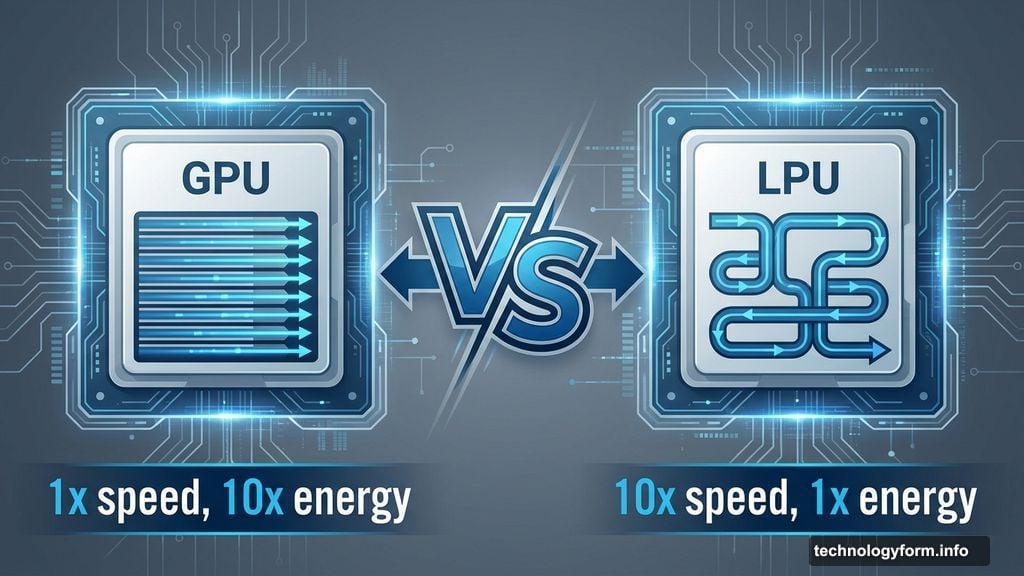
Groq’s innovation centered on LPUs (language processing units), a fundamentally different chip architecture than Nvidia’s GPUs. The company claimed its chips run large language models 10 times faster while consuming one-tenth the energy.
Those aren’t just marketing numbers. Developers noticed the performance difference. Groq’s GroqCloud inference service delivered responses so fast that it made competitors’ offerings feel sluggish by comparison.
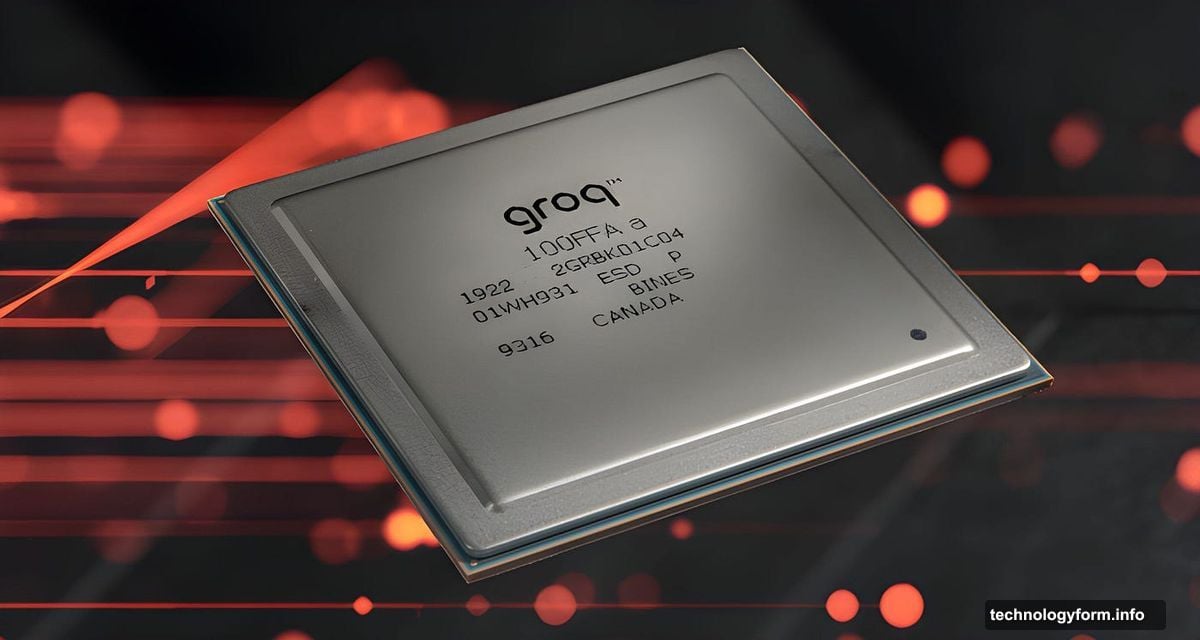
Jonathan Ross knew what he was doing. He previously invented Google’s TPU (tensor processing unit) while working there. TPUs became Google’s secret weapon for training AI models efficiently. So when Ross launched Groq, the industry paid attention.
The LPU architecture optimizes specifically for sequential language processing tasks. Traditional GPUs excel at parallel computation but waste energy on features LLMs don’t need. Groq stripped away that excess, creating chips purpose-built for the transformer models powering ChatGPT, Claude, and similar systems.
Why Nvidia Needed This Deal
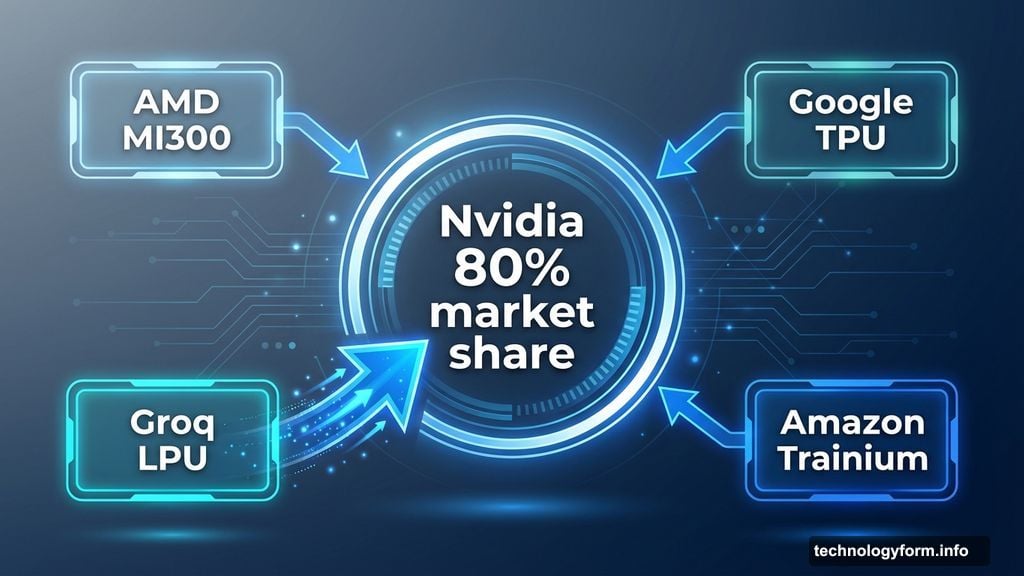
Nvidia dominates AI chip manufacturing with roughly 80% market share. Yet that dominance creates vulnerability. Companies hate depending on a single supplier, especially when that supplier can’t keep up with demand.
Plus, alternatives were emerging. AMD pushed its MI300 chips aggressively. Google expanded TPU access beyond its own cloud. Amazon developed custom Trainium chips for AWS customers. Meanwhile, startups like Groq demonstrated that specialized architectures could outperform general-purpose GPUs for specific AI workloads.
The energy efficiency angle matters more than most realize. Data centers powering AI services consume massive amounts of electricity. Chips that deliver equal performance at one-tenth the energy cost save billions in operating expenses. That’s not a nice-to-have feature—it’s a fundamental competitive advantage.
Nvidia likely recognized that LPU technology represents the future of inference workloads. Training giant AI models still needs GPUs. But running those models efficiently to serve users? That’s where specialized chips like Groq’s LPUs excel.
By licensing Groq’s designs, Nvidia can integrate LPU concepts into its own roadmap. Instead of competing against this technology, they now control it. Smart defensive move.
The Talent Acquisition Matters Most
Deals like this are really about people, not patents. Nvidia hired Groq’s founder and president along with other key employees. That brain trust brings years of specialized knowledge in chip architecture optimization.
Jonathan Ross already proved he can invent game-changing chip technology. He did it once at Google with TPUs. He did it again at Groq with LPUs. Now he works for Nvidia, bringing that innovation capability in-house.
Moreover, the Groq team understands inference optimization better than almost anyone. They built hardware and software specifically for this problem. Nvidia’s existing teams excel at GPU design and CUDA software. But bringing in specialists who think differently adds new capabilities.
This isn’t just about preventing competition. It’s about accelerating Nvidia’s own development. The combined team can likely build better chips faster than either company could alone.
What This Means for AI Infrastructure
Nvidia’s dominance just got stronger. Any startup hoping to challenge them now faces an even bigger competitor with broader technology.
However, this consolidation might actually help the AI industry. Specialized chips work best when paired with robust ecosystems. Nvidia has CUDA, developer tools, and partnerships with every major cloud provider. Groq’s technology gains access to all of that overnight.
Developers who built on Groq’s platform should see continuity. Nvidia has strong incentives to maintain compatibility rather than disrupt existing integrations. The customer base Groq built—2 million developers—represents valuable distribution Nvidia won’t abandon.
Still, some competition dies here. Groq positioned itself as the scrappy alternative to Nvidia. That narrative evaporates when Nvidia absorbs you. Other startups working on specialized AI chips just learned that even huge traction might not matter if the incumbent decides you’re too threatening.
The open question is whether regulators intervene. A $20 billion deal giving Nvidia even more control over AI chip technology will attract scrutiny. But Nvidia structured this carefully as a licensing agreement rather than a full acquisition, possibly to sidestep antitrust concerns.
The Real Winner Here
Nvidia didn’t just eliminate a competitor. They secured technology that solves their biggest vulnerability—energy efficiency in inference workloads.
Plus, they hired the exact engineers who could build alternative chips threatening their position. Those engineers now work for Nvidia instead of against them. That’s worth more than any patent portfolio.
For everyone else building AI applications, this consolidation probably means better chips eventually. But it definitely means less choice in suppliers. Nvidia’s grip on the industry just tightened considerably.