Quantum Computers Are Now Making AI Smarter. Here’s What That Means
AI predictions just got a serious upgrade. And the secret ingredient isn’t more data or faster chips. It’s quantum computing.
Researchers at University College London recently published a study in Science Advances showing that quantum computers can help AI models tackle complex predictions that would take regular computers weeks to solve. The work happened inside Germany’s Leibniz Supercomputing Centre, where scientists connected an AI model to a quantum computer. The results were striking enough to get the research community buzzing.
The Problem AI Models Can’t Solve Alone
AI has been helping with predictions for years. Doctors use it to spot disease patterns. Weather forecasters use it to model storms. Stock brokers use it to catch market signals before they happen.
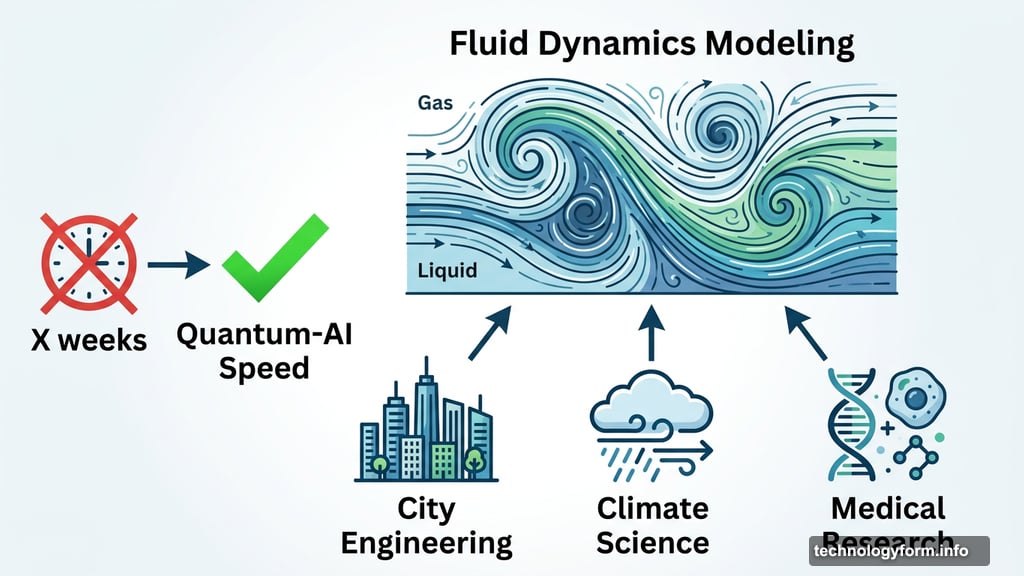
But some predictions are just brutally complex. Modeling how gases and liquids move and interact across a system over a long period of time? That falls into “weeks of computing time” territory. Climate science, city engineering, and medical research all need this kind of fluid dynamics modeling. And regular computers simply struggle to keep up.
That’s exactly the gap the UCL team set out to close.
What Quantum Computing Brings to the Table
So why does a quantum computer help where a regular one falls short? It comes down to a couple of genuinely mind-bending physics tricks.
Classical computers store information as bits. Each bit is either a zero or a one. Quantum computers use qubits, which can represent zero and one at the same time, a property called superposition. Plus, two qubits can be linked together through a phenomenon called quantum entanglement, letting them influence each other instantly regardless of distance.
Together, superposition and entanglement let quantum computers run many calculations simultaneously instead of one step at a time. For certain complex problems, that’s an enormous speed advantage.
The downside? Quantum computers are incredibly fragile. They need to be kept at temperatures colder than outer space. Even tiny vibrations in the room can throw off their calculations. That’s why they live in research labs rather than your local data center.
How the UCL Team Made It Work
The researchers didn’t hand the entire problem to the quantum computer. That would’ve been impossible with today’s still-limited quantum hardware.
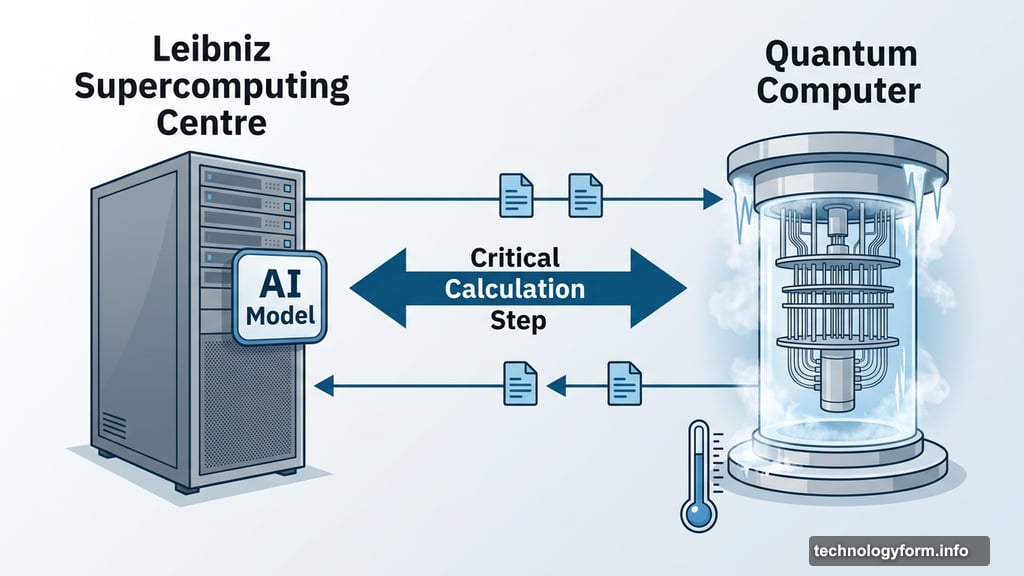
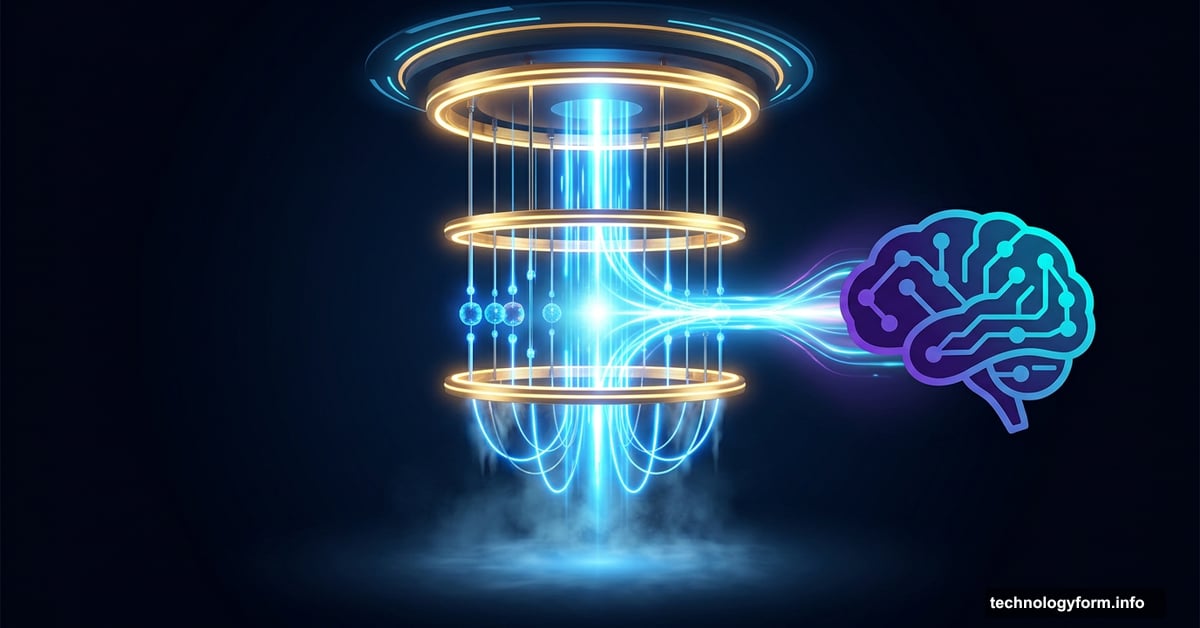
Instead, they split the work cleverly. The AI model, running on a connected supercomputer, handled the heavy data processing. Then, at one critical calculation step, it passed the problem to the quantum computer. The quantum system did its part, then handed results back to the AI. The AI finished the rest.
“Even today’s noisy and error-prone quantum devices can enhance the performance of conventional machine-learning algorithms trained on data from modern supercomputers,” UCL professor and study coauthor Peter Coveney told CNET.
That’s a big deal. It means you don’t need a perfect, fully-stable quantum computer to see real benefits. Even today’s finicky, experimental devices can meaningfully improve AI predictions when used at the right moment.
Quantum Advantage Is Real, Not Just Hype
The team used the phrase “quantum advantage” to describe what they observed. That term carries weight in the scientific community. It means the quantum computer genuinely outperformed what classical computing alone could achieve.
“Our new method appears to demonstrate quantum advantage in a practical way,” said UCL PhD student and coauthor Maida Wang in a research announcement.
And this isn’t happening in isolation. Other teams are already exploring the same territory. In 2025, Google announced its Quantum Echoes algorithm could calculate molecular structures to support future drug discovery. Around the same time, the University of Toronto and Insilico Medicine used a quantum-AI combination to design molecules targeting a particularly stubborn form of cancer, one previously considered “undruggable.”
So the pattern is emerging fast. Quantum computing isn’t replacing AI. It’s amplifying it.
What This Could Mean Across Industries
The fluid dynamics modeling in this study is just one example. The same general approach could apply anywhere predictions involve enormous datasets and staggering complexity.
Climate modeling stands out as an obvious candidate. So does pharmaceutical research, where simulating molecular behavior at scale remains painfully slow with classical hardware. Urban planning, where engineers model how traffic, water systems, and infrastructure interact, could benefit too.
Coveney was direct about the team’s ambitions: “We are already at work on real-world applications.”
Challenges remain, especially around reliability and the sheer size of real-world datasets. But the research shows the path forward is clearer than many expected. You don’t need tomorrow’s perfect quantum computer to start making progress today. You just need to use the one you have at exactly the right moment in the calculation.
That’s a surprisingly practical insight for a field that often feels decades away from everyday usefulness. It turns out quantum advantage isn’t a distant dream. For AI predictions, it might already be here.