TikTok’s Nearby Feed Just Launched. Here’s What Changed
TikTok quietly rolled out a feature that fundamentally shifts how users discover local content. The Nearby Feed landed in four European countries, and it’s designed to connect you with restaurants, shops, and events right around the corner.
This isn’t entirely new. TikTok tested the concept back in 2022 in Southeast Asia. But now it’s official for the U.K., France, Italy, and Germany. Plus, the implementation reveals something interesting about how TikTok plans to compete with Google Maps and Yelp.
How the Nearby Feed Actually Works
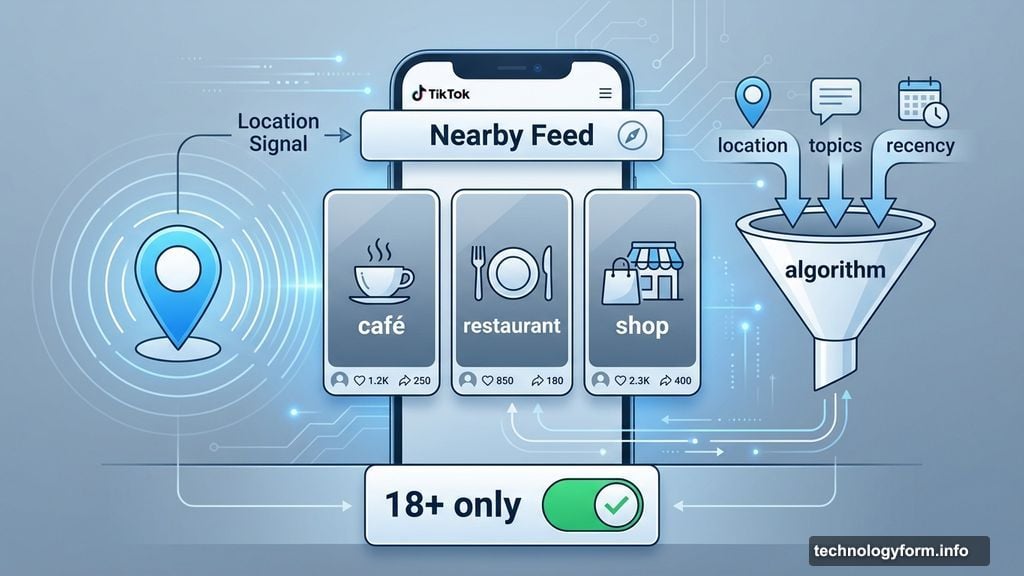
The feed shows content based on three factors: your location, the topics you care about, and how recent the posts are. So if you’re walking through Paris and love coffee shops, you’ll see recent posts about local cafés.
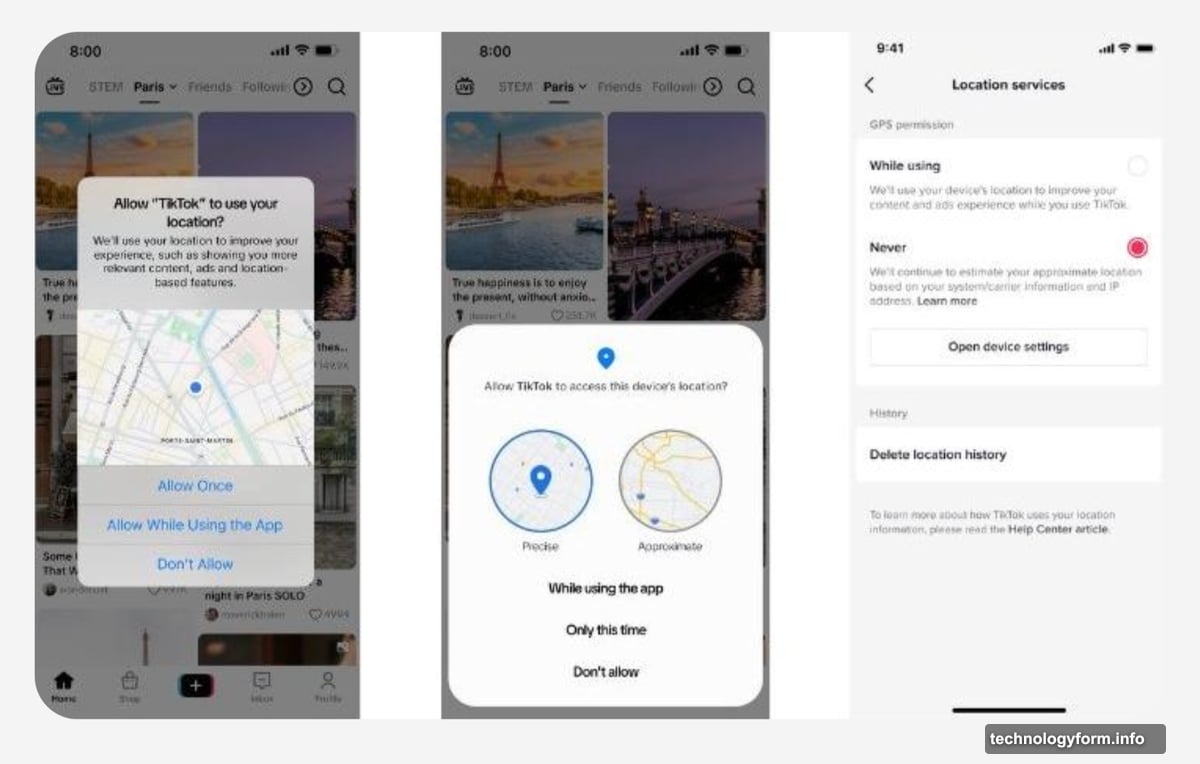
Location sharing is optional. You need to be 18 or older to enable it. Once turned on, TikTok uses your phone’s GPS while the app is open. iOS users will see that little location indicator in the status bar.
Here’s what won’t appear in the Nearby Feed: content from anyone under 18, private accounts, or posts set to Friends or Only You. That’s smart privacy design. But it also limits what you’ll discover.
Finding Content Beyond Your Current Location

You’re not locked into viewing content from where you’re standing. TikTok lets you change locations manually. Tap the location name, update it, and suddenly you’re browsing content from Rome while sitting in London.
This matters for trip planning. Instead of searching “best restaurants in Barcelona” on Google, you can browse what locals actually post about. The content feels more authentic because real people create it, not SEO-optimized blogs.
However, there’s a catch. The algorithm still curates what you see. So you’re not getting a raw feed of everything nearby. You’re getting what TikTok thinks you’ll engage with.
Small Business Impact
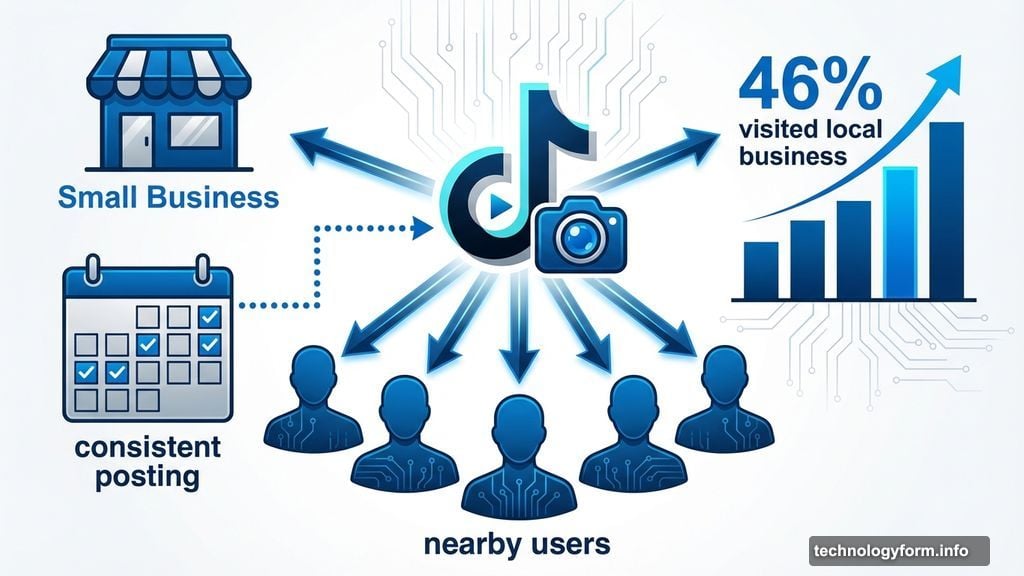
TikTok claims 46% of U.K. users have visited a local business they discovered on the platform. That’s significant. If the Nearby Feed amplifies local discovery, small businesses gain serious visibility without paying for ads.
But here’s the reality: you still need to create content that performs well. The Nearby Feed doesn’t guarantee exposure. It just gives local posts a better shot at reaching nearby users. So restaurants and shops still need to post consistently and create engaging videos.
Moreover, this puts pressure on businesses to maintain an active TikTok presence. Miss a few weeks of posting? Your competitors might capture those nearby users instead.
Privacy Questions Nobody’s Asking
TikTok says it “continues to collect and use location information in line with local laws.” That’s vague. Which laws? How long do they store location data? What exactly gets shared with advertisers?
The company doesn’t clarify these details in their announcement. For users who already granted location access, this new feed might collect more granular data about where they spend time. That’s valuable information for targeted advertising.
Plus, businesses might not realize their public posts could appear to nearby users even if they didn’t explicitly opt into the Nearby Feed. If you tagged a location or mentioned a local service, boom – you’re in the feed. Most small business owners probably don’t understand that implication.
What This Means for Content Strategy
Creators now need to think locally. If you’re a food blogger in London, tagging specific neighborhoods matters more than ever. That tag could push your content to thousands of nearby users actively looking for recommendations.
But don’t over-optimize. TikTok’s algorithm still prioritizes engagement. A well-made video from your neighborhood will outperform a mediocre one with perfect location tags. The fundamentals haven’t changed.
Also, consider posting during peak discovery times. If you’re showcasing a breakfast spot, post early morning when people are deciding where to eat. The Nearby Feed rewards recency, so timing matters more than it used to.
The Competitive Angle
Google Maps dominates local discovery. Yelp owns restaurant reviews. So why would users switch to TikTok for finding nearby places?
Video makes the difference. A 30-second TikTok showing the actual vibe of a café tells you more than five static photos. You see the space, hear the ambiance, watch how crowded it gets. That’s powerful for decision-making.
Yet TikTok lacks structured information. No hours of operation in the feed. No direct booking links. No comprehensive reviews. You still need to leave the app to get practical details. So TikTok complements Google Maps rather than replaces it.
Regional Rollout Strategy
TikTok chose Europe first. That’s interesting. Why not launch in the U.S., where they need positive momentum amid regulatory scrutiny?
Probably because European data privacy laws (GDPR) force clearer communication about location tracking. Testing in this stricter regulatory environment helps TikTok refine their privacy approach before expanding elsewhere.
Plus, European cities are dense and walkable. Local discovery matters more when you’re exploring on foot. In sprawling American suburbs where everyone drives, the Nearby Feed feels less urgent.
What Comes Next
TikTok hasn’t announced expansion plans beyond these four countries. But the feature makes too much sense not to roll out globally. Local discovery drives engagement, which drives ad revenue.
Expect more sophisticated location features soon. Maybe filters for distance (“show me content within 1 mile”). Perhaps integrations with reservation systems or e-commerce. TikTok is absolutely building toward local commerce.
The real question is whether users embrace this shift. TikTok built its empire on entertaining content that doesn’t require leaving your couch. Pivoting to local discovery changes the core value proposition. Some users will love it. Others might find it annoying.
The Nearby Feed works best when you’re actively exploring. It’s less useful when you’re doom-scrolling at home. So TikTok is betting that enough users want help discovering local experiences to justify the feature. We’ll see if they’re right.