Google Just Cloned Pinterest’s Best Feature. Here’s Why That Matters
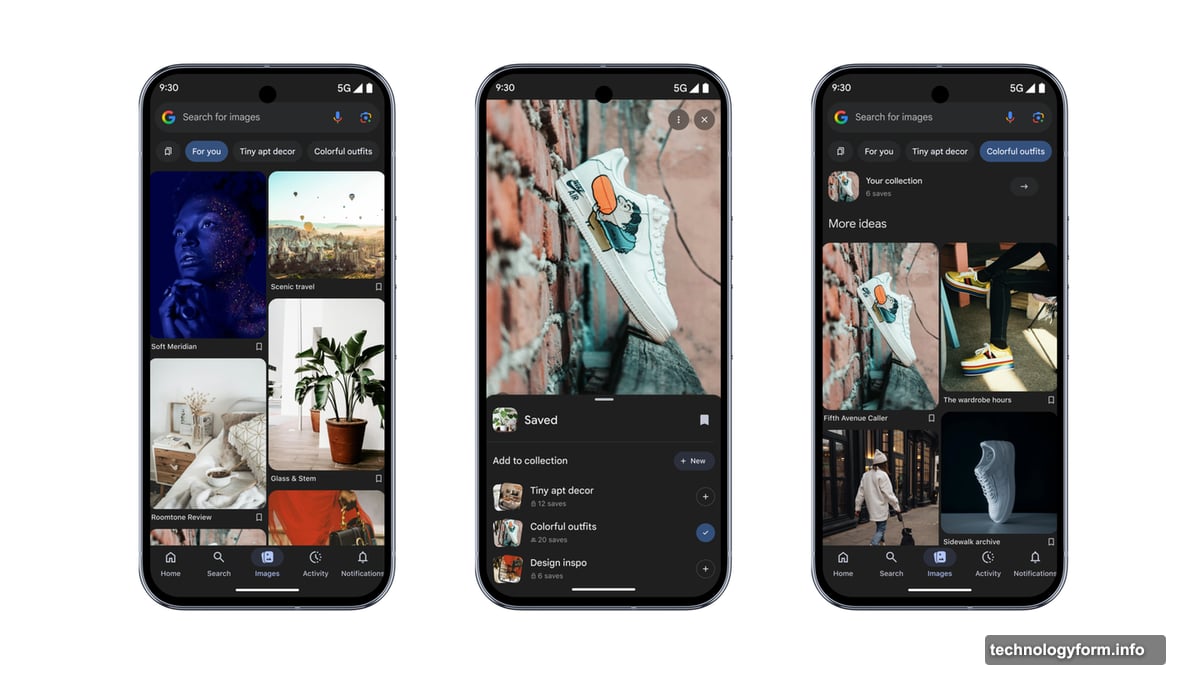
Google launched a new images tab in its mobile search app that copies Pinterest’s core function. The feature lets users browse personalized inspirational photos, save them to collections, and search for similar images. Sound familiar? That’s because Pinterest built its entire business on this exact idea.
But this isn’t just another product announcement. Google’s move signals something bigger about where search is heading and who’s eating whose lunch in the attention economy.
What Google Actually Built
The new tab appears at the bottom of Google’s iOS and Android search apps. It displays daily-updated images tailored to your interests. You can browse, search, and organize photos into collections.
Google positions this for typical Pinterest use cases. Planning trips. Decorating apartments. Discovering fashion. Hosting parties. All the visual brainstorming tasks that made Pinterest indispensable for millions of users.
Here’s the thing. Google already had a collections feature since 2018. But that tool tried to be everything for everyone. It saved websites, products, map locations, and yes, images too. So nobody really used it as their visual inspiration hub.
This new images tab focuses exclusively on photos. That sharp focus matters. Instead of competing with bookmarking tools, Google now directly targets Pinterest’s territory.
Why Google Made This Move Now
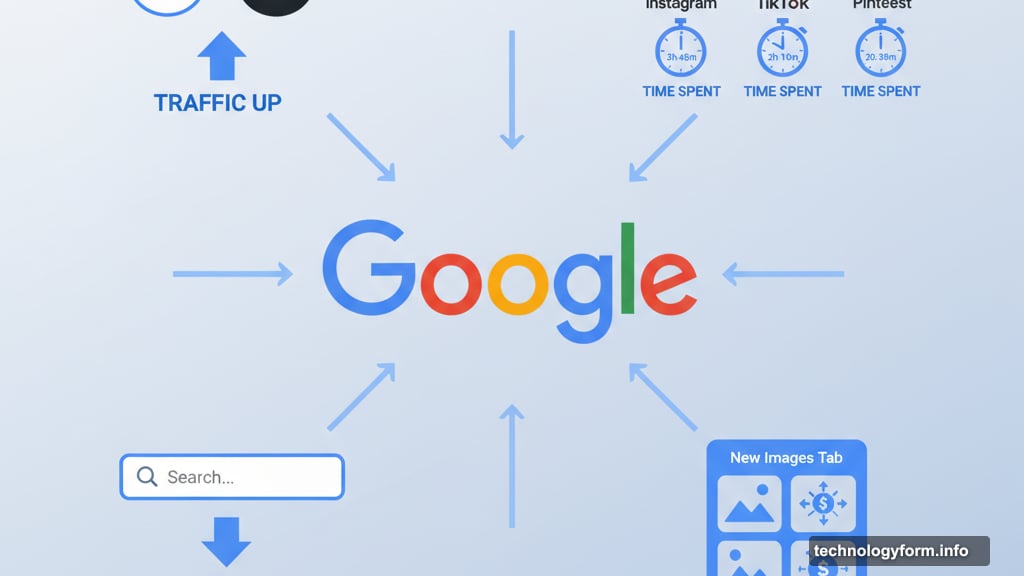
Two forces are squeezing Google’s traditional business. First, AI chatbots like ChatGPT and Claude are stealing search traffic. People ask AI assistants questions instead of googling. That means fewer searches and less ad revenue for Google.
Second, users spend more time on social apps for discovery and inspiration. Pinterest, Instagram, and TikTok capture attention that used to flow through Google Search. Those platforms keep users engaged for minutes or hours. Google searches typically last seconds.
So Google needed new surfaces inside its app to hold attention longer. An inspirational images tab does exactly that. Instead of searching once and leaving, users might browse images for minutes. More browsing means more opportunities to serve ads.
Plus, Google spotted something. TechCrunch reports the company already tested ads within image carousels on mobile. This new tab creates the perfect place to run those ads at scale. Users expect to see products and ideas when browsing inspiration images. Ads feel native there.
The Pinterest Problem
Pinterest should worry about this. Google has massive built-in advantages.
Distribution comes first. Google’s search app sits on hundreds of millions of phones already. Users don’t need to download anything new. The images tab just appears with an update. Pinterest requires a separate app download and account creation.
Next, personalization. Google knows your search history, location, and interests across its entire ecosystem. Gmail, Maps, YouTube, Chrome. All that data feeds into personalizing your image recommendations. Pinterest only knows what you do inside Pinterest.
Finally, integration. Google can weave images into its existing search features seamlessly. Looking for vacation ideas? Search results could flow directly into your images collection. Pinterest exists as a separate destination you visit intentionally.
But Pinterest has advantages too. Its entire interface optimizes for visual discovery. The algorithm understands how people browse inspirational content. The community curates and organizes images collaboratively. Google’s entering this space relatively late with a feature bolted onto a search app.
What This Means for Users
Competition here benefits everyone. Google won’t replace Pinterest overnight. Instead, users gain options.
Some people prefer Google’s simplicity. Search for images, save what you like, move on. No social features or community pressure. Just visual bookmarking integrated with tools you already use.
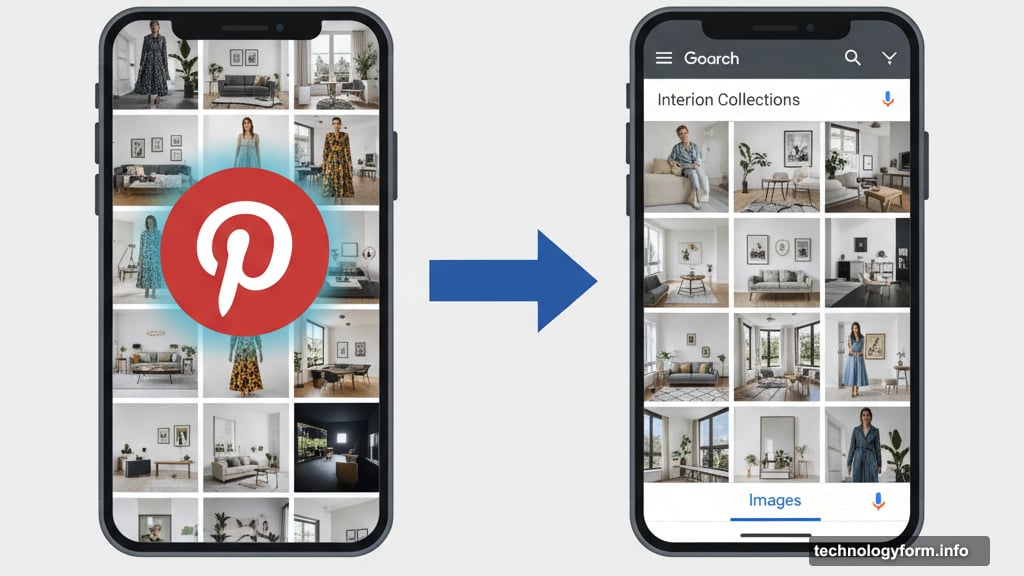
Others will stick with Pinterest’s richer experience. The platform offers deeper boards, collaborative planning, shopping integration, and a community that actively shares ideas. Pinterest built features for visual discovery that Google’s initial images tab lacks.
However, fragmentation creates problems. Now your saved images might live in Pinterest, Google, Instagram, or browser bookmarks. Finding that perfect kitchen remodel photo you saved three months ago gets harder when it could be anywhere.
Plus, this raises privacy questions. Google already tracks your behavior across services. Now it’ll learn about your home decor preferences, fashion taste, vacation dreams, and party planning ideas. That data feeds Google’s advertising business. Pinterest collects similar data, but Google’s cross-platform reach makes its profiling more comprehensive.
The Bigger Search Picture
This images tab reveals Google’s strategy for the AI era. The company can’t stop people from asking ChatGPT questions. But it can create more reasons to open Google’s app throughout the day.
Think about it. You might ask ChatGPT for travel recommendations. But you still browse Google’s images tab for visual inspiration. You use Claude for research. But you save apartment decor ideas in Google’s collections. The AI assistants answer questions. Google becomes where you explore visually.
This parallels what’s happening across tech. Companies aren’t fighting for single-use cases anymore. They’re competing for attention throughout your day. Meta wants you checking Instagram reels. TikTok wants your scrolling time. YouTube battles for your video consumption. Now Google wants your visual browsing minutes.
The irony is thick. Google built the most successful search engine ever by being fast and utilitarian. Users loved that you could find information quickly and leave. Now Google needs you to stay and browse. The feature that made Google dominant became a liability when attention moved to dwell time instead of quick answers.
What Happens Next
Google says the images tab launches over the next few weeks in the U.S. on iOS and Android. No timeline yet for global rollout.
Pinterest’s stock will likely take a hit when investors process this news. Wall Street hates when tech giants target your market. But Pinterest has survived competition from Instagram, Google, and others before. The company’s not dying tomorrow.
Meanwhile, watch for Google to rapidly iterate this feature. Expect collaborative collections, shopping integration, and yes, lots of ads. The company didn’t build this just to be helpful. This tab needs to drive revenue and engagement.
For users, the best move is trying both. See which experience fits your workflow better. Some might use Google for quick visual searches and Pinterest for deeper project planning. Others will pick one and ignore the other.
Just remember. Every photo you save trains these companies’ algorithms. Every browse session teaches them about your interests. Both Google and Pinterest monetize that data through advertising. The convenience of having all your inspiration organized comes at the cost of surveillance.
Your choice is which company gets to profile your creative interests. Not whether you get profiled at all.