OpenAI and Google Just Throttled Their AI Tools. High Demand Killed Free Access
Free users got crushed this week. Both OpenAI and Google slashed generation limits on their hottest AI products.
The culprit? Overwhelming demand during the holiday weekend. But here’s the catch. Neither company promised these restrictions are temporary. Plus, OpenAI made it clear you can always buy more if you need it.
Let’s break down what changed and what it means for casual users.
Sora Drops to Six Videos Daily
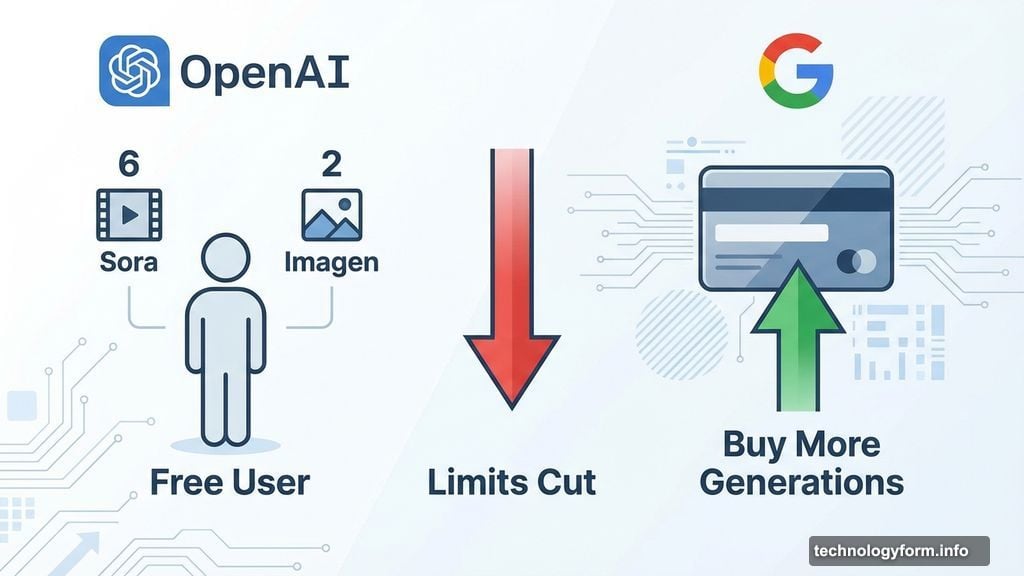
OpenAI cut free Sora access hard. Users now get just six video generations per day.
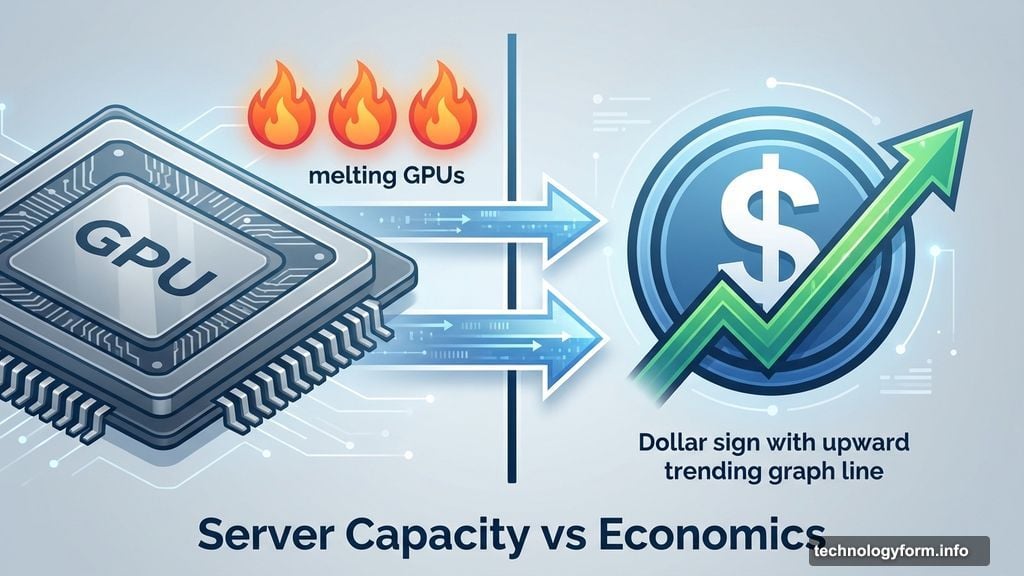
Bill Peebles leads Sora at OpenAI. He didn’t mince words about the reason. “Our gpus are melting,” he explained on social media. That’s tech speak for “we didn’t expect this many people to use our stuff.”
Here’s what’s different this time. Previous limits were explicitly temporary. OpenAI would throttle during peak usage, then restore access. Not anymore. Peebles didn’t mention any plans to increase limits again.
Instead, he pointed users toward buying more generations. That fits OpenAI’s broader strategy to monetize everything. Free tiers exist to hook users. Then the company pushes paid upgrades when demand spikes.
ChatGPT Plus and Pro subscribers still get higher limits. But OpenAI won’t specify exactly how many. That opacity lets them adjust without announcing cuts.
Nano Banana Pro Drops to Two Images
Google made similar moves with Nano Banana Pro. The image generator launched just last week to massive interest.
Free users originally got three images daily. Now they’re down to two. The change happened quietly. Users only noticed when they hit the new limit.
Google added a warning to the interface. Limits may change “frequently and without notice.” Translation? Don’t get comfortable with current access levels. They’ll drop them whenever server costs spike.
Moreover, Google appears to be restricting free access to Gemini 3 Pro. Users report getting blocked from the more powerful model. Google hasn’t officially announced this change. But the pattern is clear.
Server Capacity Wasn’t the Real Issue
Let’s be honest about what’s happening here. These companies have massive server capacity. They run some of the world’s largest computing infrastructure.
So why the sudden limits? Economics, not hardware.
Free users generate costs without revenue. Each AI generation burns compute resources. That electricity and hardware depreciation adds up fast. Meanwhile, free users don’t pay anything.
Plus, these companies want to drive subscriptions. Cutting free access creates urgency. Users who rely on these tools will upgrade rather than lose access. It’s a proven conversion strategy.
The “melting GPUs” explanation sounds dramatic. But it’s really about profit margins. If demand exceeded capacity permanently, they’d simply buy more servers. They have the capital. What they don’t want is serving free users at scale indefinitely.
Paid Tiers Remain Untouched
Notice what didn’t change. Paid subscriber limits stayed constant.
ChatGPT Plus costs $20 monthly. Pro subscribers pay even more. Those users still get generous access. Because they’re generating revenue that covers costs and then some.
This creates a two-tier system. Paid users get reliable access. Free users get whatever capacity is left over. When demand surges, free access gets cut first.
Google follows the same playbook. Premium Gemini subscribers aren’t hitting new restrictions. The company protects paying customers while squeezing free users toward upgrades.
It’s effective but frustrating. Free tiers initially promised generous access. Now they’re being used as conversion funnels. The rug pull feels deliberate.
What This Means for Casual Users
If you’re just playing with AI tools occasionally, these limits hurt.
Six Sora videos daily sounds reasonable. Until you consider how AI generation works. You rarely nail it on the first try. Most prompts need iteration. Six attempts might yield one decent video. That’s not much creative freedom.
Two Nano Banana Pro images is even more restrictive. Again, you’ll burn through that experimenting with prompts. Getting quality output requires multiple tries.
So casual experimentation becomes difficult. You’ll ration your generations carefully. Or you’ll pay up. That’s exactly what these companies want.
Meanwhile, professional users already subscribe. They need reliable access and higher limits. These changes don’t affect their workflows. Free tier restrictions only squeeze hobbyists and curious experimenters.
The Pattern Repeats
This isn’t new. AI companies consistently follow the same playbook.
First, launch with generous free access. Build buzz and user base. Get people excited about the technology. Then gradually restrict free tiers while pushing paid upgrades.
Google did it with search API limits. OpenAI does it with ChatGPT. Now both are doing it with generative AI tools. The pattern is predictable.
Moreover, this will continue. As these tools get more expensive to run, free access will keep shrinking. Eventually, free tiers might only offer a handful of generations weekly. Enough to taste the product, not enough to use it meaningfully.
Your Options Are Limited
What can you do about this? Not much, honestly.
You can pay for subscriptions. That’s the obvious solution. If you use these tools regularly, the cost might justify the access.
Alternatively, you can ration your free generations carefully. Use them only for serious projects, not casual experimentation. That’s less fun but preserves access.
You could also explore alternatives. Other AI tools exist with different pricing models. Some offer more generous free tiers. But quality varies significantly.
Or you can wait and hope limits increase. Maybe demand will stabilize. Maybe these companies will add capacity. But don’t count on it. The economics don’t favor expanding free access.
Free AI tools were never sustainable at scale. These companies aren’t charities. They’re businesses with investors expecting returns. The generous early access was always temporary, designed to hook users before monetization kicked in.
Now we’re seeing the inevitable squeeze. Expect more restrictions ahead, not fewer.