OpenAI Quietly Killed Its ChatGPT Adult Mode. Here’s What Pushed It Over the Edge
OpenAI just shelved its controversial “adult mode” for ChatGPT, and this time it sounds permanent.
Less than a month after announcing a temporary pause, CEO Sam Altman has reportedly decided to drop the erotic chatbot feature “indefinitely,” according to the Financial Times. The decision reflects a much bigger shift happening inside one of the world’s most closely watched AI companies.
The Adult Mode That Never Made It
The original concept was fairly specific. ChatGPT’s adult mode would have allowed text-based conversations with adult themes. Importantly, it wasn’t supposed to generate explicit images, audio, or video — just text chats.
But even that limited scope caused serious alarm. Internal advisers at OpenAI raised concerns that the system couldn’t reliably prevent minors from accessing it. There were also fears about sexual abuse material finding its way into the model, which proved difficult to solve technically.
OpenAI investors pushed back too. The consensus was that adult mode carried far more risk than potential reward. So the project stalled, then paused, and now appears dead entirely.
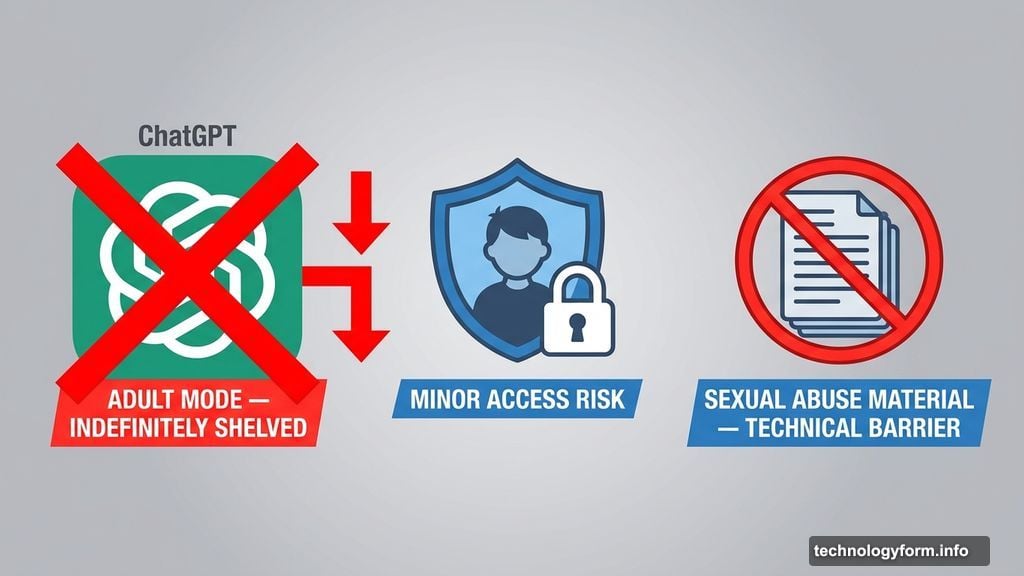
OpenAI said earlier this month it was only pausing the project — not ending it. That position clearly didn’t hold long.
Sam Altman’s “Side Quest” Problem
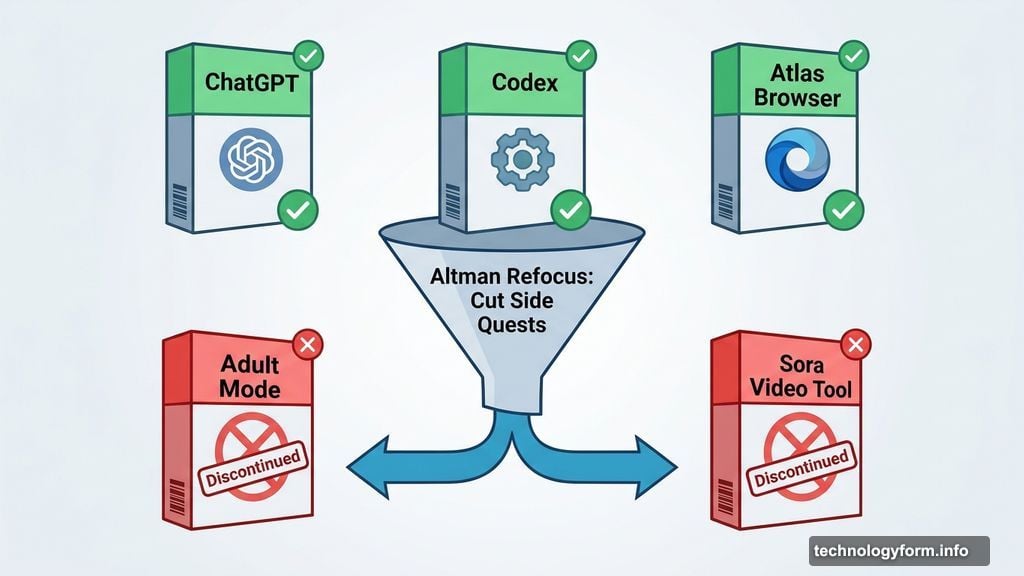
The adult mode cancellation isn’t happening in isolation. Altman reportedly told staff to cut back on “side quests” and refocus on core products.
That list of priorities includes ChatGPT itself, the coding tool Codex, and the agentic AI browser Atlas. Everything else is apparently on the chopping block. Sora, OpenAI’s video generation tool, got discontinued earlier this week under the same logic.
It’s a notable reset for a company that seemed to be expanding in every direction just months ago.
Competition Is Biting Hard
The real pressure driving this refocus comes from competitors closing the gap fast.
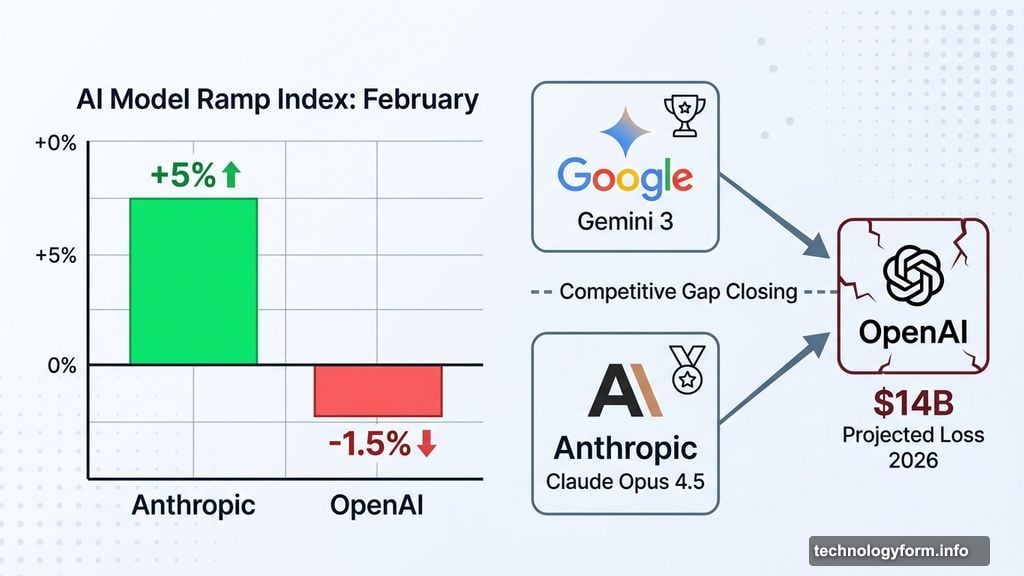
Google launched Gemini 3 in November, and it outperformed ChatGPT on several benchmark tests. Anthropic followed with Claude Opus 4.5 the same month. Then in December, Altman reportedly declared a “code red” internally, telling employees ChatGPT needed serious improvement.
The numbers back that urgency. The Ramp Index, which tracks AI adoption across tens of thousands of US businesses, showed Anthropic gaining 5% in business AI adoption in February. OpenAI, meanwhile, saw a 1.5% decline in the same period.
That’s a meaningful swing in a market where momentum matters enormously.
The Financial Pressure Behind the Pivot
Financial trouble wasn’t officially cited as a reason for OpenAI’s strategic shift, but the numbers are hard to ignore.
The New York Times reported that OpenAI has been scrambling to balance its books and generate real revenue. The company’s own internal forecast projects a $14 billion loss in 2026. And OpenAI plans to spend $200 billion through the end of the decade.
With those figures looming, every project faces a simple question: does this help the core business or not? Adult mode clearly failed that test.
A Messy Moment for AI and Adult Content
OpenAI’s decision arrives amid growing scrutiny of how AI platforms handle sexualized content across the industry.
Grok, the chatbot from Elon Musk’s xAI, has faced widespread criticism for allowing users to generate fake nude or sexually suggestive images of real people — including minors — using just a single photo. The City of Baltimore filed a lawsuit against xAI this week, alleging the tool generated nonconsensual sexual images in violation of consumer protection laws.
Meta has also faced heat for reportedly enabling its AI chatbots to engage in sensual conversations with minors.
So the landscape OpenAI was entering with adult mode was already a minefield. Between the technical challenges, investor concerns, and the regulatory attention landing on competitors, walking away starts to look less like retreat and more like smart timing.
Whether OpenAI’s sharpened focus actually helps it claw back ground from Google and Anthropic — that’s the bigger question worth watching.