Amazon’s Alexa Just Got Sneaky Good at Spending Your Money
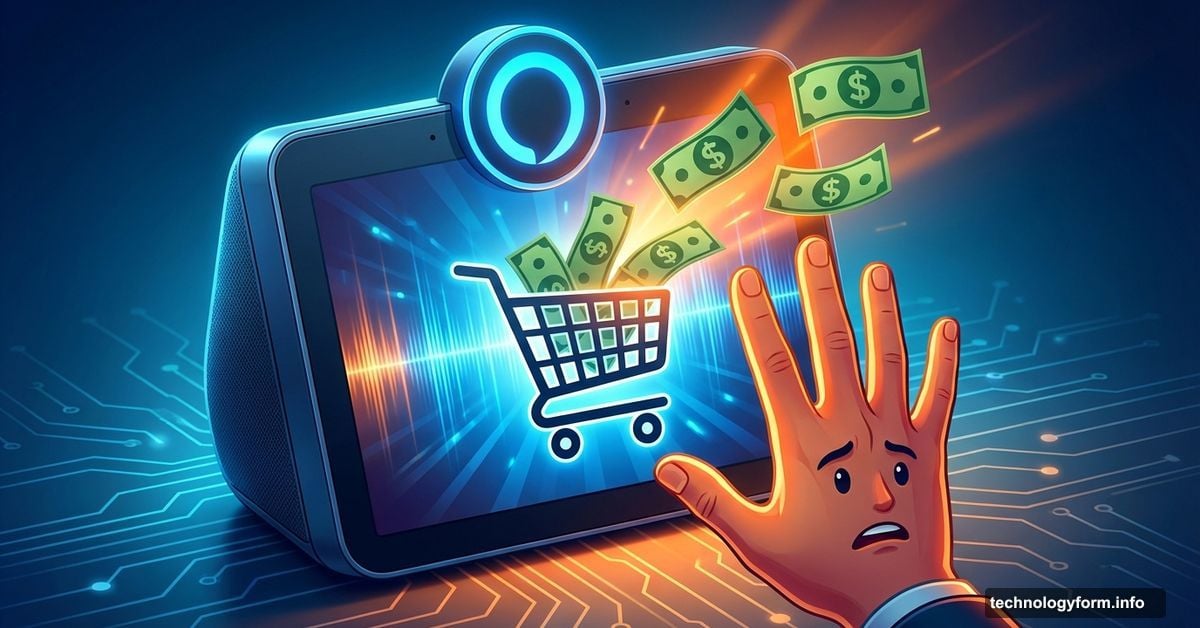
Alexa can now buy stuff without asking. Amazon rolled out auto-purchase features that track prices and complete orders the moment costs drop below your target.
Sounds convenient. But this raises questions about impulse buying, household chaos, and whether we really want AI shopping for us.
Auto-Buy Arrives on Alexa Plus
Alexa Plus gained price-tracking powers back in June. Now those features work across Echo Show devices with expanded capabilities.
Here’s how it works. You tell Alexa to monitor specific products in your Amazon basket or wish list. For example, “Notify me when the Dyson Supersonic drops below $300.” Alexa watches that item continuously.
But it goes further. You can instruct Alexa to automatically purchase products when they hit your price threshold. No confirmation needed. The assistant uses your default payment method and shipping address to complete the transaction instantly.
Amazon’s Rufus chatbot got similar features last month. So this auto-buy capability now exists across multiple Amazon AI tools. The company clearly wants automation embedded throughout its shopping ecosystem.
The Gift-Giving Problem Nobody Mentions
Here’s the catch most people will discover the hard way. Alexa doesn’t understand context about who lives in your household.
Imagine this scenario. You add a surprise gift to your wish list for your partner’s birthday. Alexa sees the price drop. It auto-purchases the item. Now the order confirmation appears on your Echo Show 15 in the living room.
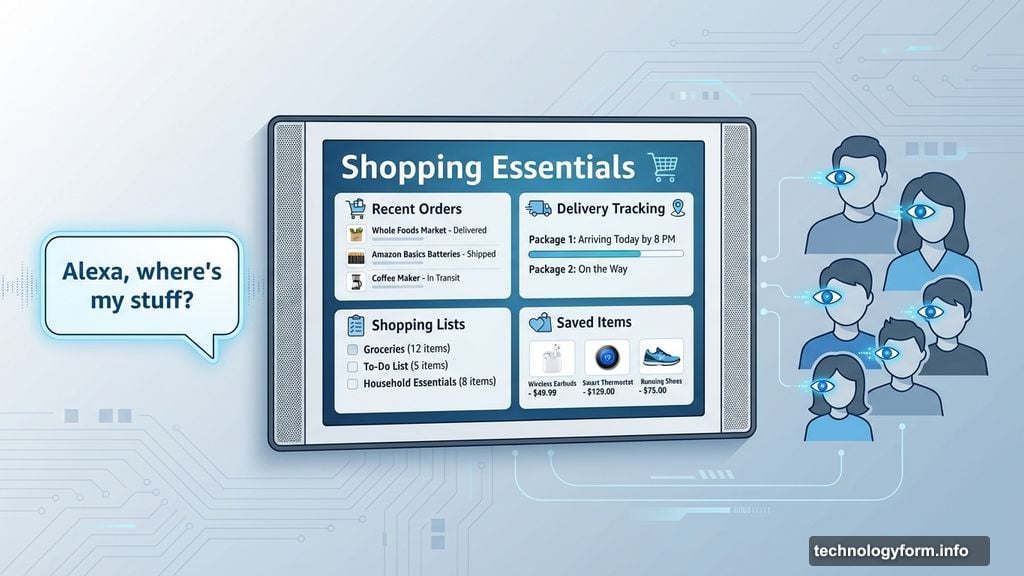
Surprise ruined. Moreover, anyone in the household can see incoming orders through the new Shopping Essentials center. That’s terrible for gift secrecy.
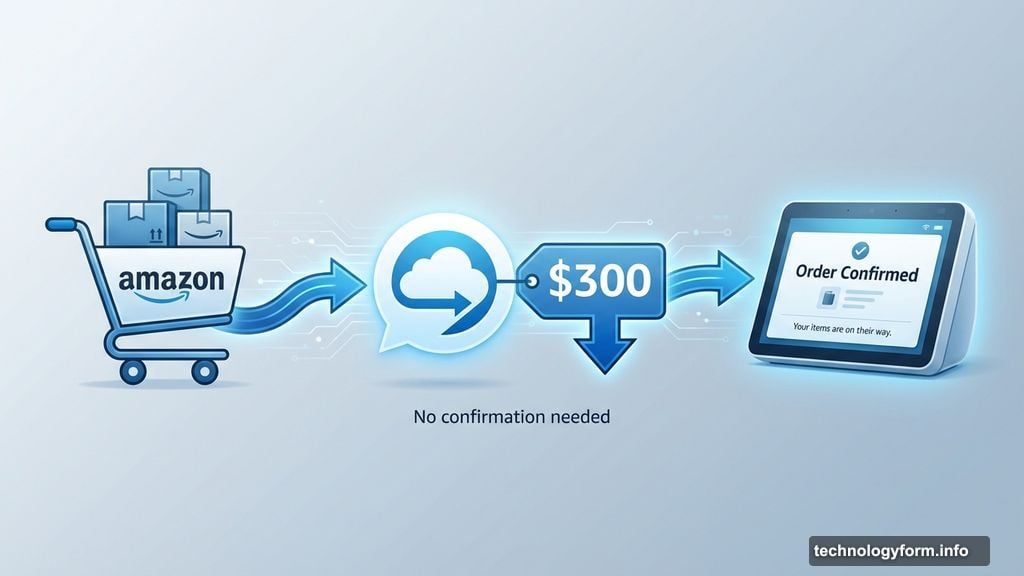
Amazon designed these features for convenience. But they didn’t account for the social dynamics of shared devices and surprise purchases. So users need to be extremely careful about what they track and when they enable auto-buy.
Shopping Command Center Takes Over Echo Screens
Echo Show 15 and Show 21 devices now display a dedicated Shopping Essentials interface. This consolidates several existing widgets into one screen.
The center shows recent orders, real-time delivery tracking, shopping lists, and saved items. Plus, it suggests household essentials to repurchase. You can activate it by saying “Alexa, where’s my stuff?” or “Open Shopping Essentials.”
Amazon says users can add a shopping widget to their homescreen soon. That means shopping information will be even more prominent on Echo displays.
This feels like Amazon transforming Echo devices into shopping terminals rather than smart home hubs. The focus shifted from controlling lights and playing music to buying products and tracking deliveries.
Last-Minute Add-Ons Push More Purchases
Alexa Plus now prompts users to add items to orders already in transit. The assistant suggests products that can join your shipment “right up until it leaves the warehouse.”
This creates urgency. Your order is packing. You could grab that extra item now. Otherwise, you’ll need to place a separate order and wait longer.
It’s clever from Amazon’s perspective. They increase order value while reducing shipping costs by consolidating purchases. But it’s also designed to trigger impulse buying through time pressure.
Furthermore, Alexa Plus offers personalized gift suggestions. You provide details about who you’re shopping for. The assistant generates product recommendations organized by category.
Again, convenient for some users. But it’s another nudge toward spending more money through Amazon’s ecosystem.
The Convenience-Control Tradeoff
Auto-buy features raise fundamental questions about shopping automation. Sure, tracking prices saves money on items you already planned to purchase. But giving AI permission to complete transactions removes your final decision checkpoint.
What happens when Alexa misunderstands your price threshold? What if you changed your mind about needing that product? What about fraudulent purchases if someone gains access to your Alexa account?
Amazon built safeguards like using default payment methods. But those safeguards also make unauthorized purchases easier to execute. Plus, the auto-buy feature works silently until you notice the order confirmation.
Most concerning is how these features normalize AI-initiated purchases. Today it’s price drops on items you requested. Tomorrow it might be “helpful” suggestions that Alexa thinks you need. The line between assistance and manipulation gets blurry fast.
Smart Shopping or Shopping Trap?
These Alexa Plus features work well for specific use cases. Tracking prices on big-ticket items you definitely need makes sense. Auto-buying household essentials when they go on sale could save money.
But the broader trend worries me. Amazon keeps adding friction-reducing features that make spending money easier. Voice shopping. One-click ordering. Now automated purchasing through AI assistants.
Each innovation removes another moment of consideration. That’s by design. Amazon profits when you buy more stuff with less deliberation.
So use these tools carefully. Set strict price limits. Disable auto-buy for anything you’re not certain about. Check your orders frequently. Otherwise, you might discover Alexa became your most expensive household member.