RAM Prices Exploded. Your Next Phone Costs $40 More
Memory suppliers just torched the tech industry. PC gamers noticed first when their RAM costs tripled overnight. But the real damage is just starting.
Your smartphone, laptop, gaming console, and even your car all need DRAM memory. Now AI companies are buying it all. The result? Price hikes hitting every gadget you own.
AI Data Centers Devoured the Memory Supply
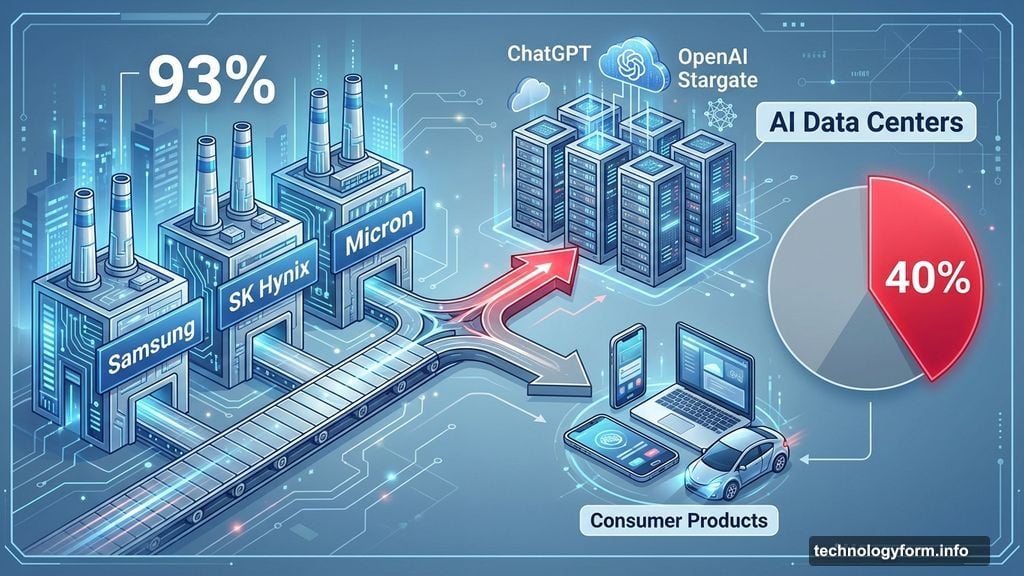
Three companies control 93 percent of global DRAM production: Samsung, SK Hynix, and Micron. They’re all chasing the same customer now—AI.
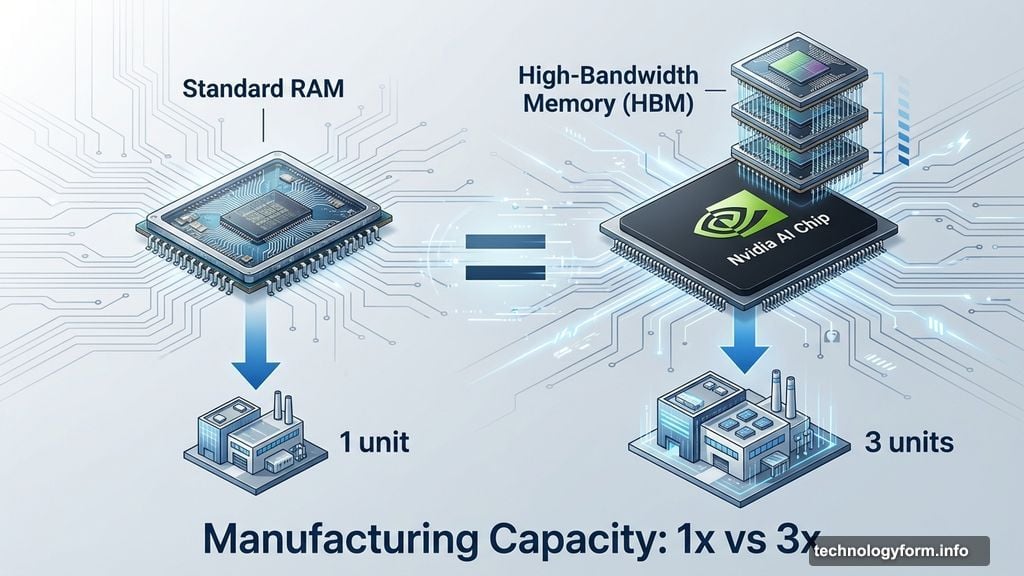
Data centers need massive amounts of memory to power ChatGPT, Claude, and similar AI models. Plus, they’re buying high-bandwidth memory (HBM) that comes packaged with Nvidia’s latest AI chips. These HBM chips consume three times more manufacturing capacity than standard RAM.
So what happens to everyone else? “If you are not a server customer, you will be considered a second priority,” Gartner analyst Shrish Pant told The Verge.
Samsung and SK Hynix reportedly committed 40 percent of worldwide memory output to a single AI project. OpenAI’s Stargate infrastructure initiative requires up to 900,000 DRAM wafers monthly. That’s memory that won’t appear in your next phone or laptop.
Meanwhile, Micron announced it’s shutting down Crucial, its consumer brand. The company’s pulling out of consumer products entirely to focus on AI customers. Translation: memory makers see bigger profits selling to OpenAI than to you.
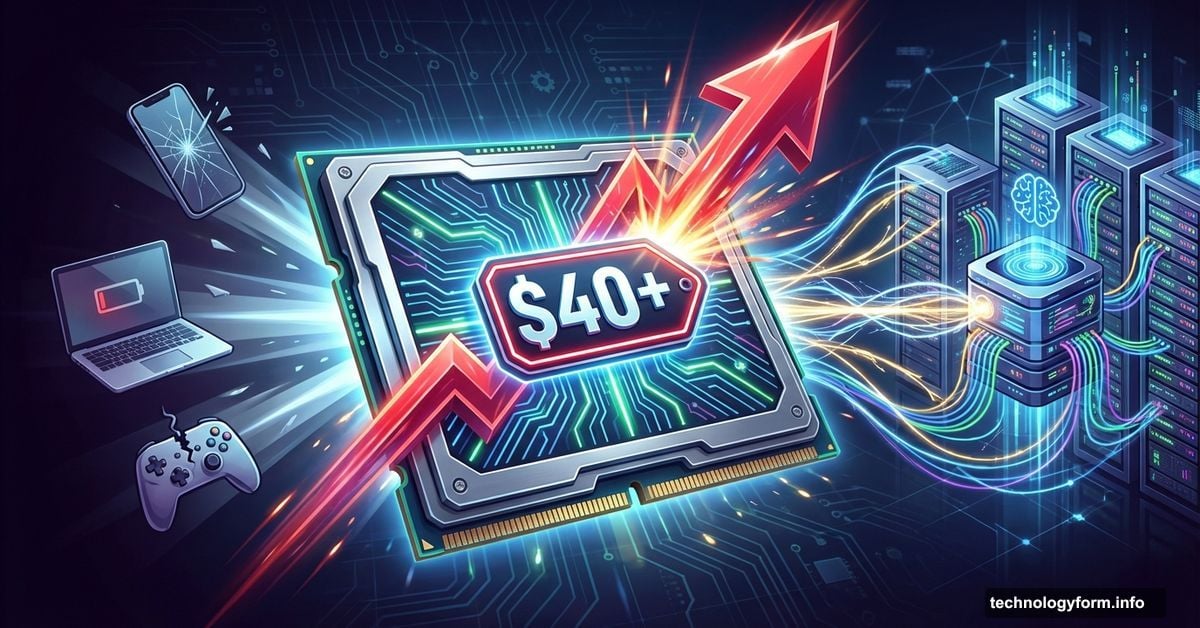
Flagship Phones Now Cost $40 More Just for Memory
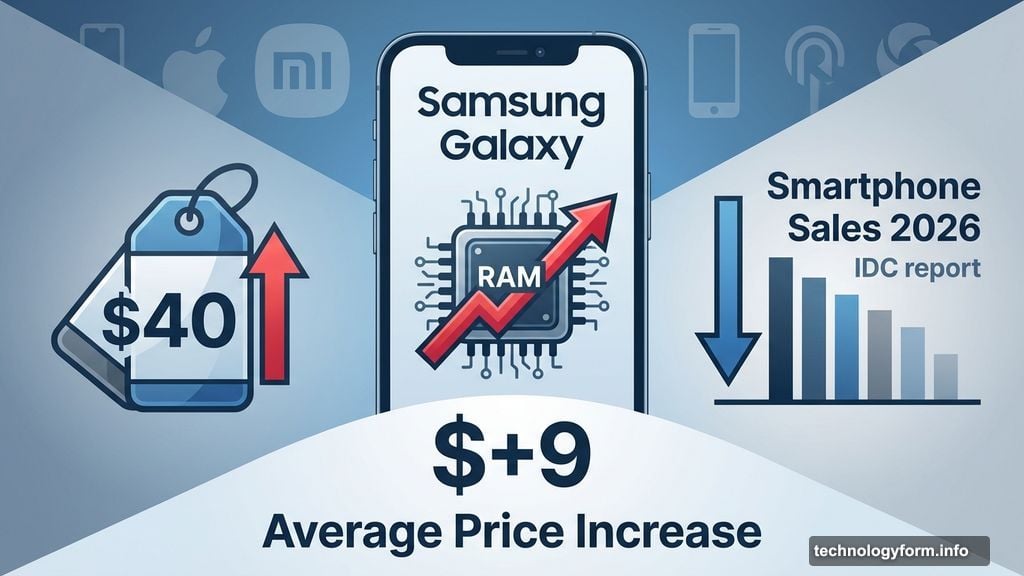
Smartphone makers are getting crushed. The 12GB of RAM in a Samsung Galaxy flagship now costs the company nearly $40 more than before.
IDC predicts smartphone sales will drop in 2026 because of the shortage. Average phone prices will jump $9 across the board. In China, Xiaomi already warned customers about incoming price hikes.
Here’s why this matters. DRAM is embedded “in every part of our digital society today,” according to Jeff Janukowicz, research VP at IDC. Laptops, gaming consoles, smart TVs, and cars all need it. Even solid-state drives use small amounts.
But phone manufacturers can’t easily cut corners. Budget devices like Chromebooks and the Google Pixel 9A already use cost-optimized parts. There’s nothing left to swap out. So companies will pass costs to customers or cut back on battery size and display quality.
Lenovo is stockpiling memory to prepare for 2026. Dell and HP are planning “adjustments”—which probably means higher prices. During an earnings call, Dell COO Jeff Clarke admitted “the cost basis is going up across all products.”
Memory Makers Are Making Record Profits
Don’t expect Samsung, SK Hynix, or Micron to fix this shortage quickly. They’re too busy celebrating.
Samsung’s memory business pulled in 26.7 trillion Korean won (about $18.12 billion) last quarter. That’s more than a quarter of Samsung’s total revenue—nearly double what its entire TV and appliance division made.
SK Hynix saw net profits more than double from $3.92 billion in Q3 2024 to $8.6 billion in Q3 2025. Micron’s annual net income exploded from $778 million in fiscal 2024 to $8.6 billion in fiscal 2025. That’s a 10x increase.
With profits like that, why rush to expand production? Samsung told investors it plans to “pursue a strategy of maintaining long-term profitability” instead of rapidly building new facilities. Translation: we like these high prices.
SK Hynix does plan to spend $500 billion on new production plants. But the first won’t open until 2027. Micron’s building a New York plant too, though it won’t focus on consumer products.
So prices will stay high or keep rising throughout 2026, according to Janukowicz. SK Hynix told investors the shortage will continue through late 2027.
PC Gamers Watched Prices Triple Overnight
Custom PC builders saw this disaster first. Memory prices doubled, tripled, even quadrupled in months.
G.Skill’s Trident Z5 Neo RGB DDR5-6000 RAM (2x16GB) cost $124.99 in September. By December, it hit $389.99. Corsair Vengeance DDR5 RAM with similar specs jumped from $134.99 to $427.99.
PC builders CyberPowerPC and Maingear announced price increases. Framework, the modular laptop company, raised prices too. Even Raspberry Pi bumped up costs on its single-board computers.
Gaming handheld maker OneXPlayer planned to raise prices before halting sales completely. Now concerns are growing around Valve’s Steam Machine, as company rep Pierre-Loup Griffais warned it will be “in line with the current PC market.”
Microsoft might price hike the Xbox Series X again, according to leaker Moore’s Law is Dead. The console already costs $150 more than at launch five years ago.
SSDs are hitting similar problems. They primarily use NAND flash memory, but AI data centers are buying that up too. Samsung, SK Hynix, and Micron make SSDs as well as DRAM. They’re shifting focus to AI customers across all product lines.
Budget Devices Might Disappear
Here’s the scary part. Companies might stop making affordable products entirely.
Budget laptops and phones already use the cheapest possible components. Manufacturers can’t downgrade battery or display quality much further without making products unusable. So those $200 Chromebooks and $300 smartphones might just vanish from shelves.
Or companies will cut features you actually need. Dell and HP suggested they might reduce memory capacity in devices. But modern software demands more RAM, not less. A laptop with 4GB of memory is basically unusable in 2025.
“You may use a cheaper battery, maybe a smaller capacity battery,” suggests Janukowicz. “Display might be another area where you might look to do some cost reductions.”
None of that sounds great for consumers. Worse batteries mean shorter usage time. Cheaper displays mean worse image quality. And reduced memory means slower performance.
Meanwhile, SK Hynix’s Paul Jang told The Verge the company isn’t considering discontinuing consumer products. But actions speak louder than words. When Micron shut down Crucial to chase AI profits, it proved where priorities lie.
The Real Problem Goes Deeper
Memory makers are choosing profits over products regular people can afford. That’s their right as businesses. But it exposes how fragile the entire tech supply chain really is.
Three companies shouldn’t control 93 percent of global DRAM production. When they all chase the same AI customers simultaneously, everyone else suffers. No competition means no pressure to expand production or moderate prices.
Plus, this pattern keeps repeating. Remember GPU shortages? Crypto mining drove up prices for years. Now AI is doing the same thing to memory. Next it’ll be something else.
The tech industry loves talking about innovation and progress. But what’s innovative about making phones and laptops more expensive? What progress happens when budget devices disappear?
AI companies will get their memory. Data centers will get built. Meanwhile, regular consumers pay more for everything while getting less. That’s the real cost of the AI boom nobody talks about.