AI Image Generators Just Learned to Fake Reality. Phone Cameras Showed Them How
AI image generators got scary good at faking reality. But not by making images more perfect.
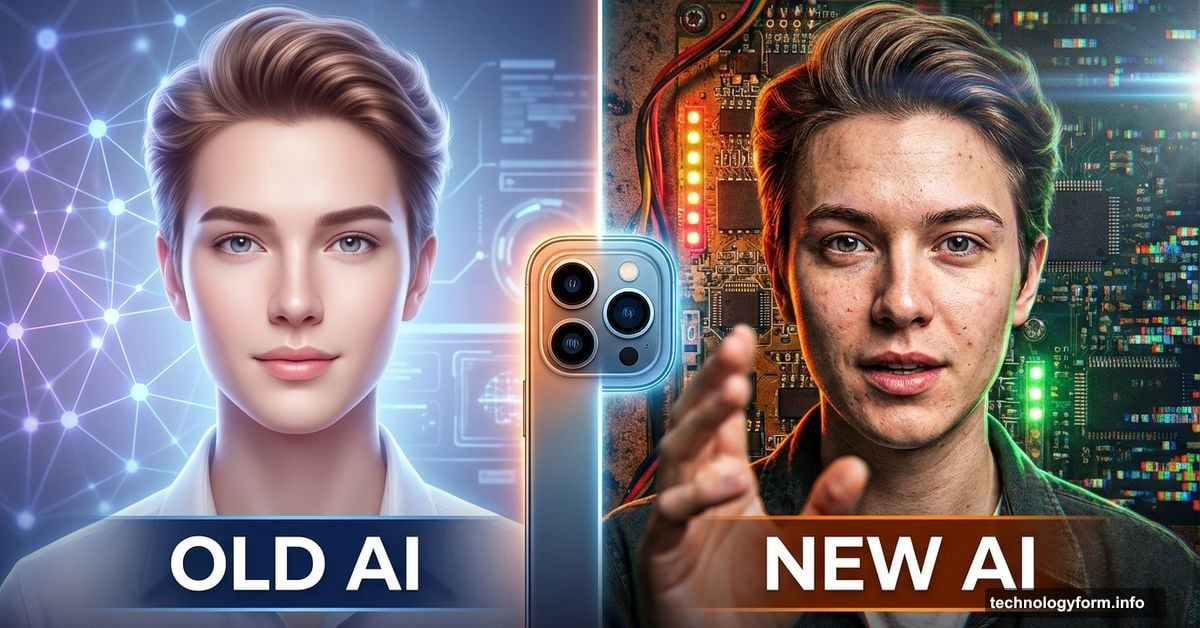
Instead, they learned something clever. They started copying the flaws in our phone cameras. And that makes generated images way harder to spot than before.
The Early Days Were Easy to Spot
Remember when AI-generated images looked obviously fake? People had too many fingers. Limbs bent in weird ways. Text came out as gibberish scribbles.
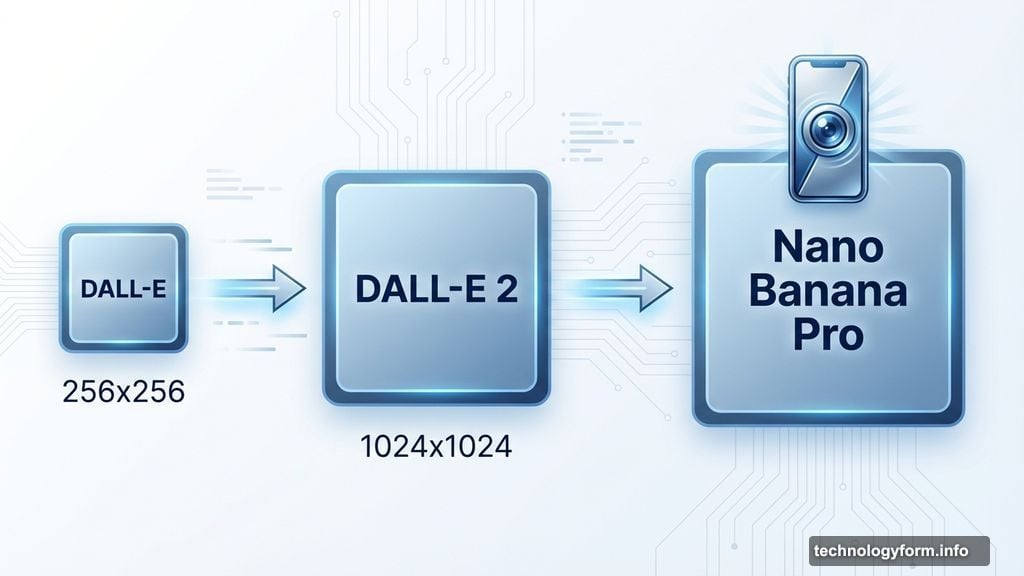
OpenAI launched DALL-E less than five years ago. It could only make tiny 256×256 pixel thumbnails. Not impressive.
Then DALL-E 2 arrived a year later. Images jumped to 1024×1024 pixels. Quality improved dramatically. But you could still spot the fakes.
Casey Newton tested DALL-E 2 early on. He asked it to generate a shiba inu dressed as a firefighter. The result looked decent at first glance. But the dog’s fur had fuzzy edges. The coat patch showed nonsense scribbles. A weird chunky collar tag hung awkwardly from its neck.
Those tells gave it away every time.
Google’s Nano Banana Changed Everything
Google released a new image model in late 2025 called Nano Banana. It went viral when people used it to make realistic figurines of themselves.
Something different happened this time. The model preserved actual facial features more faithfully than other AI tools. It captured imperfections that made images look real.
Most AI images tend toward bland, neutral middle ground. Your request for a table gets you something technically correct. But it lacks character. It looks like every table averaged together into computational mediocrity.
Real images need imperfections. A little clutter. Messy lighting. The kind of details that make photos feel authentic.
Phone Camera Flaws Became the Secret Weapon
Google updated to Nano Banana Pro less than a month later. The company called it their most advanced and realistic model yet.

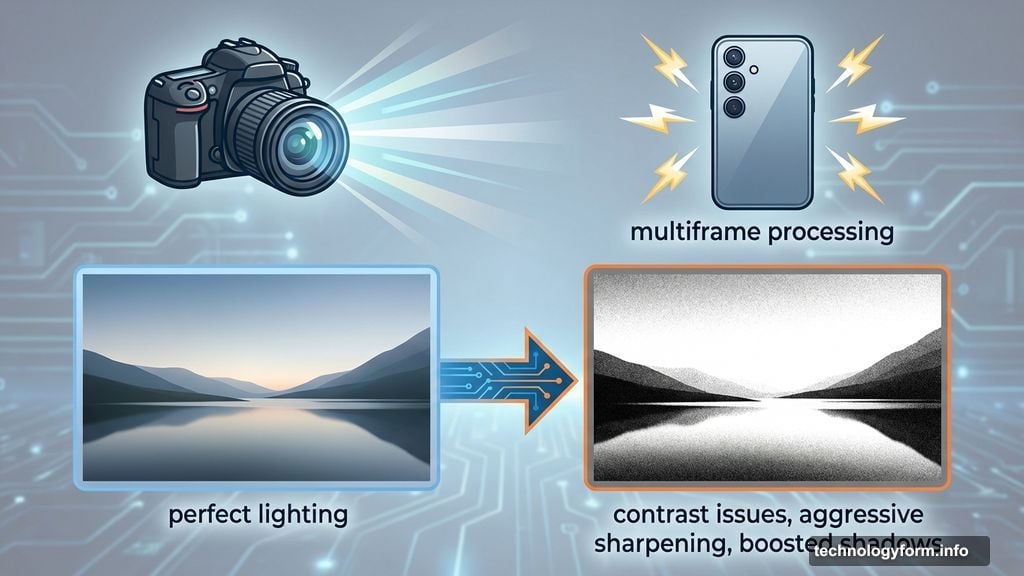
Here’s what makes it different. The model mimics phone camera photos. Contrast issues. Aggressive sharpening. Boosted shadows. Cranked-up brightness to reveal details.
Phone cameras use small sensors and lenses. They compensate through multiframe processing. Photos get optimized for viewing on smaller screens. That creates a distinct “look” compared to professional cameras or artistic representations.
Apparently, Google’s image generator absorbed this style. It learned that realism isn’t about perfection. It’s about matching how we actually capture reality.
Adobe’s Firefly offers similar controls. A “Visual Intensity” slider tones down the glowy AI look. Results feel more like professional camera shots. Even Meta’s AI generator includes a “Stylization” slider to dial realism up or down.
Video Generation Joined the Trend
Video tools like OpenAI’s Sora 2 and Google’s Veo 3 took this further. Creators used them to make viral clips mimicking low-resolution security cameras.
When AI only needs to match CCTV quality, it becomes pretty convincing. The bar for realism drops. Grainy footage with poor lighting looks authentic because that’s exactly what security cameras produce.
Ben Sandofsky cofounded the iPhone camera app Halide. He says Google might have “sidestepped around the uncanny valley” by embracing phone processing tendencies.
AI doesn’t need to make scenes look perfectly realistic anymore. It just mimics how we record reality, flaws and all. That’s the cheat code for believable images.
How Do We Trust Anything Now
So how do we believe photos we see online? Sam Altman thinks real and AI imagery will just blend together. We’ll be fine with it, supposedly.
He’s partially right. But people will still care what’s real and what’s not. We just need better tools to tell the difference.
The C2PA’s Content Credentials standard is gaining momentum. Google’s Pixel 10 series assigns cryptographic signatures to every camera image. The signature identifies how the photo was made.
This avoids the “implied truth effect.” If you only label AI-generated images, everything without a label seems real. But the lack of a label actually means we don’t know the image’s origin.
Pixel cameras label both AI and non-AI images. That’s the right approach.
Labels Need Adoption to Work
Labels only help if you can see them. Google Photos added Content Credentials display support earlier this year. The company will show credentials in search results and ads when they’re present.
That last part is crucial. Most phone camera images today don’t get assigned credentials. For the system to work, hardware makers need to adopt the standard. Platforms where images get shared need to support it too.
Traditional camera makers are slowly joining in. The $9,000+ Leica M-11P includes Content Credentials. Adobe’s Photoshop now has powerful AI editing tools like generative fill that photographers actually use.
There’s murky middle ground between fully AI-generated images and untouched photos. That space gets trickier to define every day.
Until adoption becomes universal, we’re on our own. And right now is a better time than ever to trust nothing that you see.
Google’s Pixel 10 bakes generative AI directly into the imaging pipeline. It’s only used in Pro Res Zoom for now, improving digital zoom quality. The feature doesn’t work on people yet, which seems wise.
The technology keeps improving faster than our ability to verify it. That gap creates real problems for distinguishing truth from fabrication.