OpenAI Chases $100B. That Valuation Is Insane
OpenAI wants to raise another $100 billion. At an $830 billion valuation.
Read that number again. $830 billion. That would make the ChatGPT maker worth more than most Fortune 500 companies. And it comes just months after OpenAI was valued at $500 billion in a secondary deal.
The Wall Street Journal broke the news Thursday, citing anonymous sources familiar with the talks. OpenAI aims to close the deal by the end of March 2026. Plus, the company plans to court sovereign wealth funds to participate.
The Math Stops Making Sense
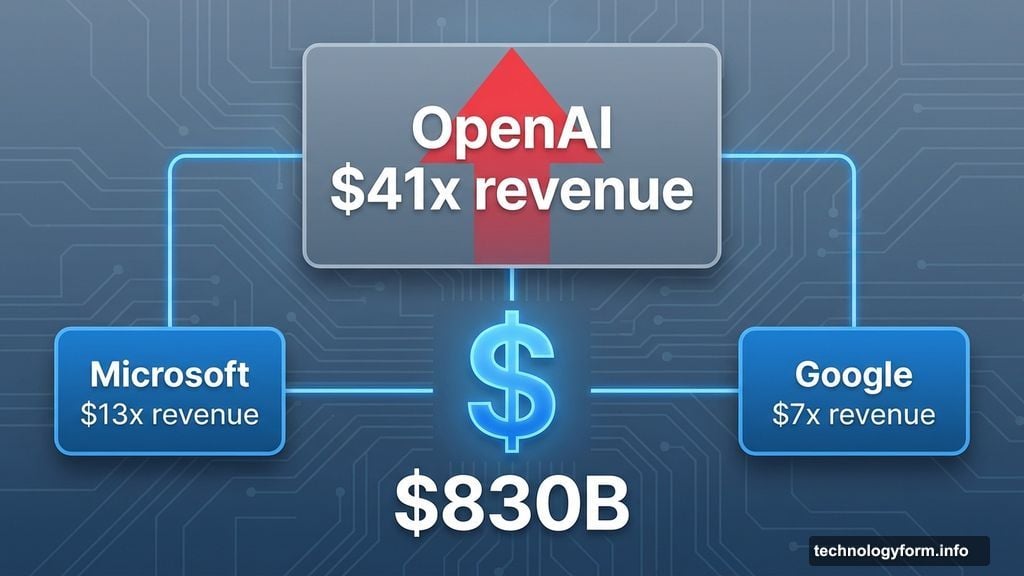
Let’s be clear about what this valuation means. OpenAI currently generates around $20 billion in annual revenue. So an $830 billion price tag values the company at roughly 41 times revenue.
For context, Microsoft trades at about 13 times revenue. Google sits around 7 times. Even at the peak of tech bubbles, valuations this extreme rarely stick.
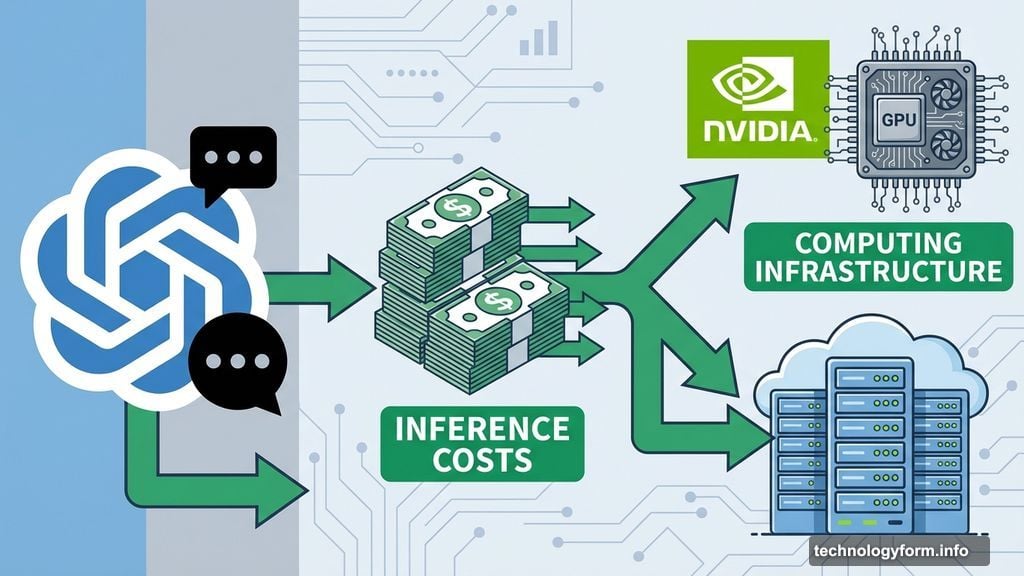
Moreover, OpenAI burns cash faster than almost any startup in history. The company spends billions on computing infrastructure, model training, and inference costs. Those expenses keep climbing as the company scales.
So where does all that money go? Mostly to Nvidia and cloud providers. OpenAI needs massive computing power to train models and serve millions of ChatGPT users. And contrary to earlier reports suggesting cloud credits funded much of this, the company now pays mostly in actual cash.
Competition Forced OpenAI’s Hand
The funding push comes as rivals close the gap. Anthropic raised billions and released Claude models that compete directly with GPT-4. Google integrated Gemini across its product suite and made it free for most users.
Meanwhile, Meta released Llama models as open source. That gives developers powerful AI tools without paying OpenAI’s API fees. And smaller startups like Mistral and Cohere offer specialized models at lower prices.
OpenAI can’t afford to slow down. The company recently launched o1, its reasoning-focused model. It expanded ChatGPT’s capabilities with web search and file analysis. It built tools for developers and enterprises. Each move requires enormous capital.
But here’s the problem. Spending billions to maintain market leadership only works if the market keeps growing. And recently, investor sentiment around AI has cooled significantly.
The AI Spending Bubble Shows Cracks
Tech giants poured hundreds of billions into AI infrastructure this year. Amazon, Microsoft, Oracle, and Google all announced massive capital expenditure plans. Most justified this spending by promising revolutionary AI capabilities.
Yet doubts are emerging. Can this debt-fueled investment pace continue? Will AI actually generate enough revenue to justify these costs? So far, the answer remains unclear.
Furthermore, chip shortages threaten to constrain the entire industry. Memory chip supplies can’t keep up with demand for AI accelerators. That bottleneck could slow down everyone, including OpenAI.
Some analysts now question whether current AI valuations reflect reality or hype. After all, we’ve seen this movie before. The dot-com bubble crashed when investors realized many internet companies burned cash without viable business models.
OpenAI Has Other Options Brewing
The company isn’t putting all its eggs in one basket. Rumors suggest OpenAI is preparing for an IPO that could raise tens of billions more. That would give public market investors a chance to buy shares.
Additionally, reports indicate Amazon might invest $10 billion in OpenAI. That deal would also give the AI lab access to Amazon’s custom AI chips. It’s a win-win: Amazon gets closer ties to the hottest AI company, and OpenAI gets both capital and compute.
OpenAI already has more than $64 billion in the bank, according to PitchBook. So why raise another $100 billion? Because the company committed to spending trillions on AI development. That’s not a typo. Trillions.
CEO Sam Altman has repeatedly said that building artificial general intelligence (AGI) requires unprecedented investment. He’s making big bets that the technology will eventually justify the costs. But that remains speculative.
The Real Risk Everyone Ignores
OpenAI’s strategy depends on one critical assumption: that AI capabilities will keep improving fast enough to generate massive revenue. If model improvements slow down, or if customers decide current AI is “good enough,” the company faces trouble.
Plus, OpenAI operates at a scale where even small miscalculations cost billions. The company reportedly spends over $700,000 daily just to run ChatGPT. That’s before counting research costs, salaries, and infrastructure expansion.
And let’s not forget the regulatory risk. Governments worldwide are scrutinizing AI companies more closely. New regulations could constrain OpenAI’s business model or force expensive compliance measures.
Then there’s the talent war. OpenAI competes with Google, Meta, and others for the same AI researchers. Salaries for top AI talent now reach millions annually. Retaining those employees requires constant raises and equity grants.
What This Means for AI’s Future
If OpenAI successfully raises $100 billion at an $830 billion valuation, it sends a clear message: investors still believe in AI’s transformative potential. That could trigger another wave of AI investments across the industry.
However, it also raises the stakes dramatically. OpenAI must now deliver results that justify this astronomical valuation. Anything less risks a massive correction that could damage the entire AI sector.
Other AI startups will watch closely. If OpenAI can command this valuation, perhaps they can too. That could inflate valuations across the board, creating conditions for a bubble.
But here’s what bugs me most. These valuations assume AI will reshape every industry and generate trillions in value. Maybe that’s true. Or maybe we’re repeating the same mistakes we made with crypto, the metaverse, and countless other “next big things.”
Time will tell. But at $830 billion, OpenAI has a lot to prove.