This AI Dating App Gets You Out on Real Dates. Fast.
Dating apps killed actual dating. Endless swiping. Ghost-filled chat threads. Months of messaging that goes nowhere.
Known thinks voice AI can fix that mess. And investors just bet $9.7 million they’re right.
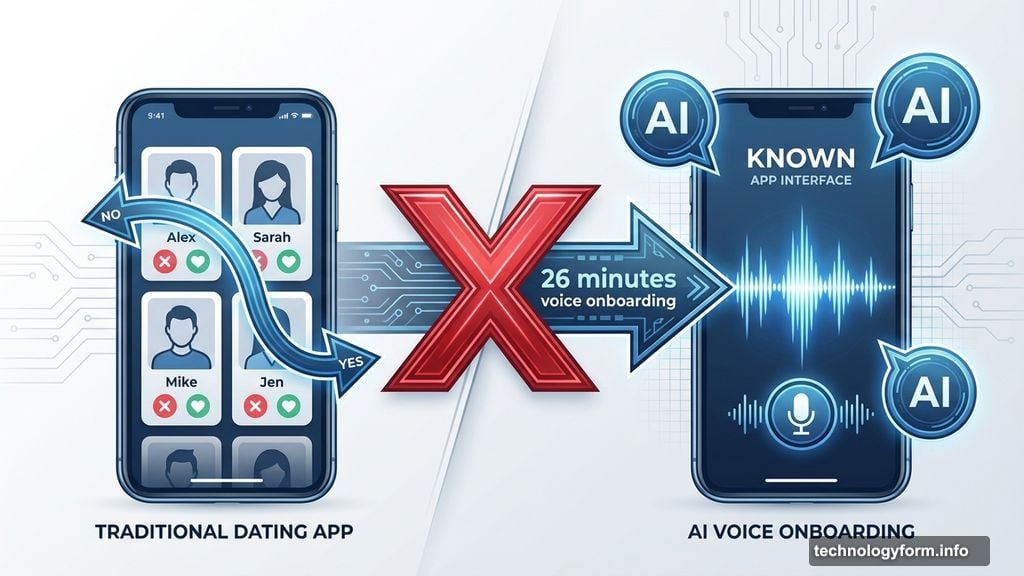
The 26-Minute Onboarding Nobody Minds
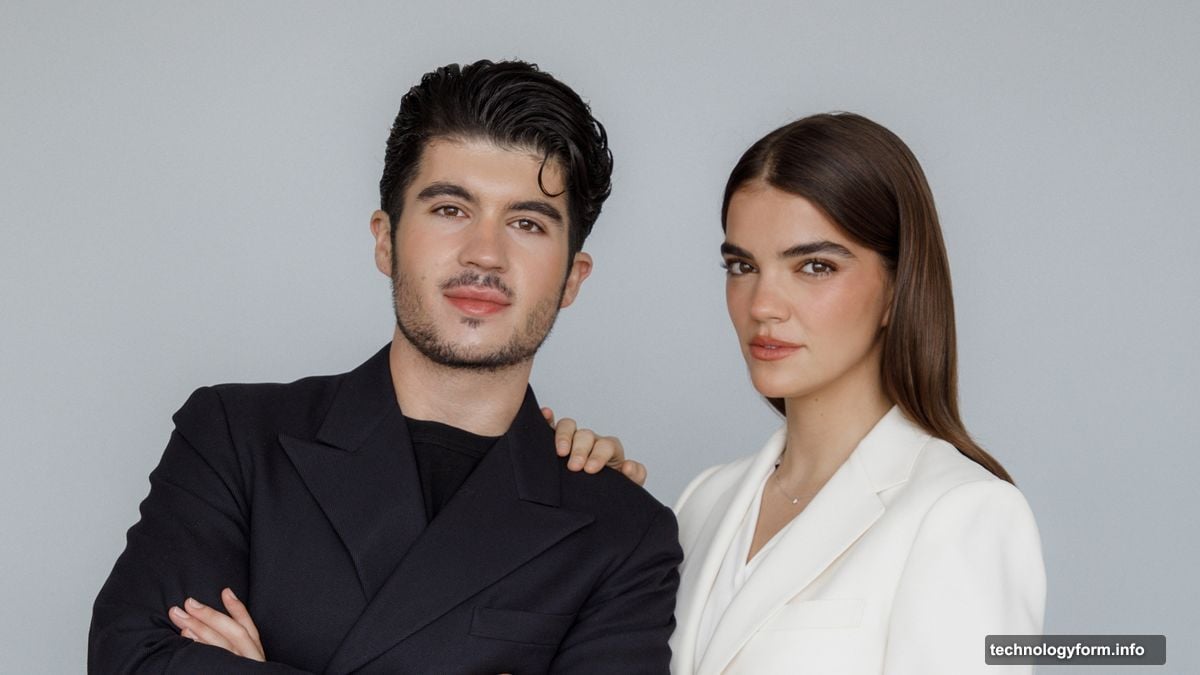
San Francisco founders Celeste Amadon and Asher Allen stumbled onto something weird. They built voice AI onboarding for their restaurant booking app. Users talked for 26 minutes on average.
That’s insane. Most apps lose people after 90 seconds.
But people loved it. They shared details they’d never type in a profile. The AI asked follow-up questions that felt natural. Conversations flowed instead of feeling like a tedious form.
So Amadon and Allen pivoted. They dropped the restaurant app and built Known instead.
Their thesis? If AI knows enough about someone through conversation, it can suggest matches that actually make sense. No swipe fatigue. No rejection loops. Just dates that happen.
80% Match Rate Beats Everything Else
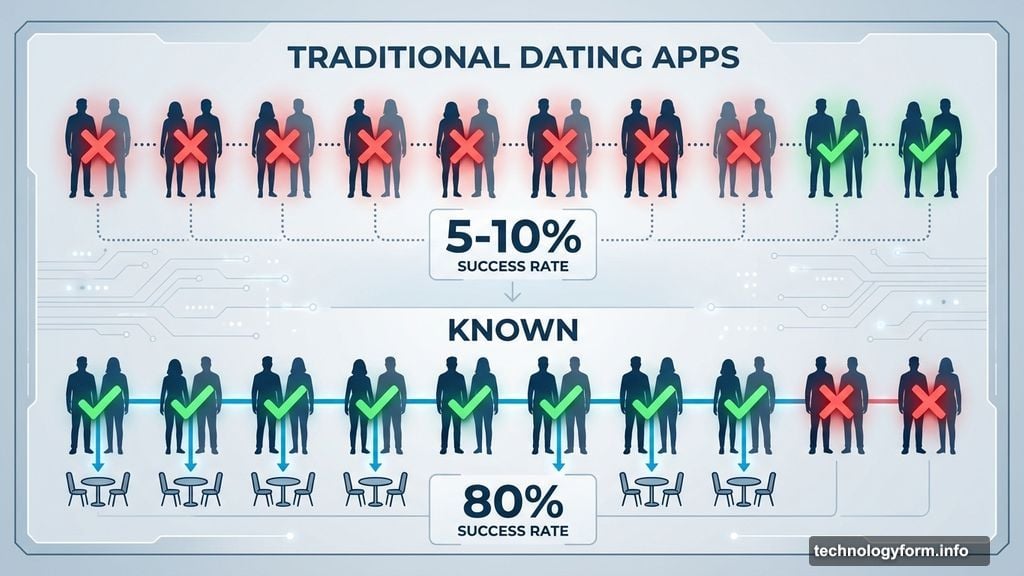
Known’s beta numbers in San Francisco tell the story. Four out of five introductions led to in-person dates.
Compare that to traditional dating apps. Most matches never meet. Chat threads die. People ghost. The conversion rate from match to actual date hovers around 5-10% on most platforms.
Known’s 80% success rate caught attention fast. Forerunner led the $9.7 million round, marking their first-ever dating app investment. NFX, Pear VC, and Coelius Capital joined in.
What convinced them? The voice AI captures nuances that profiles miss.
“In a conversation, you can get a lot of those nuances out, but in the past, the conversation required a $10,000 matchmaker,” said Eurie Kim, partner at Forerunner.
Now AI delivers that personalized matching at scale. Without the five-figure price tag.
How Voice Changes Everything
Known’s onboarding replaces forms entirely. Users talk to AI instead of typing responses.
The difference? People edit written answers. They overthink. They present curated versions of themselves.
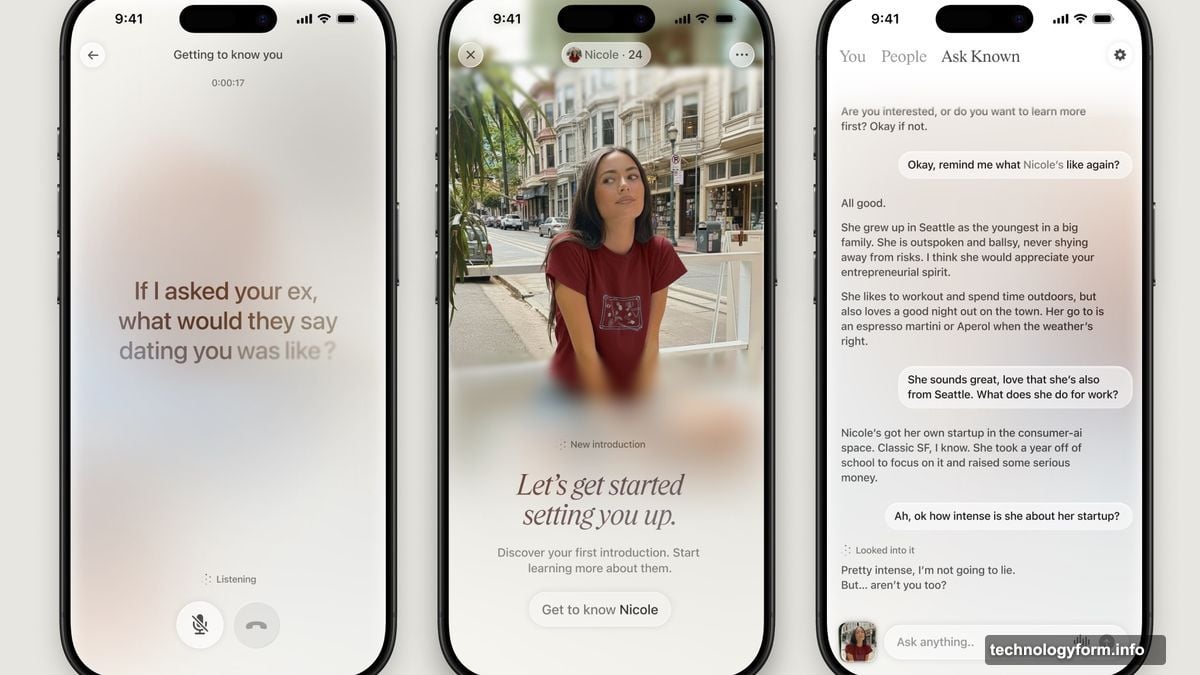
Voice feels different. More honest. More spontaneous.
Plus, the AI adapts in real time. If someone mentions moving to San Francisco recently, it asks about their experience so far. If they love hiking, it digs into favorite trails.
One user talked for an hour and 38 minutes during onboarding. That’s not a bug. That’s the product working.
After onboarding, the AI suggests matches. Users can chat with AI agents about those profiles. Ask questions. Get context. Then tap “interested” if someone appeals to them.
When two people match, the clock starts ticking. They have 24 hours to accept the introduction. Another 24 hours to agree on a date.
No endless chatting. No ghosting limbo. Just momentum toward meeting in person.
Restaurant Picks and Calendar Integration
Known didn’t completely abandon the original restaurant idea. The app suggests date spots based on user preferences collected during onboarding.
It also integrates with calendars. Users indicate their availability. The AI coordinates scheduling.
After dates, users provide feedback. The AI refines future recommendations based on how things went.
Currently, Known charges $30 per successful date during beta. But pricing remains fluid. The team plans to experiment with different models once they launch publicly.
Fighting the Loneliness Epidemic
Amadon sees dating apps as more than a business opportunity. She calls loneliness her generation’s biggest problem.
“There’ve been a million pieces written about the loneliness epidemic in the U.S. And I do really think that it’s our generation’s largest problem,” said Amadon, who dropped out of Stanford with Allen to build Known.
Both founders bring unusual backgrounds. Amadon worked in politics. Allen built product at Phia, an AI shopping app.
Their team now includes three full-time engineers, four go-to-market people, and various contractors. The new funding will expand headcount as they prepare to launch beyond San Francisco early next year.
Competition Heats Up
Known isn’t alone in rethinking dating apps. Overtone uses AI matching. Justin McLeod, Hinge’s former CEO, launched a new AI-powered app. Even incumbents like Tinder, Bumble, and Hinge added AI features.
Amadon welcomes the competition. More startups mean the industry is ready to move past swipe-based models.
“I’ve been so happy to see a lot of people building in the space because I think it shows that it’s time to shift away from a swipe-based model,” she said.
Most competitors take different approaches anyway. Some focus on chatbot companions. Others emphasize profile optimization. Known bets on voice-first onboarding and fast paths to real dates.
The Real Test Ahead
San Francisco’s tech-savvy singles might embrace voice AI easily. Other markets could prove tougher.
But the fundamental insight holds. People want real connections. They’re tired of endless swiping. They’ll pay for services that actually work.
Traditional matchmakers charge thousands because personalized matching requires expertise and time. AI could deliver similar results at consumer prices.
If Known’s 80% success rate holds as they scale, they’ve cracked something meaningful. Dating apps might finally help people date again.
The irony? It took AI to make dating feel human.