AI Can’t Turn On the Lights. Smart Homes Broke in 2025
My coffee machine refused to brew this morning. Again.
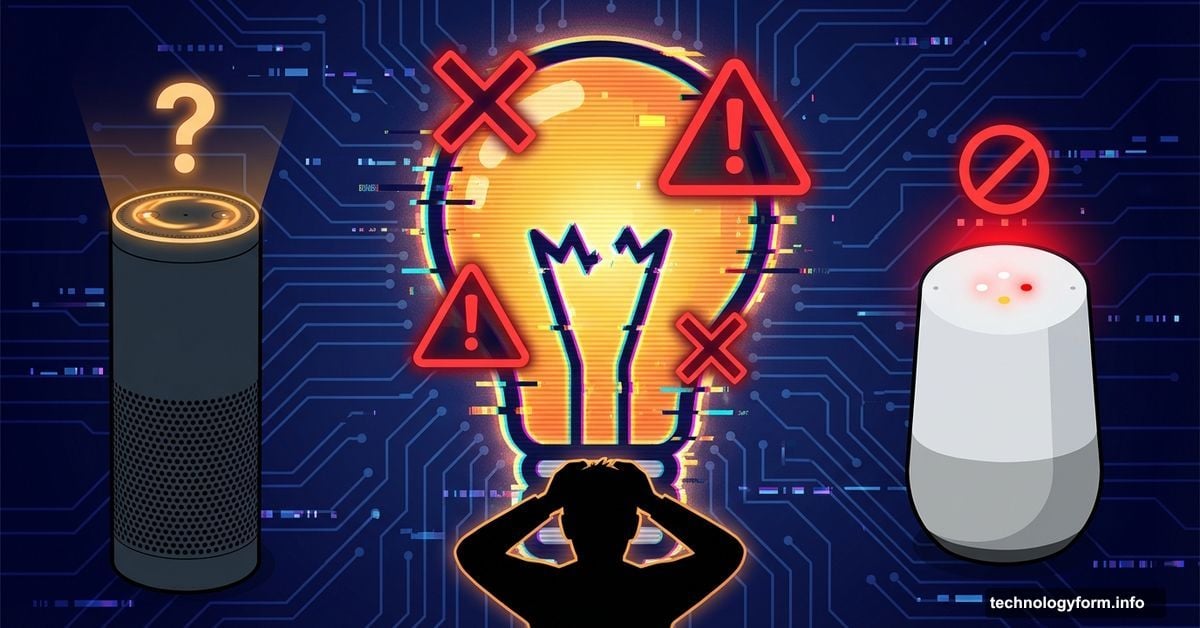
I asked nicely. Used the exact same words that worked yesterday. But Alexa Plus just shrugged and said it couldn’t help. This happens almost daily now since Amazon upgraded its voice assistant with generative AI.
It’s 2025. AI supposedly transforms industries and powers breakthroughs. Yet mine can’t reliably make coffee or flip a light switch. Something went terribly wrong this year.
The Promise Was Beautiful
Back in 2023, Amazon’s then-head of devices painted an exciting picture. New generative AI would understand natural language. It would know your devices. It would connect hundreds of services seamlessly.
Setting up smart homes would get easier. Controlling them would feel natural. The complexity that kept normal people away would vanish.
Plus, the assistant would be proactive. It would learn your patterns. Adjust things before you asked. Create that ambient intelligence everyone talks about.
Instead, we got assistants that struggle with basics while occasionally surprising us with complex requests.
What Actually Happened
The new AI-powered assistants are wildly inconsistent. They understand casual conversation better than their predecessors. They answer random questions more accurately. They feel more human.
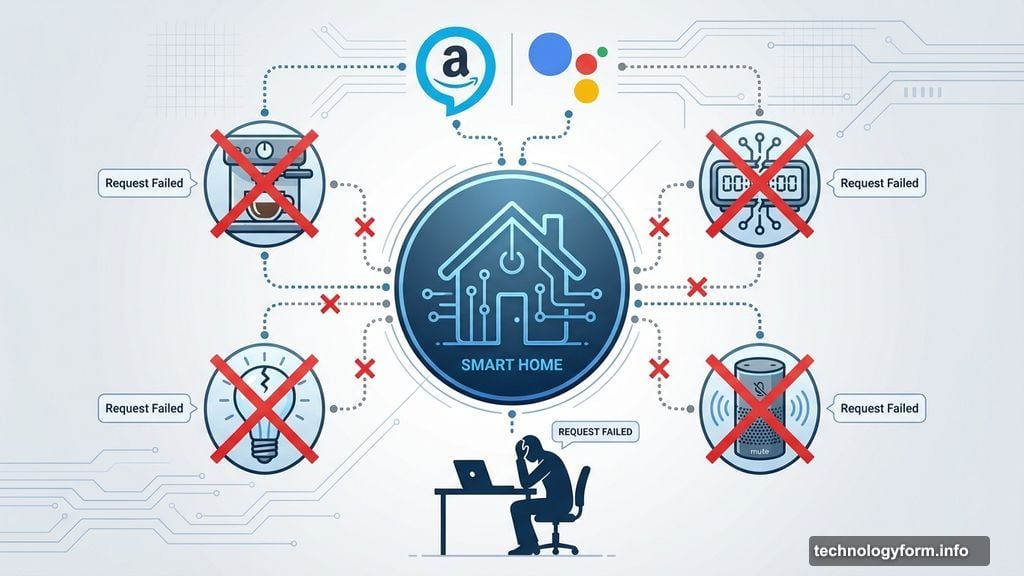
But they fail at simple tasks constantly. Turning on lights. Setting timers. Playing specific songs. Running routines that worked perfectly for years.
Online forums overflow with frustrated users. Support tickets pile up. Amazon and Google both acknowledge the problems publicly. Even ChatGPT can’t consistently count or tell time.
So why ship broken products? Because we’re all beta testers now.
Large Language Models Weren’t Built for This
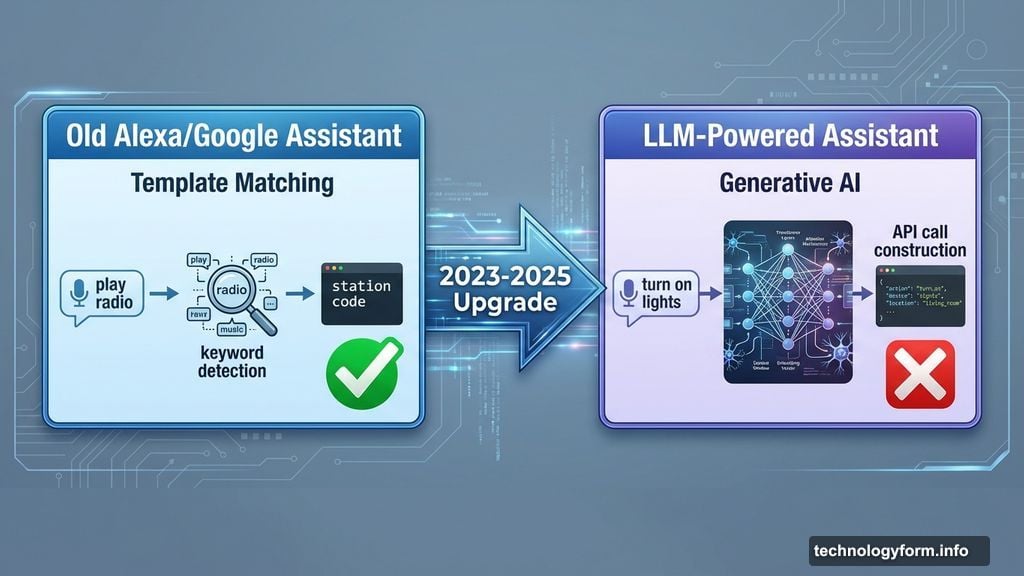
The old Alexa and Google Assistant used template matching. Hear “play radio,” expect station code next. Simple. Predictable. Boring but reliable.
Large language models work completely differently. They bring randomness by design. That flexibility makes them better conversationalists. It also makes them unreliable for repetitive tasks.
Ask the same question twice, get two different answers. Sometimes that’s valuable. Sometimes it means your lights won’t turn on because the AI overthought your request.
Moreover, these models now have to compose entire API calls from scratch every time. The old systems just waited for keywords. New ones must construct complex code sequences that APIs can recognize.
That’s another point where mistakes happen. And they happen often.
Why Companies Abandoned Working Technology
Because LLMs offer exponentially more potential. The old systems could never chain services together dynamically. They couldn’t understand complex relationships between tasks. They had zero chance of becoming truly agentic assistants.
Tech companies want assistants that invent solutions on the fly. That generate if-then sequences based on natural conversation. That anticipate needs instead of waiting for commands.
Those capabilities require starting over with new technology. Even if that technology doesn’t work as well yet.
So they made a calculated bet. Accept reduced reliability today for transformative capabilities tomorrow. Push users to adopt systems that learn from real-world use.
Multiple Models Don’t Fix The Core Problem
Google’s solution splits Gemini into two systems. Gemini Live handles complex tasks. Tighter-constrained Gemini for Home manages basic controls. Amazon uses multiple models too.
But this creates inconsistency and confusion. Users never know which model handles which request. The handoffs between models introduce new failure points.
Plus, nobody’s figured out how to train LLMs to know when precision matters versus when creativity helps. Even “tame” models still get simple things wrong.
Want a chatbot that never adds randomness? Tamp it all down. But then it can’t have natural conversations or tell creative bedtime stories. You’re making tradeoffs no matter what.
The Bigger Question Nobody’s Asking
If AI can’t turn on lights reliably, why trust it with complex tasks?
You have to walk before you can run. These struggles in smart homes might signal broader problems with deploying LLM-powered agents everywhere.
Tech companies are known for moving fast and breaking things. They’re pushing into spaces where the technology isn’t ready. Releasing products before they work consistently.
The story of language models has always involved taming them over time. Making them more reliable. More trustworthy. But companies keep pushing into new areas where models struggle.
Smart Home Casualties Mount
Meanwhile, enthusiasts who built elaborate smart homes face daily frustrations. Routines that took hours to perfect now fail randomly. Voice commands that always worked suddenly don’t.
Some gave up and went back to manual switches. Others abandoned voice control entirely. The reliability that made smart homes useful vanished overnight.
New users trying smart home tech for the first time encounter broken experiences. They assume smart homes just don’t work. They’re not wrong.
The technology lost trust this year. Rebuilding that trust will take time and consistent performance. Neither seems likely soon.
Resources Are Limited
Researchers and companies have limited resources. They can spend time making lights turn on reliably. Or they can chase more exciting capabilities with better profit potential.
The path forward is obvious. Deploy AI in the real world. Let it learn from millions of users. Improve gradually over time while focusing resources on breakthrough capabilities.
That means years of users wrestling with inconsistent technology. Years of frustration for those who just want coffee without negotiation.
The cost-benefit ratio might favor companies. It doesn’t favor users.
Where This Leads
Over time, these systems will probably improve. Models become more reliable as companies invest in taming them. Basic functions will eventually work consistently again.
But we’re years away from that. Early access phases last indefinitely. Users become unpaid testers. The smart home remains broken while companies chase artificial general intelligence.
I still believe in the vision. Assistants that truly understand context and chain actions intelligently would transform homes. But we needed to nail basics first before chasing breakthroughs.
Instead, companies threw out working technology for flashy demos. They prioritized conversational ability over reliability. They shipped products knowing they didn’t work consistently.
My coffee machine sits idle most mornings now. I gave up asking and just press the button manually. Progress.