Google’s Gemini Turns 2026 Goals Into Hand-Drawn Vision Boards
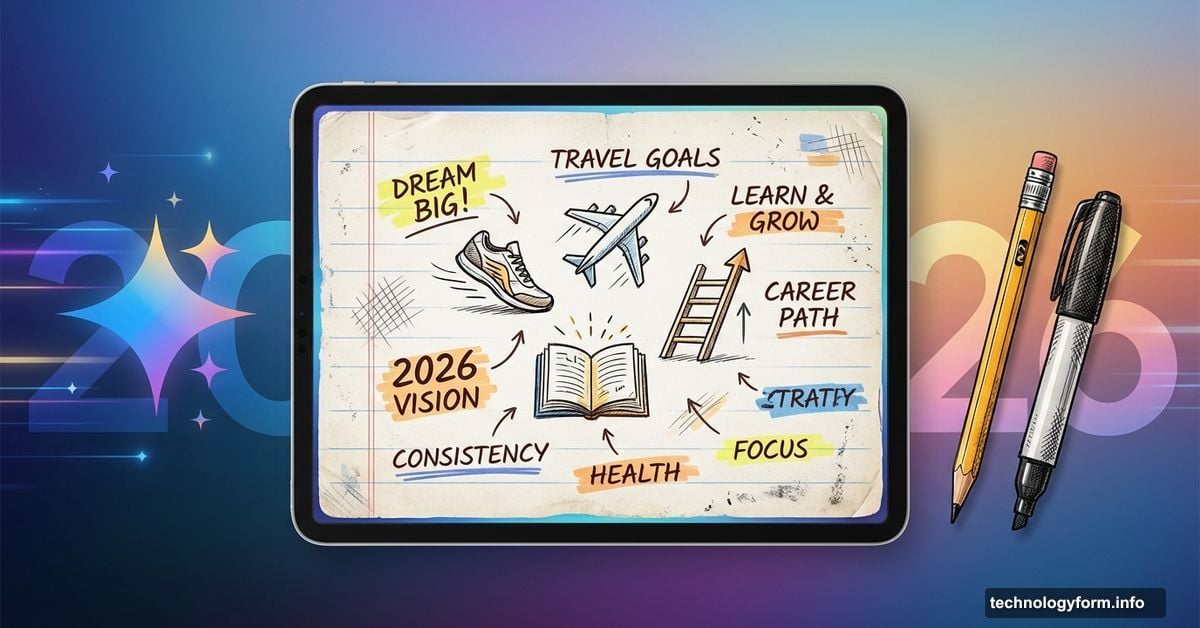
New year resolutions just got visual. Google’s Gemini AI now transforms future goals into personalized, illustrated vision boards that look hand-drawn.
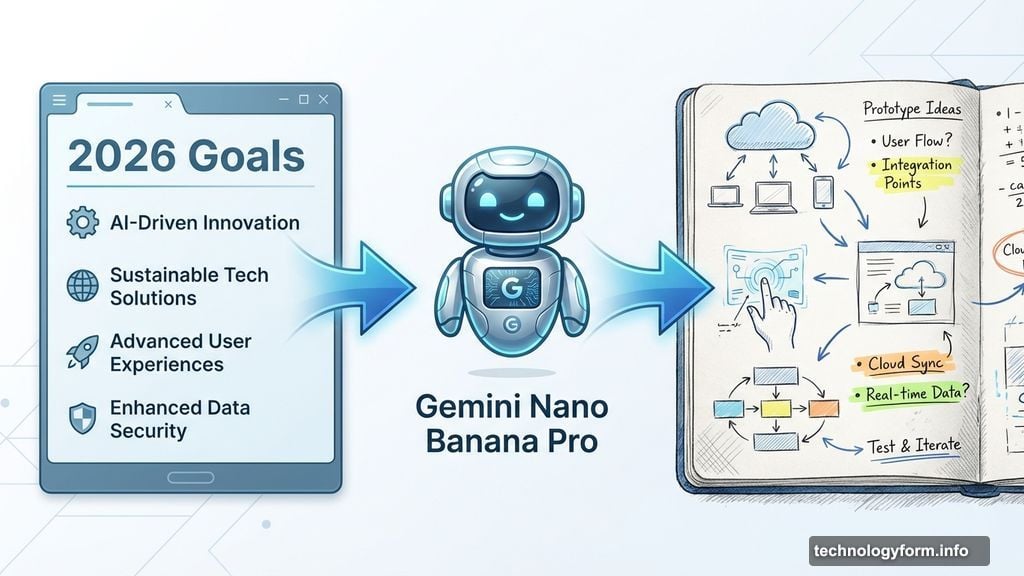
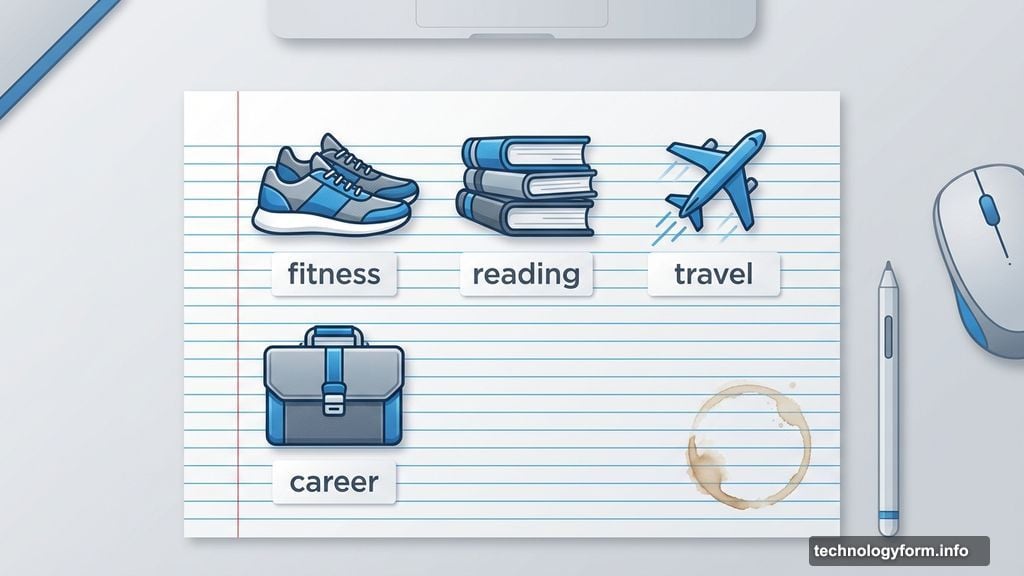
The approach ditches traditional text lists. Instead, users describe their 2026 aspirations to Gemini’s Nano Banana Pro tool. The AI generates custom illustrations mixing notebook aesthetics, hand-drawn elements, and personal annotations.
How the Visual Prompt Actually Works
Gemini’s prompt system centers on specificity. Users input goals ranging from fitness milestones to career changes to travel plans. The AI arranges these into knolling-style layouts—where objects appear organized from above.
But here’s where it gets interesting. The generated images deliberately avoid polished perfection. Cross-hatching textures, highlighter effects, and imperfect handwritten notes create a journal aesthetic. So even though AI generates everything, the output mimics personal sketchbook pages.
Google encourages style experimentation too. Magazine cutout aesthetics, notebook paper textures, and various illustration approaches let users match visuals to personal taste. Plus, the shareability factor turns goal-setting into a social exercise rather than private reflection.
Beyond Productivity Into Creative Reflection
This marks a shift in how companies position generative AI tools. Most AI applications focus on efficiency—writing emails faster, summarizing documents, generating reports. Gemini’s vision board feature targets something different.
Instead of saving time, it adds creative expression to everyday planning. The tool transforms routine goal-setting into artistic storytelling. That positions AI as a creativity partner rather than just a productivity assistant.
The timing matters too. Early January sees millions of people setting resolutions. Most abandon them by February. Visual, shareable goal boards might increase commitment through social accountability and emotional investment.
Moreover, the hand-drawn aesthetic addresses a common AI criticism. Many users complain generative AI output feels sterile and corporate. By mimicking imperfect, personal sketches, Gemini makes AI-generated content feel more human and relatable.
Knolling Layouts Meet Personal Planning
The knolling arrangement technique comes from photography and design. Objects get arranged flat and parallel, photographed from directly above. Think neatly organized workspace flat-lays on Instagram.
Gemini applies this visual organization to abstract goals. Fitness targets, reading lists, travel destinations—all arranged as if physical objects on a desk. This spatial layout helps users see connections between different life areas and spot potential conflicts in time or resources.
The notebook paper texture adds another layer. Instead of clinical digital design, the AI mimics college-ruled paper, margin lines, and even coffee stains. These imperfections make goals feel more achievable and less intimidating.
The Shareability Calculation
Google explicitly encourages users to share their vision boards. The Gemini announcement asked people to post results in replies. This social component transforms private goal-setting into community participation.
Why push sharing? Two likely reasons. First, social commitment increases follow-through. When you publicly declare intentions, accountability pressure helps maintain motivation. Second, shared examples showcase Gemini’s capabilities organically. Every posted vision board becomes user-generated marketing.
The strategy mirrors successful social features from fitness apps and habit trackers. Public progress sharing drives engagement and retention. Google applies this proven approach to AI tool adoption.
What This Reveals About AI Direction
Most tech companies position generative AI as a work tool. Write better emails. Summarize meetings. Generate code. Google’s vision board feature indicates a different strategy—AI for personal enrichment and creative expression.
This approach potentially broadens AI appeal beyond professionals. Someone who doesn’t need help with work documents might still want help visualizing personal goals. By targeting lifestyle use cases, Google expands the potential user base for Gemini.
The emphasis on imperfection also matters. As AI-generated content floods the internet, many users crave authenticity. Hand-drawn aesthetics and deliberately imperfect outputs signal humanity even in AI-created work.
Practical Questions Remain
The announcement raises several unanswered questions. Does the vision board feature actually improve goal completion rates? Do people find AI-generated personal illustrations meaningful or gimmicky?
Plus, the shareable aspect creates potential privacy concerns. Goal visualization might reveal personal information users wouldn’t otherwise share publicly. Financial targets, health struggles, relationship aspirations—all potentially exposed through shared vision boards.
The feature also assumes users know what they want from 2026. Many people struggle identifying meaningful goals. Gemini helps visualize aspirations but doesn’t help discover them. That’s still human work.
Creative AI Meets Self-Help Culture
This tool sits at the intersection of two massive trends: generative AI adoption and the self-optimization movement. Vision boards have existed for decades as manifestation tools. Gemini digitizes and personalizes the practice.
Whether visualization actually helps achieve goals remains debated. Some research suggests visual goal-setting improves motivation. Other studies find limited real-world impact. But the widespread popularity of vision boards, bullet journals, and planning systems shows clear demand for structured reflection tools.
Google’s betting that combining AI capabilities with established self-help practices creates something users actually want. Not productivity. Not efficiency. Just a more engaging way to think about the future.
The approach feels refreshingly different in the AI space. Most tools promise to do things for you. Gemini’s vision board feature helps you think about what you want to do yourself. That’s a subtle but meaningful distinction.