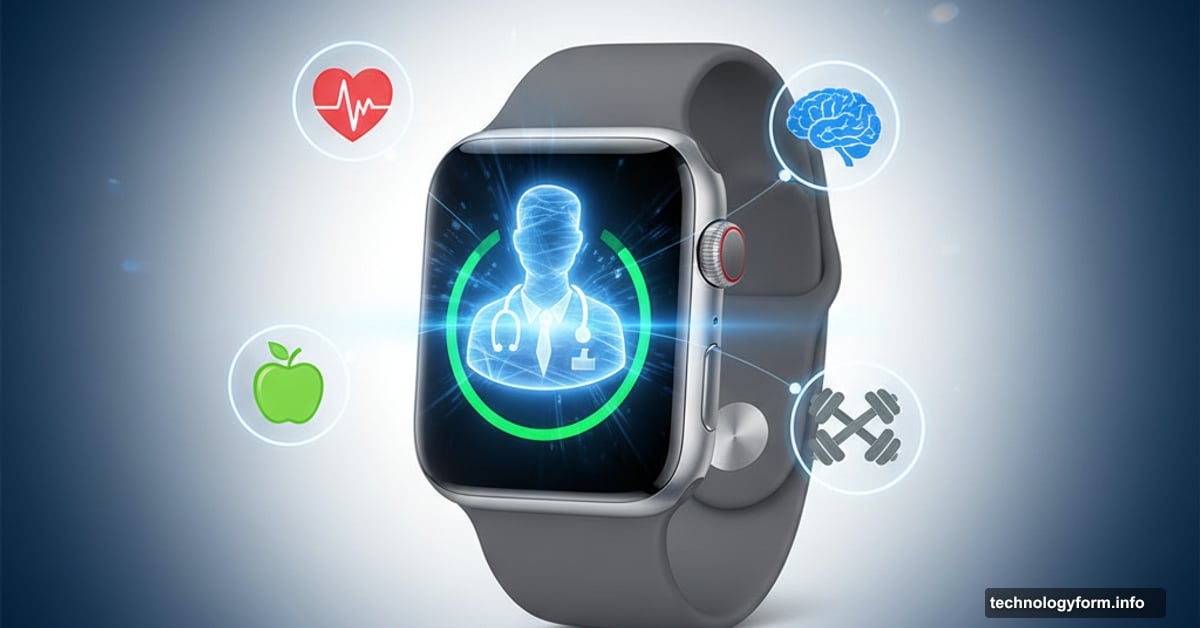
Apple’s Health+ With AI Doctor Could Launch in 2026
Apple’s health ambitions just got serious. The company quietly reorganized its health team under services leadership, and that signals something big is coming.
Mark Gurman reports Apple moved its entire health and fitness division to work directly under Eddy Cue, head of services. This shift happened as COO Jeff Williams plans retirement. But the timing suggests more than just corporate reshuffling.
Apple appears ready to launch Health+, a subscription service that could change how millions monitor their wellbeing. The target date? Sometime in 2026, likely bundled with iOS 27.
Your Personal AI Health Assistant
Health+ centers around an AI-powered advisor that studies your data and offers personalized recommendations. Think of it as having a health consultant in your pocket.
The AI monitors information from your Apple Watch, iPhone, and compatible third-party devices. It tracks patterns in your heart rate, sleep quality, activity levels, and more. Then it provides specific guidance tailored to your situation.
For example, say your heart rate shows concerning patterns. The AI might flag potential risks and serve up educational videos about heart disease. Next, it could suggest workout plans and nutrition changes designed to improve cardiovascular health.
The system won’t stop at physical fitness either. Plans reportedly include mental health support and physical therapy features down the line. So this goes way beyond counting steps or logging workouts.
Smart Food Tracking That Actually Helps
Current health apps make food logging tedious. You manually enter every meal, estimate portion sizes, and hope you’re close to accurate.
Health+ aims to simplify that process dramatically. The service will include intelligent food tracking that helps you understand what you’re eating and why it matters. Plus, it’ll create nutrition plans based on your specific health goals and current metrics.
The AI assistant can connect the dots between your eating habits and health outcomes. Maybe your energy crashes every afternoon. The system might identify that you’re not eating enough protein at lunch. Then it’ll suggest specific meal adjustments.
This practical, personalized approach beats generic calorie counting. Instead of just telling you to eat less, it explains what to eat and when based on your body’s actual responses.
Exercise Guidance That Adapts to You
Generic workout plans assume everyone responds the same way to exercise. They don’t.
Health+ will analyze how your body actually responds to different activities. Heart rate recovery, sleep quality changes, and energy levels all factor into the recommendations. The AI learns what works for your specific physiology.
If high-intensity training leaves you exhausted for days, the system will notice. It might suggest lower-intensity options that still deliver results without wrecking your recovery. Or if you’re crushing your current routine without enough challenge, it’ll push you harder.
The goal is optimization based on real data, not cookie-cutter programs copied from fitness magazines.
Questions That Need Answers
Apple hasn’t confirmed pricing yet. Fitness+ currently costs $9.99 monthly or $79.99 annually. Health+ likely commands similar or higher fees given the advanced AI features.
Will these services merge? Right now, no indication exists that Fitness+ and Health+ will combine. But Apple could bundle them under its One subscription plan alongside Music, TV+, Arcade, and iCloud storage.

Privacy matters enormously with health data. Apple has strong encryption practices, but an AI assistant analyzing your medical information creates new concerns. Hopefully, detailed privacy controls launch alongside the service.
The question of accuracy also looms large. AI health advice sounds helpful until it gives bad recommendations. Apple needs bulletproof systems that know when to defer to actual medical professionals.
The Bigger Health Tech Picture
Tech companies are racing to dominate personal health monitoring. Google, Samsung, and others push deeper into wellness features with every product cycle.
Apple’s advantage comes from its ecosystem. The company controls the hardware, software, and now wants to own the services layer too. That vertical integration enables tighter data connections and potentially better recommendations.
However, subscription fatigue is real. Consumers already juggle multiple monthly fees for streaming, storage, productivity tools, and more. Another $10-15 monthly charge faces resistance, especially for health features people might view as optional.
The success of Health+ depends on delivering clear, measurable value. If the AI assistant genuinely helps people lose weight, sleep better, or avoid health problems, subscriptions will follow. If it feels like glorified step counting with a chatbot, adoption will disappoint.
Apple betting big on health services makes strategic sense. The company needs new revenue streams as iPhone sales plateau. Services provide recurring income that smooths out hardware cycles.
Plus, health represents a massive market opportunity. Americans spent over $4 trillion on healthcare in 2023. Even capturing a tiny fraction of that spending would represent billions in new revenue for Apple.
The real test comes when Health+ actually launches. Will people trust AI with health advice? Will the recommendations actually improve lives? And will Apple navigate the complex regulatory landscape around medical claims?
We’ll find out in 2026 when this service presumably goes live. For now, the team restructuring suggests Apple is serious about making health a cornerstone of its services strategy.