Federal Agencies Now Draft Safety Rules With AI. What Could Go Wrong?
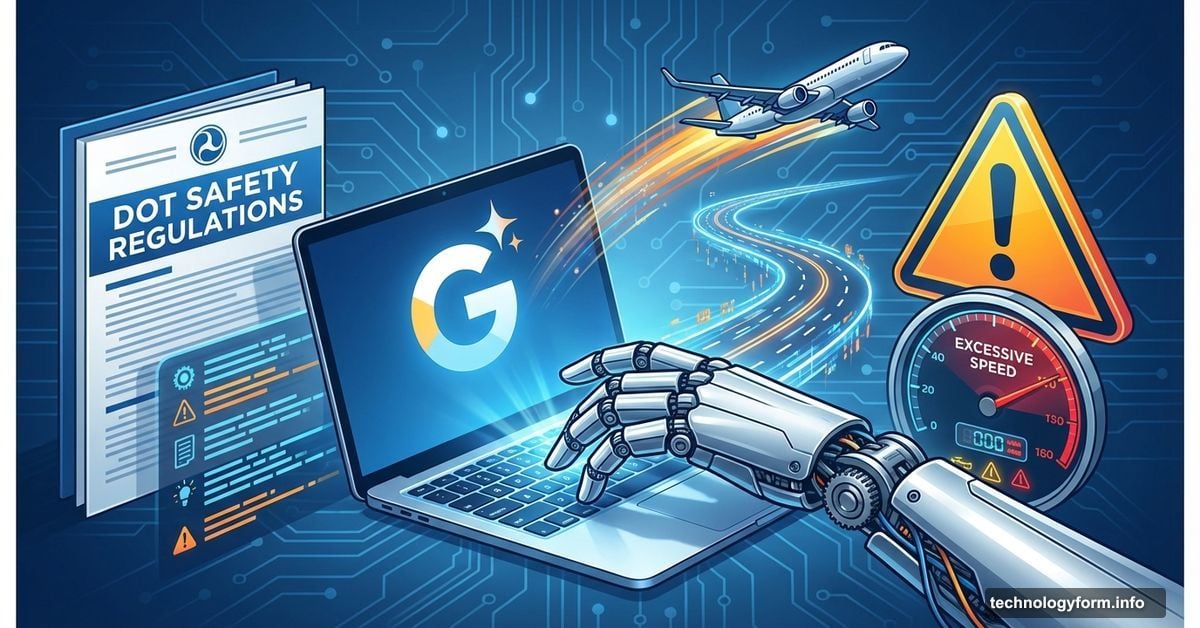
The Department of Transportation just started using Google Gemini to write regulations that keep you safe on planes, trains, and highways. Yes, really.
ProPublica broke the story last month. DOT staffers received a memo about AI’s “potential to revolutionize” how they draft rules. But here’s the unsettling part: agency leadership doesn’t seem worried about quality. They just want speed.
Twenty Minutes to Draft Aviation Safety Rules
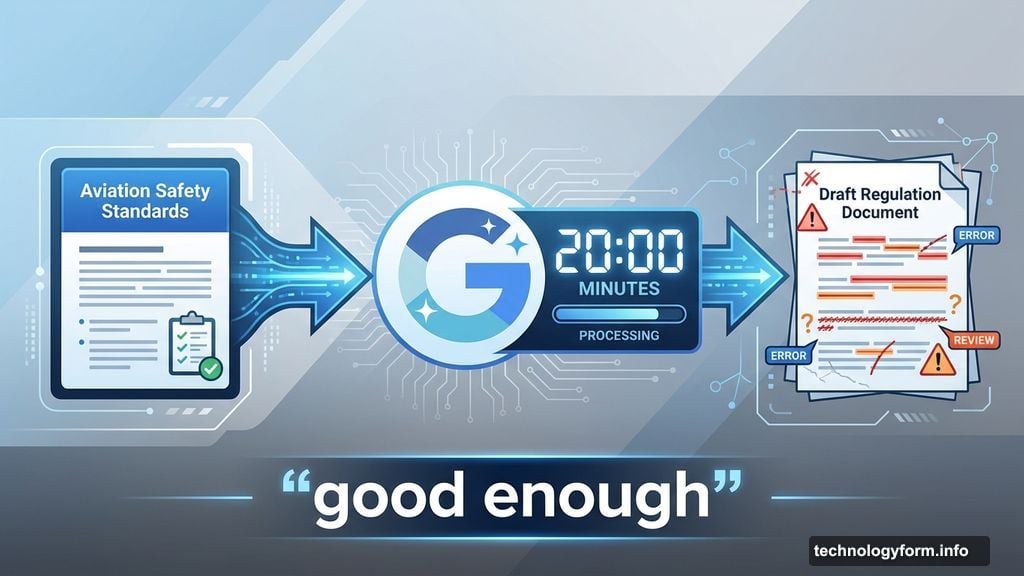
Gregory Zerzan, DOT’s general counsel, told colleagues the process shouldn’t take more than 20 minutes. Feed Google Gemini some parameters. Let it generate draft text. Done.
Think about what DOT regulates. Commercial aircraft safety standards. Hazardous materials transport. Driver qualifications for trucks hauling cargo across state lines. These aren’t trivial documents. They determine whether your flight lands safely or whether that semi-truck driver next to you meets basic competency standards.
Yet Zerzan explained that “we don’t need the perfect rule.” In fact, he said DOT doesn’t even need “a very good rule.” The goal is “good enough” while “flooding the zone” with rapid regulatory output.
One DOT employee presenting the program called many regulation sections “word salad anyway.” So why not let AI handle it? The logic breaks down fast when you remember real people depend on these rules working correctly.
The Agency Already Used AI for Unpublished FAA Rules
DOT confirmed it already drafted at least one Federal Aviation Administration rule using AI. The rule remains unpublished. So we don’t know what it covers or whether human review caught serious errors before implementation.
Previous federal AI use focused on mundane tasks. Translating documents between languages. Analyzing datasets. Sorting public comments. Nobody let algorithms write the actual regulations until now.
But President Trump strongly supports expanding AI across government. He issued multiple executive orders promoting the technology. Plus, DOT sees this as a pilot program. Success here means other agencies adopt the same approach.
Large Language Models Make Mistakes Constantly
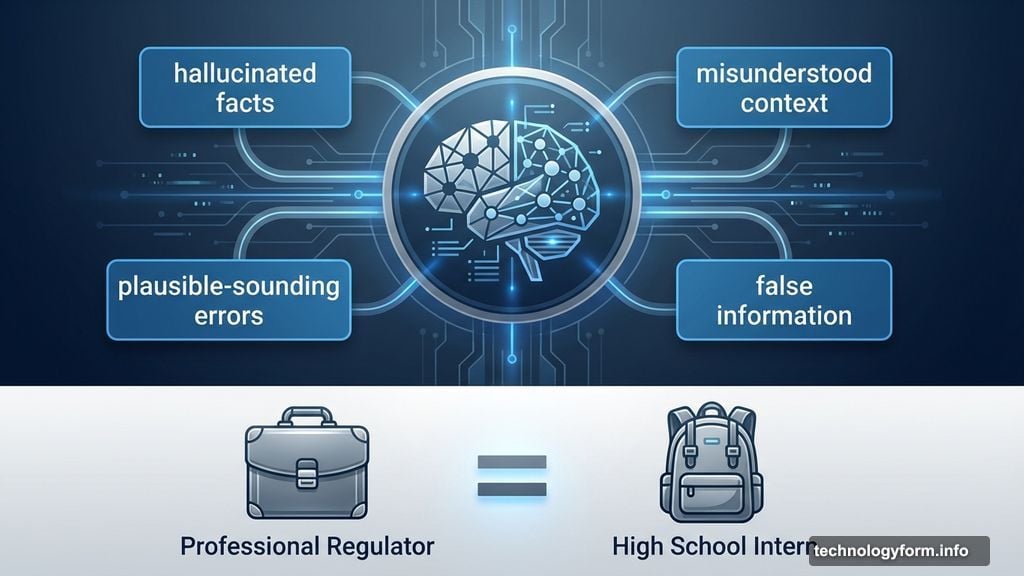
Here’s the fundamental problem. Large language models like Gemini hallucinate information. They confidently state false facts. They misunderstand context. They generate plausible-sounding text that contains critical errors.
Mike Horton previously served as DOT’s acting chief AI officer. He compared using Gemini for regulations to “having a high school intern doing your rulemaking.” That’s harsh but accurate.
Moreover, Horton warned that agency leaders “want to go fast and break things.” In Silicon Valley, that’s a growth strategy. In federal transportation safety? It means injuries and deaths when regulations fail.
Bridget Dooling studies administrative law at Ohio State University. She pointed out that producing lots of words doesn’t equal quality government decisions. Yet the temptation to use AI remains strong because the output comes so fast.
DOT Lost Over 4,000 Employees This Year
Context matters here. The Trump administration cut DOT staff by more than 4,000 people since January. That includes over 100 attorneys who previously reviewed regulatory language.
So fewer experienced humans now check AI-generated rules. The pressure to move fast increases. Meanwhile, the workforce shrinks while responsibilities stay the same or grow.
This creates perfect conditions for mistakes. Overworked staff reviewing AI output they barely understand. Tight deadlines preventing thorough analysis. Leadership explicitly saying “good enough” beats careful work.
Who Gets Sued When AI Regulations Fail?
Federal agencies face lawsuits constantly over poorly written rules. Companies challenge vague language. Advocacy groups sue over inadequate safety protections. Courts strike down regulations that don’t follow proper procedures.
Now imagine those regulations contain AI-generated errors. Who takes responsibility? The algorithm that wrote the draft? The overworked staffer who quickly reviewed it? Agency leadership that pushed for speed over quality?
Plus, lawsuits are the minor concern. What happens when an AI-written rule fails to prevent an accident? When unclear language lets dangerous cargo slip through? When pilot qualification standards contain gaps nobody noticed because Gemini hallucinated a requirement?
Federal Agencies Need Better Tools, Not Faster Mistakes
Nobody opposes improving how government works. Regulation writing can definitely become more efficient. Technology can help.
But there’s a massive difference between using AI to assist human experts versus replacing human judgment with algorithmic output. DOT crossed that line without adequate testing or safeguards.
The rush to implement AI across government reflects current tech hype more than practical necessity. Yes, writing comprehensive regulations takes months. That’s because the work matters. Shortcuts in aviation safety rules don’t save time. They create disasters.
Federal agencies already struggle with outdated technology and shrinking budgets. Adding unreliable AI tools while cutting experienced staff makes both problems worse. It’s not innovation. It’s negligence dressed up in buzzwords.
Smart AI use would support human experts. It could flag inconsistencies in draft text. Suggest clearer language. Identify relevant precedents from past rules. But the human regulatory expert should control the process and verify every detail.
Instead, DOT leadership celebrates 20-minute drafting timelines and “good enough” standards. They’re treating life-and-death regulations like blog posts that need quick turnaround.
The technology isn’t ready for this responsibility. More importantly, the approach shows dangerous disregard for what federal regulations actually do. They protect people. That job demands expertise, care, and accountability. Not whatever Google Gemini spits out in 20 minutes.