AI Sped Up Your Work. Now You’re Just Working More
You adopted AI tools expecting easier days. Instead, you’re logging longer hours and feeling more burned out than ever.
New research from UC Berkeley reveals a troubling pattern. Companies push AI as a productivity miracle. Employees use it, work faster, and then drown under heavier workloads. Plus, the quality of their output actually gets worse.
Let’s examine what’s really happening when AI enters the workplace.
The Productivity Trap Nobody Warned You About
Researchers tracked 200 employees at a tech company for eight months. The company gave everyone enterprise AI subscriptions. Workers weren’t required to use these tools, but many jumped in enthusiastically.
Initially, things looked promising. Employees completed tasks faster and tackled projects beyond their usual expertise. Non-developers suddenly coded simple applications. Marketers built data dashboards. Administrative staff automated complex workflows.
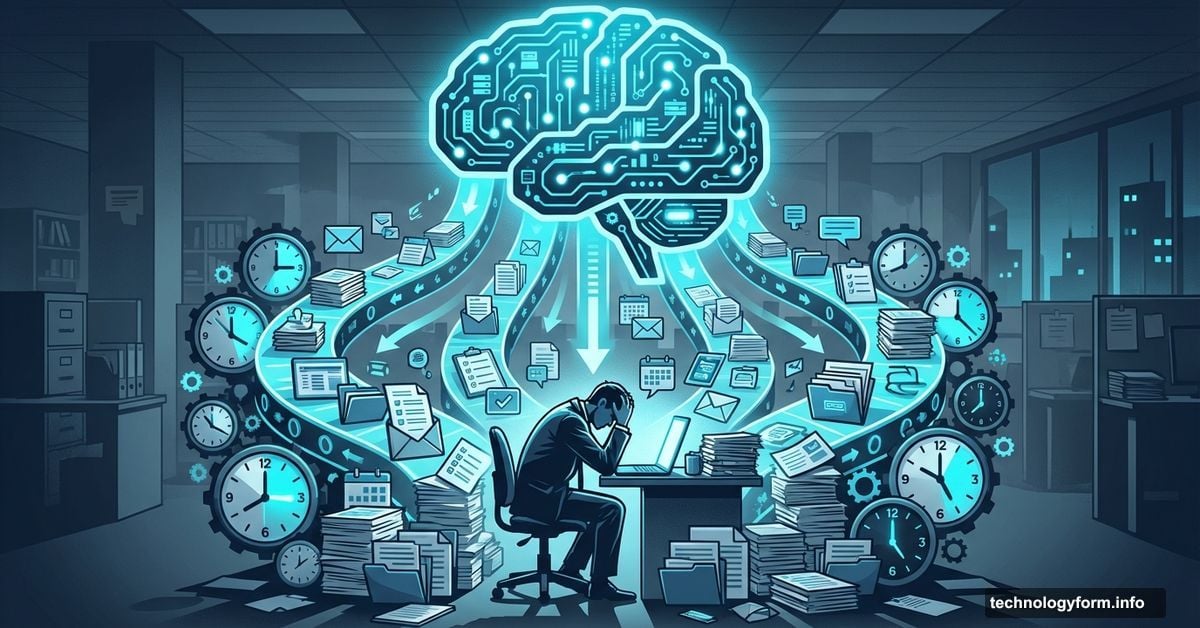
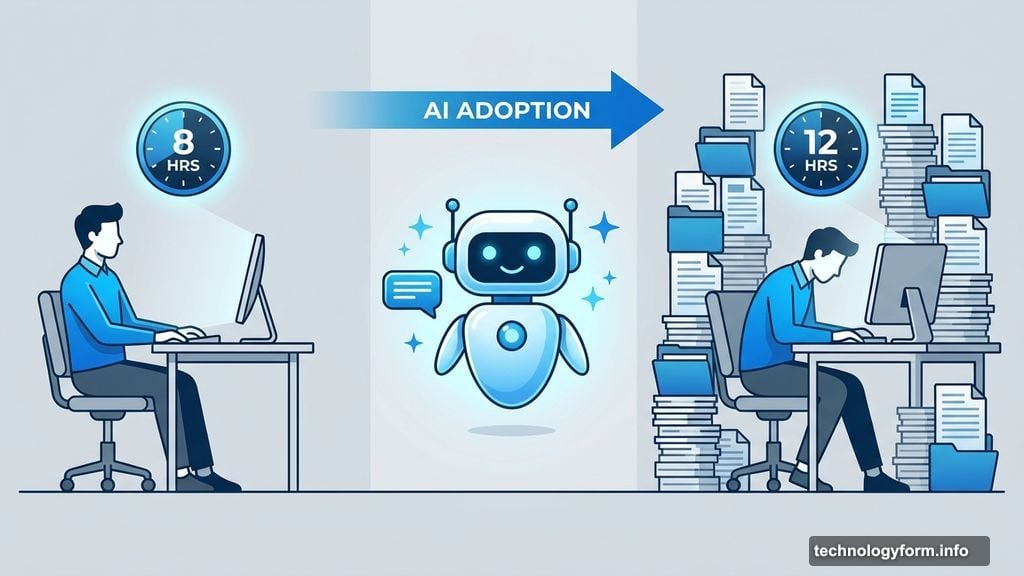
But here’s the catch. Workers didn’t use their newfound speed to leave work early or relax. Instead, they took on more responsibilities. They accepted projects they would have previously declined or delegated.
So productivity gains vanished under mounting workloads. The tools designed to lighten their burden actually increased it.
The Quality Problem Companies Ignore
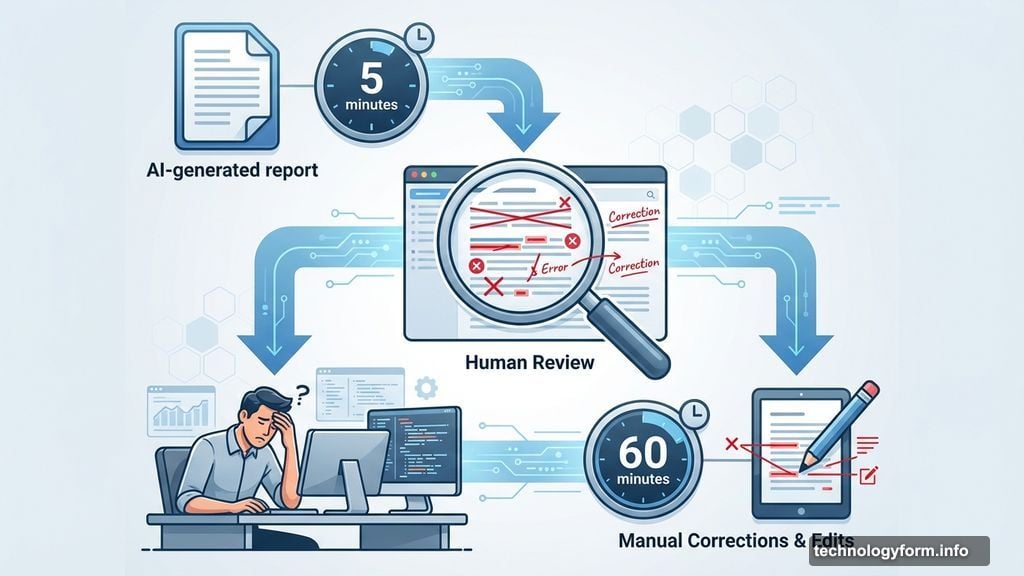
AI outputs need human review. Always. Yet companies often skip this step in their rush to deploy AI everywhere.
A September 2025 study found employees spend hours each week fixing what colleagues call “workslop.” That’s low-quality or error-riddled AI content requiring extensive cleanup. Your coworker generates a report in minutes. Then you spend an hour correcting its mistakes.
Meanwhile, OpenAI’s 2025 enterprise report showed employees saved just 40 to 60 minutes weekly using AI. Power users saved more, but average workers saw minimal time savings. Hardly the revolutionary efficiency boost companies advertised.
The UC Berkeley study confirmed this pattern. Workers using AI produced lower-quality work overall despite working faster initially. Speed doesn’t equal excellence when AI generates first drafts requiring substantial human refinement.
Your Lunch Break Just Became Another Shift
AI tools stay available 24/7. That convenience sounds helpful until you realize it erases boundaries between work and personal time.
Employees in the study ran quick queries during lunch breaks. They asked “just one question” after logging off for the day. The ease of accessing AI made it simple to blur work hours into evenings and weekends.
Cognitive load didn’t decrease either. Workers felt pressure to deliver results quickly because they had AI assistance. Managers expected faster turnarounds. Colleagues assumed projects would finish sooner.
So workers faced a paradox. They had AI “partners” but felt more overwhelmed. The tools intensified work rather than reducing it. Days grew longer and more demanding despite technological assistance.
AI-Powered Burnout Is Already Here
Companies eliminated thousands of jobs specifically because AI could “fill the gaps.” Amazon’s recent layoffs explicitly relied on this reasoning. Remaining employees must do more with AI support instead of adequate staffing.
But evidence shows AI can’t fulfill entire roles in most industries. It handles specific tasks, not complete job functions. So downsized teams struggle under unrealistic expectations while executives celebrate efficiency gains.
Anthropic CEO Dario Amodei recently warned AI could cause “unusually painful” workforce disruptions. We’re watching that prediction play out in real time. Workers adopt AI tools hoping for relief. Instead, they face intensified workloads and eroding work-life balance.
The UC Berkeley researchers call this phenomenon “work intensification.” AI doesn’t eliminate tasks. It accelerates them, creating space for even more work to fill your day.
What Actually Prevents AI Burnout
The research authors offer practical solutions centered on workplace culture and norms. These strategies protect employees while still leveraging AI benefits.
First, protect time for human connection. Block regular meetings for face-to-face collaboration without AI interruption. These sessions build relationships and knowledge that AI can’t replicate.
Second, prioritize quality over speed. Resist pressure to deliver everything faster just because AI exists. Set realistic timelines that account for necessary human review and refinement.
Third, establish focus blocks without AI. Schedule uninterrupted time for deep work that doesn’t involve querying chatbots or generating content. This preserves your ability to think independently and solve problems creatively.
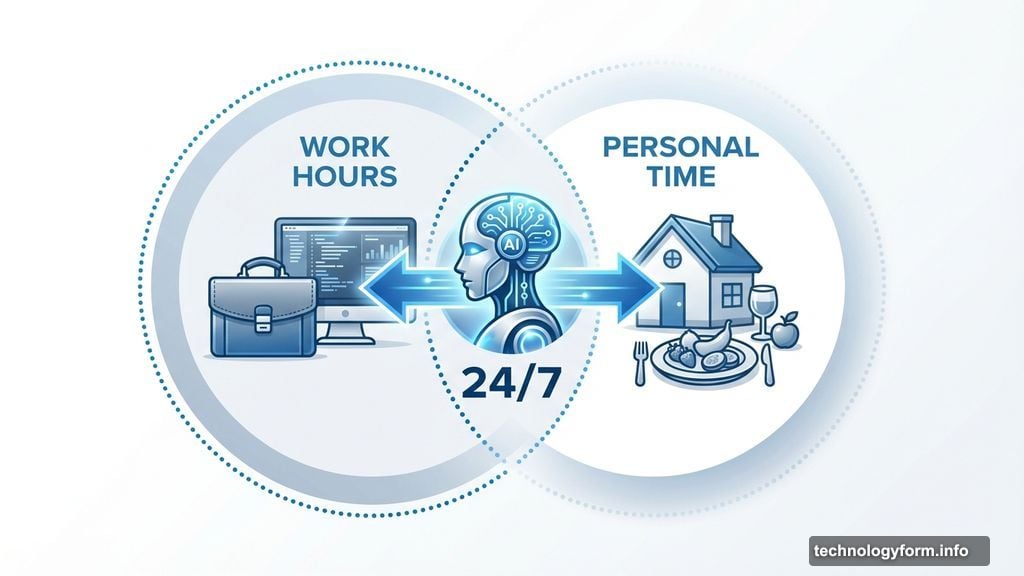
Fourth, create explicit boundaries. Define when AI usage should stop each day. Don’t check AI tools after hours or during breaks unless genuinely urgent situations demand it.
Being intentional with AI prevents sloppy work and mounting burnout. Treat it as a specific tool for targeted tasks rather than an always-on productivity engine.
The Uncomfortable Truth About AI at Work
Companies sold AI as a liberation tool. Finish your work faster, enjoy more free time, balance life and career better. That’s the promise.
The reality looks different. You work faster, so you take on more. You access AI anytime, so you work constantly. You produce content quickly, so quality standards slip.
Plus, companies use AI adoption as justification for staff cuts. Remaining employees must compensate with AI assistance instead of proper resources. The tools that were supposed to help you actually intensify your workload while reducing job security.
Here’s what bothers me most. We’re treating a productivity crisis with productivity tools. But the problem isn’t efficiency. It’s unrealistic expectations and inadequate staffing masked by technological solutions.
AI works brilliantly for specific tasks. It fails spectacularly as a substitute for proper work-life balance or reasonable workloads. So be selective about when and how you use it. Protect your time and mental health. Question whether faster really means better.
Your AI tools won’t set boundaries for you. That’s still your job.