India’s AI Impact Summit: Every Major Announcement You Need to Know
India just put the world on notice. With 250,000 expected visitors and a who’s-who list of tech’s biggest names, the India AI Impact Summit is one of the largest AI gatherings the world has ever seen.
Alphabet CEO Sundar Pichai, OpenAI CEO Sam Altman, Anthropic CEO Dario Amodei, and Google DeepMind CEO Demis Hassabis all showed up in person. French President Emmanuel Macron joined India’s Prime Minister Narendra Modi for a joint address. And the announcements kept coming, one after another, for four straight days.
Here’s everything that matters.
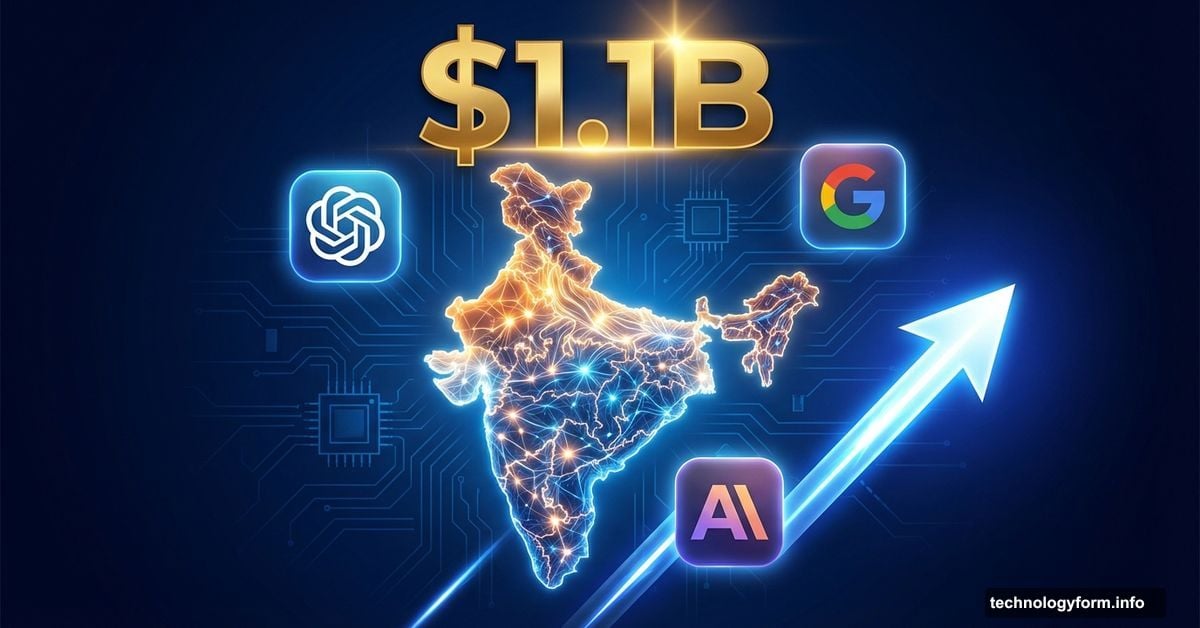
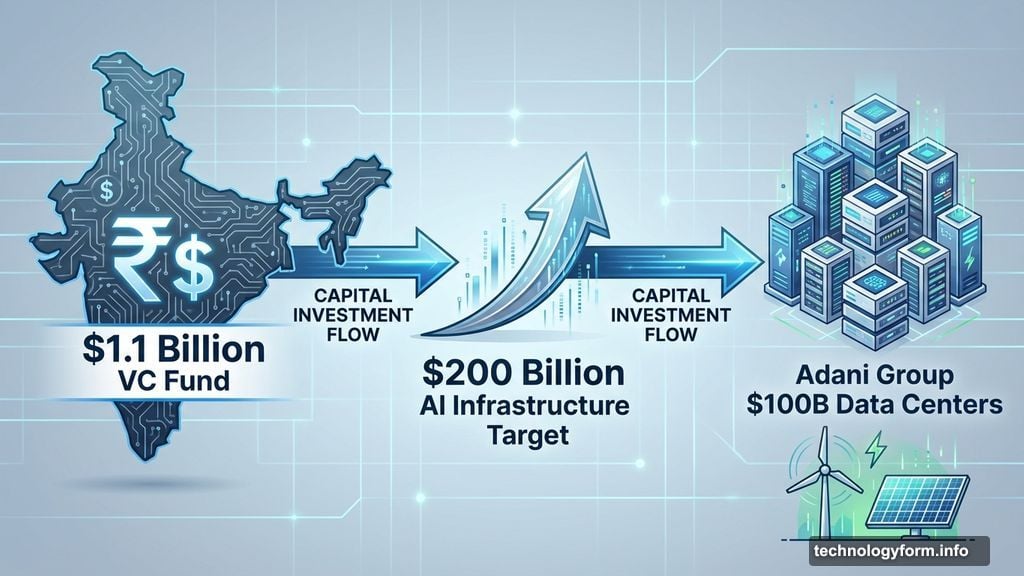
India Commits $1.1 Billion to AI Startups
India’s government isn’t just hosting a summit. It’s putting serious money behind it.
The country earmarked $1.1 billion for a state-backed venture capital fund focused on artificial intelligence and advanced manufacturing startups. That’s a direct signal to global investors that India wants to be an AI-building nation, not just an AI-consuming one.
Tech minister Ashwini Vaishnaw went even further. He said India wants to attract over $200 billion in AI infrastructure investment within the next two years. Whether that target is achievable is debatable, but the ambition is real.
Also adding fuel to the fire, Adani Group announced a $100 billion commitment to build AI data centers powered by renewable energy by 2035. The conglomerate projected that this investment would trigger an additional $150 billion in adjacent industries like server manufacturing, sovereign cloud platforms, and advanced electrical infrastructure.
ChatGPT Has Over 100 Million Weekly Users in India
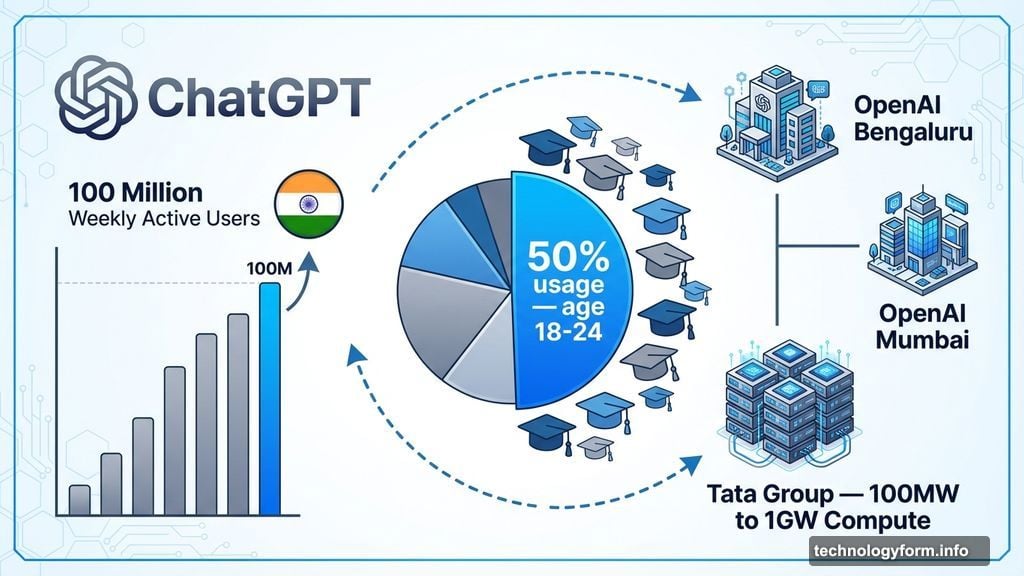
Sam Altman dropped a number that stopped the room. India now accounts for more than 100 million weekly active ChatGPT users, making it second only to the United States.
But one stat stood out even more. Indians make up the largest group of students using ChatGPT anywhere in the world. That’s not just a usage story. It’s a signal about where the next generation of AI-native workers is coming from.
Altman’s numbers don’t stop there. He noted that 18-to-24-year-olds drive nearly 50% of all ChatGPT usage in India. That’s a young, engaged user base that’s growing fast.
OpenAI Expands with Two New India Offices
OpenAI is backing up those user numbers with real infrastructure. The company announced it will open two new offices in India, located in Bengaluru and Mumbai.
On top of that, OpenAI partnered with the Tata Group to deploy 100 megawatts of compute capacity in India, with plans to scale that up to 1 gigawatt. That’s a massive investment in local AI infrastructure that goes well beyond a symbolic presence.
JioHotstar, one of India’s biggest streaming platforms, also announced it will use ChatGPT to power conversational content discovery. Think asking a chatbot what to watch next, rather than scrolling through endless menus.
Anthropic Opens Its First India Office in Bengaluru
Anthropic joined the expansion wave too. The company announced its first-ever India office, based in Bengaluru, citing India as the second-largest user base for its Claude AI assistant after the United States.
Anthropic also announced a partnership with IT giant Infosys to deploy Claude models and developer tools across Indian enterprises. Their first focus area is the telecommunications sector, anchored by a dedicated Anthropic Center of Excellence.
For a company that’s been primarily US-focused, this is a meaningful geographic step.
Blackstone Leads $600 Million Investment in Indian AI Startup Neysa
The private equity world showed up too. Blackstone acquired a majority stake in Neysa, a Bengaluru-based AI startup, as part of a $600 million equity fundraise. Teachers’ Venture Growth, TVS Capital, 360 ONE Asset, and Nexus Venture Partners also participated.
Neysa isn’t stopping there. The company plans to raise an additional $600 million in debt financing and deploy more than 20,000 GPUs. That’s serious compute infrastructure for an Indian startup.
Meanwhile, data center power startup C2i raised $15 million in a Series A round led by Peak XV, with participation from Yali Deeptech and TDK Ventures. As AI data centers multiply across India, power solutions are becoming a hot investment category on their own.
Indian AI Startup Sarvam Has a Busy Week
Sarvam might have been the most active company at the entire summit. The Indian AI startup released two new open-sourced models, Sarvam 30B and Sarvam 105B, announced smart glasses under the name Sarvam Kaze, and launched a ChatGPT competitor called Indus that supports multiple Indian languages.
Sarvam also announced partnerships with Qualcomm, HMD, and Bosch to bring its models to smartphones, feature phones, cars, laptops, and smartglasses. The ambition is to get Indian AI models running on everyday devices across the country.
That’s a lot of ground covered in a single week.
Other Models, Partnerships, and Announcements
The summit generated a long list of other notable moves worth knowing about.
Cohere Labs launched a family of multilingual models with open weights supporting over 70 languages, designed to run on local devices. BharatGen, a government-backed AI consortium, released Param 2, a 17 billion parameter model covering 22 languages. Tech Mahindra released an 8 billion parameter Hindi-focused model aimed at educational applications.
Voice AI startup Gnani released Vachana, a zero-shot voice cloning text-to-speech model supporting 12 languages. Voice AI company Cartesia teamed up with India-based orchestrator Blue Machines to deploy enterprise voice solutions with local data residency.
AMD announced a partnership with Tata Consultancy Services (TCS) to develop rack-scale AI infrastructure based on AMD’s Helios platform. UAE-based G42 and US chip maker Cerebras announced plans to deploy 8 exaflops of compute in India through a supercomputer, with Abu Dhabi’s MBZUAI and India’s C-DAC also involved in the project.
India joined the Pax Silica group, led by the United States, to create a stable supply chain for materials used in AI infrastructure. Members include the UK, UAE, Singapore, Qatar, Japan, Israel, South Korea, and Australia.
Finally, 88 countries and organizations signed the New Delhi AI Declaration, committing to use AI for social and economic good. Signatories included the US, China, and Russia.
The Less Comfortable Conversations
Not everything at the summit was celebratory. A few harder conversations cut through the excitement.
HCL CEO Vineet Nayyar said Indian IT companies should focus on profits rather than job creation. That’s a pointed comment at a time when AI anxiety is already shaking Indian IT stocks.
Vinod Khosla, founder of Khosla Ventures, took it further. He said IT services and BPO industries could “almost completely disappear” within five years because of AI. His suggestion? India’s 250 million young people should pivot to selling AI-based products and services to the rest of the world.
Meanwhile, Sam Altman waded into the energy debate with some eyebrow-raising comments. He called concerns about how much water AI uses “totally fake,” then compared ChatGPT’s energy consumption to the energy humans use growing up. “It takes like 20 years of life and all of the food you eat during that time before you get smart,” he said. It’s a creative analogy, but probably not one that will settle the debate.
What This Summit Actually Means
India’s AI ambitions have been building for years. But this summit feels different. The scale of investment commitments, the number of global tech leaders present, and the volume of product launches all point to something accelerating.
India has the users. It’s now building the infrastructure, the models, and the policy framework to match. Whether the $200 billion investment target materializes or not, the direction is clear.
The question isn’t whether India becomes a major force in global AI. It’s how fast that happens, and what gets built along the way.