Anthropic vs. the Pentagon: Who Should Control Powerful AI?
A standoff between an AI company and the U.S. military might sound like a sci-fi plot. But this one is very real, and the stakes couldn’t be higher.
Over the past two weeks, Anthropic CEO Dario Amodei and Defense Secretary Pete Hegseth have been locked in a public battle over how the military can use Claude, Anthropic’s AI model. Amodei isn’t backing down, even as the Pentagon threatens to blacklist his company entirely. So what’s actually going on here, and why does it matter?
Let’s break it down.
Anthropic’s Two Hard Limits
At the center of this fight are two specific restrictions Anthropic refuses to budge on.
First, mass surveillance of American citizens. Second, fully autonomous weapons — systems that can select and engage targets without any human making the final call.
These aren’t new concerns for Anthropic. From day one, the company has argued that AI poses unique risks compared to traditional technology. A fighter jet doesn’t make its own targeting decisions. An AI model potentially could. That difference, Anthropic says, demands a completely different approach to safety.
The company isn’t claiming these uses should be banned forever. Its position is more specific: Claude isn’t capable enough yet to support them safely. Put an AI that’s not ready in charge of high-stakes weapons decisions, and you get a very fast, very confident machine making calls it shouldn’t be making.
Why AI-Powered Surveillance Scares Experts
Mass surveillance of Americans already happens under current U.S. law. Texts, emails, and other communications can be collected through legal channels.
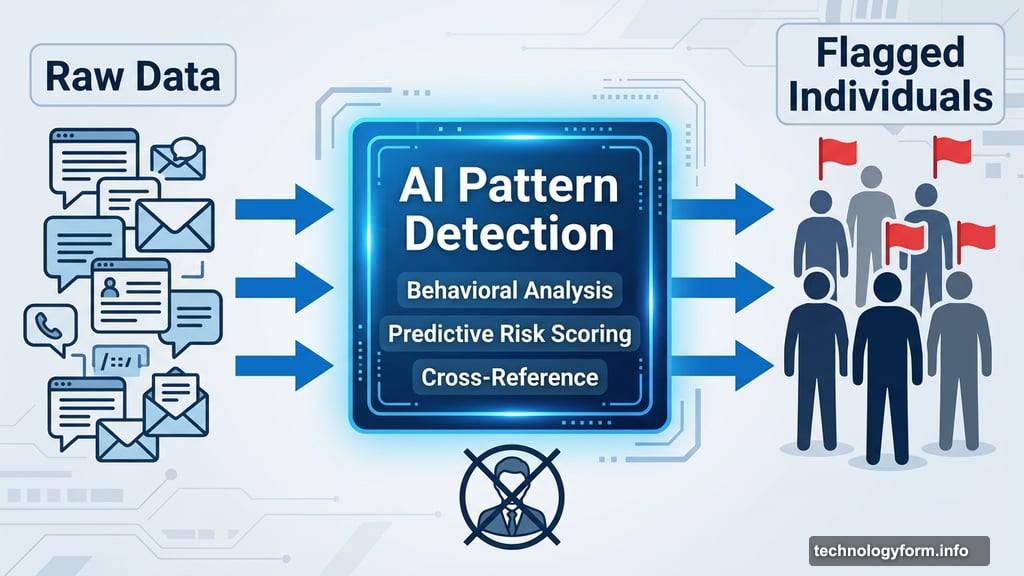
But AI changes the equation dramatically. Traditional surveillance requires human analysts reviewing data. AI enables something far more powerful: automated large-scale pattern detection, predictive risk scoring, and continuous behavioral analysis across massive datasets. It can cross-reference information from multiple sources simultaneously, flagging people based on behavioral patterns rather than specific evidence.
That’s a qualitative leap, not just a quantitative one. And it’s exactly what worries Anthropic.
Autonomous Weapons: The Human-in-the-Loop Debate
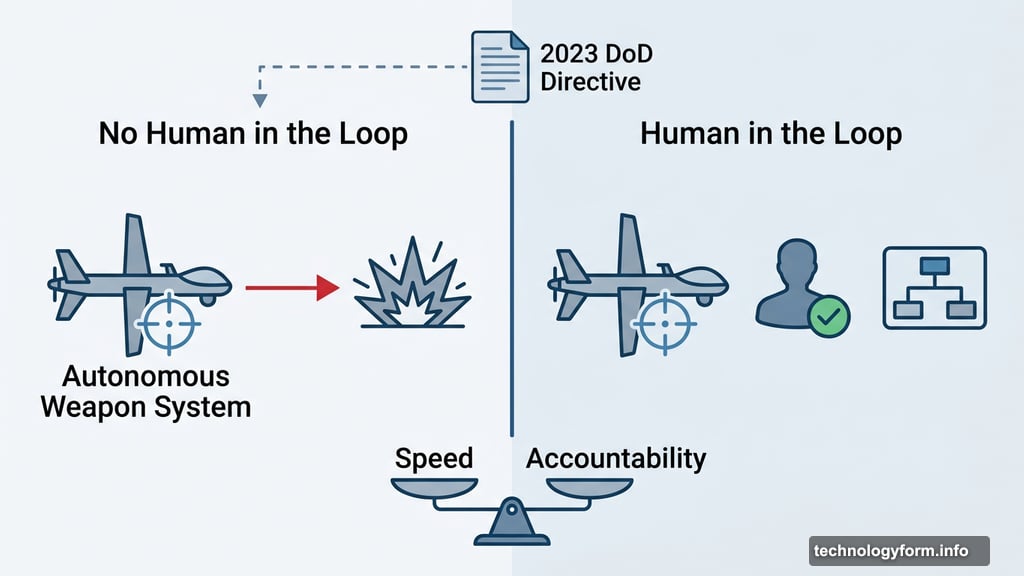
The autonomous weapons concern is equally serious. The U.S. military already operates highly automated systems, some of them lethal. But historically, the decision to use lethal force has stayed with humans.
Here’s the uncomfortable truth: there’s no U.S. law that categorically bans fully autonomous weapons. A 2023 Department of Defense directive actually permits AI systems to select and engage targets without human intervention, provided they meet certain standards and receive approval from senior defense officials.
So autonomous lethal AI isn’t technically off the table. And military technology is secretive by nature. If the Pentagon moved toward automating lethal decision-making using Claude, we might not know until it was already operational. From Anthropic’s perspective, that’s precisely the problem.
What the Pentagon Says It Wants
Defense Secretary Hegseth’s argument sounds simple on the surface: the DoD should be able to use Anthropic’s technology for any lawful purpose it deems necessary. No vendor should get to dictate military operations.
Pentagon spokesperson Sean Parnell made the position official in an X post on Thursday. “Allow the Pentagon to use Anthropic’s model for all lawful purposes,” Parnell wrote. “We will not let ANY company dictate the terms regarding how we make operational decisions.”
Parnell added that the department has no interest in mass domestic surveillance or deploying autonomous weapons. But the insistence on removing usage restrictions tells a different story about the flexibility the Pentagon wants to preserve.
Hegseth also set a hard deadline. Anthropic had until 5:01 p.m. ET on Friday to comply — or face consequences.
Cultural Grievance or Genuine Policy Dispute?
Not everyone sees this as a purely policy-driven fight.
In a January speech at SpaceX and xAI offices, Hegseth railed against what he called “woke AI.” He said, “Department of War AI will not be woke. We’re building war-ready weapons and systems, not chatbots for an Ivy League faculty lounge.”
That framing suggests some of Hegseth’s frustration with Anthropic goes beyond usage agreements. Anthropic has a reputation for cautious, safety-focused AI development. That approach doesn’t sit well with a Defense Secretary who wants unrestricted access to cutting-edge technology.
Still, whatever the motivation, the core dispute is concrete. Who gets to set the limits on how powerful AI gets used?
What Happens If the Pentagon Follows Through?
The threatened consequences are serious. The Pentagon could declare Anthropic a “supply chain risk,” effectively blacklisting the company from all government contracts. Or it could invoke the Defense Production Act to force Anthropic to modify Claude to the military’s specifications.
Neither option is simple. Sachin Seth, a venture capitalist at Trousdale Ventures who focuses on defense tech, told TechCrunch that a supply chain risk designation could mean “lights out” for Anthropic. Losing the DoD as a customer would be devastating financially.
But cutting Anthropic off carries its own risks. Seth argues that dropping Anthropic could actually create a national security gap. “That leaves a window of up to a year where they might be working from not the best model, but the second or third best,” he said. Neither OpenAI nor xAI is currently positioned to fill the void immediately.
xAI, owned by Elon Musk, is reportedly working toward classified readiness and would likely offer the DoD far fewer restrictions. Recent reporting suggests OpenAI may hold the same red lines as Anthropic on autonomous weapons and mass surveillance.
The Bigger Question Behind the Fight
This dispute is really about something much larger than one contract.
It’s about who controls powerful AI systems when they’re deployed by governments. Traditional defense contractors — companies that build planes, missiles, and ships — have almost no say in how those products get used once delivered. The government decides.
Anthropic argues that AI is different. A software model embedded in military systems isn’t just a static tool. It reasons, adapts, and makes decisions. That capability, Anthropic believes, requires ongoing accountability from the company that built it.
The Pentagon, for its part, sees vendor-imposed restrictions as an unacceptable constraint on military judgment. Those two views aren’t easy to reconcile.
Whatever happens with Friday’s deadline, this fight isn’t going away. As AI becomes more embedded in defense infrastructure, the question of who sets the rules will come up again and again. The answer we land on now will shape how these technologies get deployed for years to come.