OpenAI Signed a Defense Deal With Safety Guardrails Still Intact. Anthropic Walked Away.
The Pentagon just picked a side in the AI arms race. And it might not be the one you expected.
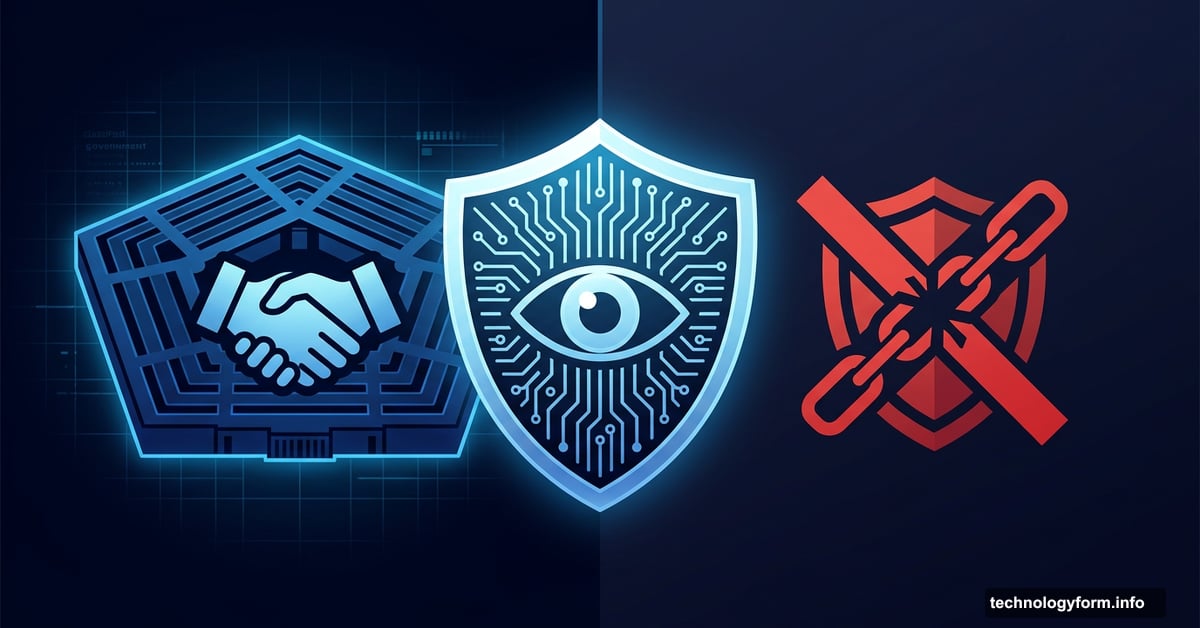
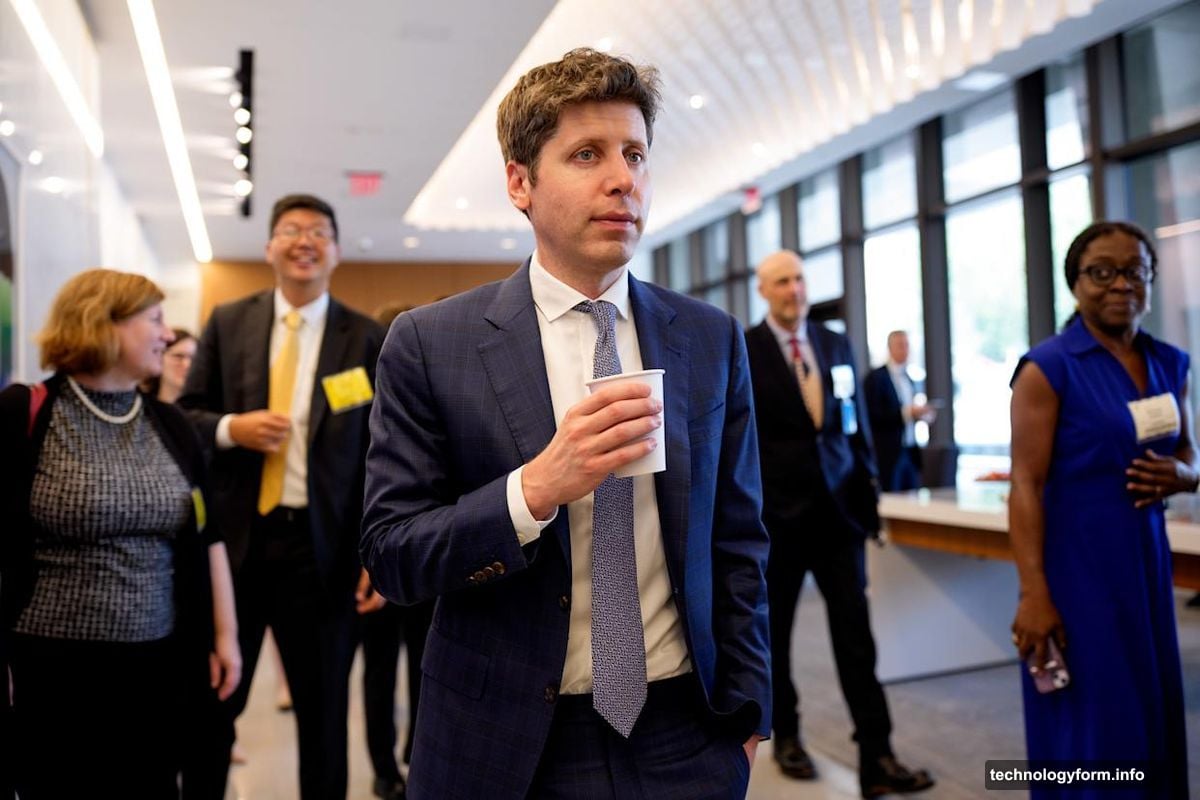
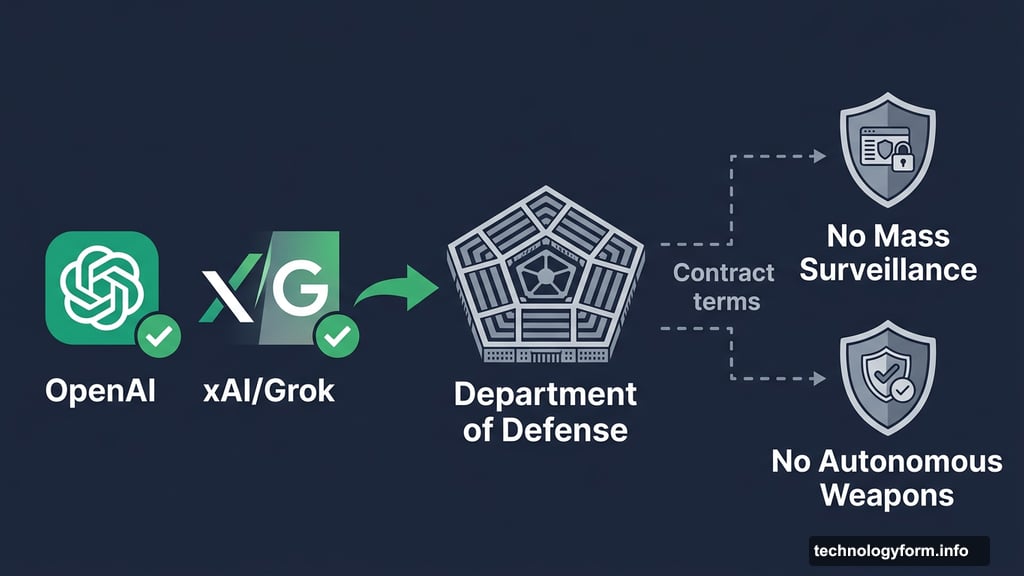
OpenAI has quietly struck a deal with the Department of Defense to deploy its AI models on government networks. Sam Altman announced the agreement on X, making clear that OpenAI’s core safety principles came along for the ride. What’s surprising isn’t that a deal happened. It’s how the deal got done, and why Anthropic refused the same offer.
Sam Altman Drew Two Hard Lines
Altman was unusually direct about what OpenAI wouldn’t budge on.
Two principles, he said, were non-negotiable: no domestic mass surveillance, and no fully autonomous weapons systems without human oversight. He called these OpenAI’s most important safety commitments. More importantly, he said both made it into the actual contract language.
That’s a meaningful distinction. Plenty of companies talk about values. Fewer write them into binding government agreements.
Altman also pushed for something broader. He’s asking the government to offer those same terms to every AI company it partners with. Not just OpenAI. That framing positions him as advocating for an industry-wide standard, not just protecting his own turf.
The Department of War Agreed. That’s the Surprising Part.
Here’s where the story gets interesting.
Defense Secretary Pete Hegseth previously threatened to label Anthropic a “supply chain risk” for refusing to strip the guardrails off its AI. The specific concern? Anthropic’s models wouldn’t support mass domestic surveillance or fully autonomous weapons. Hegseth saw those restrictions as a problem.
So why did the DoD agree to work with OpenAI, whose models have the same restrictions?
Jeremy Lewin, the Senior Official Under Secretary for Foreign Assistance, Humanitarian Affairs, and Religious Freedom, offered an explanation on X. He said the contract references existing legal authorities and includes mutually agreed-upon safety mechanisms. He described it as a compromise, the same one Anthropic was offered and rejected.
Both OpenAI and xAI, which separately signed a deal to deploy Grok in the DoD’s classified systems, agreed to those terms.
Anthropic Said No. And Meant It.
Meanwhile, Anthropic made its position crystal clear.
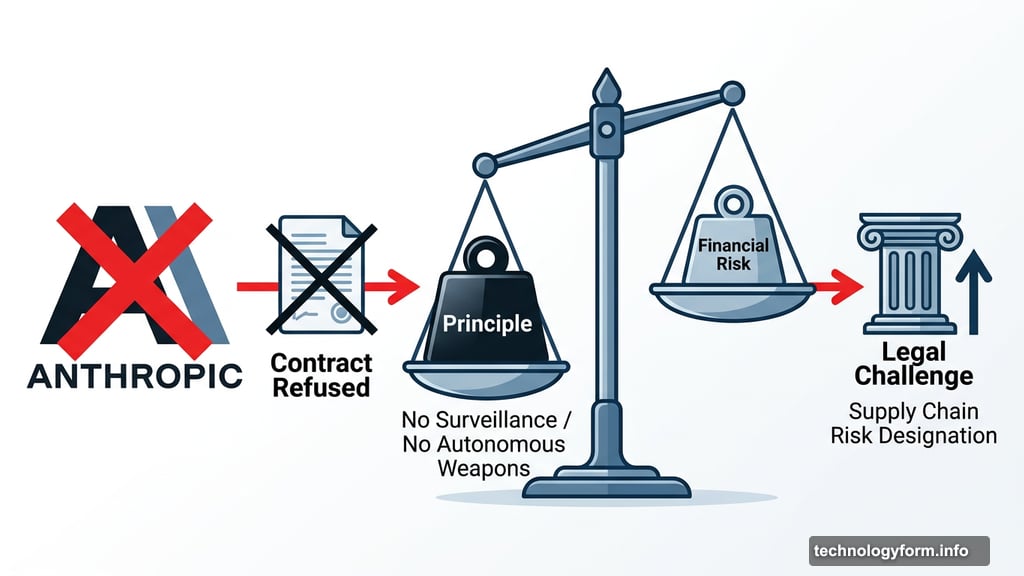
Just hours before Altman announced the OpenAI deal, Anthropic published a statement that left zero room for interpretation. “No amount of intimidation or punishment from the Department of War will change our position on mass domestic surveillance or fully autonomous weapons,” the company wrote.
It went further. Anthropic pledged to challenge any supply chain risk designation in court if the government follows through on Hegseth’s threat.
That’s a remarkable stance for a company that had been working with the US government since 2024. Anthropic essentially chose principle over the contract, accepting real financial and regulatory risk rather than softening its safety commitments.
The contrast with OpenAI is sharp. Same restrictions on paper, different outcomes. One company got a deal. The other got a threat. Whether the actual contract language holds the same weight remains an open question.
What Deployment Actually Looks Like
Altman said OpenAI is sending engineers directly to work alongside the agency.
The goal is ensuring the models behave as designed inside a classified environment. Deployment will happen exclusively on cloud networks, not on-premises government servers. That matters because the DoD currently runs on Amazon’s cloud infrastructure, and OpenAI hasn’t historically been on AWS.
But that gap is closing fast. OpenAI just announced a separate partnership with Amazon to run its models on Amazon Web Services for enterprise customers. The timing isn’t coincidental. A government contract that requires cloud deployment, combined with a fresh AWS partnership, makes the path forward fairly clear.
The technical safeguards Altman described aren’t just about ethics. They’re also about accountability. If a model behaves unexpectedly inside a classified network, OpenAI wants engineers on-site who can identify and fix the problem quickly.
The Real Question This Deal Raises
Something about this story doesn’t fully add up, and it’s worth saying out loud.
The government pressured Anthropic specifically because its safety guardrails prevented mass surveillance and autonomous weapons use. Then the government signed a deal with OpenAI featuring the same guardrails. Either the government’s priorities shifted between those two negotiations, or the guardrails in OpenAI’s contract are written differently than they appear.
Altman’s public framing is optimistic, but government contracts are rarely as clean as social media posts suggest. The enforcement mechanisms matter as much as the principles. What exactly triggers a violation? Who monitors compliance? What happens if a model gets used in ways that conflict with the stated restrictions?
Those details aren’t public. And until they are, the reassurances deserve healthy skepticism on both sides. Either Anthropic walked away from a fair deal, or OpenAI accepted terms that are softer than they sound. Possibly both.
What’s certain is that AI models are now formally embedded in US military infrastructure. The companies building them have to decide what lines they’ll hold, and what they’ll sign away to stay in the room.