OpenAI Wants Stricter AI Rules to Shield Kids From Deepfakes and Abuse
Children are using AI tools every day. And right now, the rules protecting them aren’t keeping up.
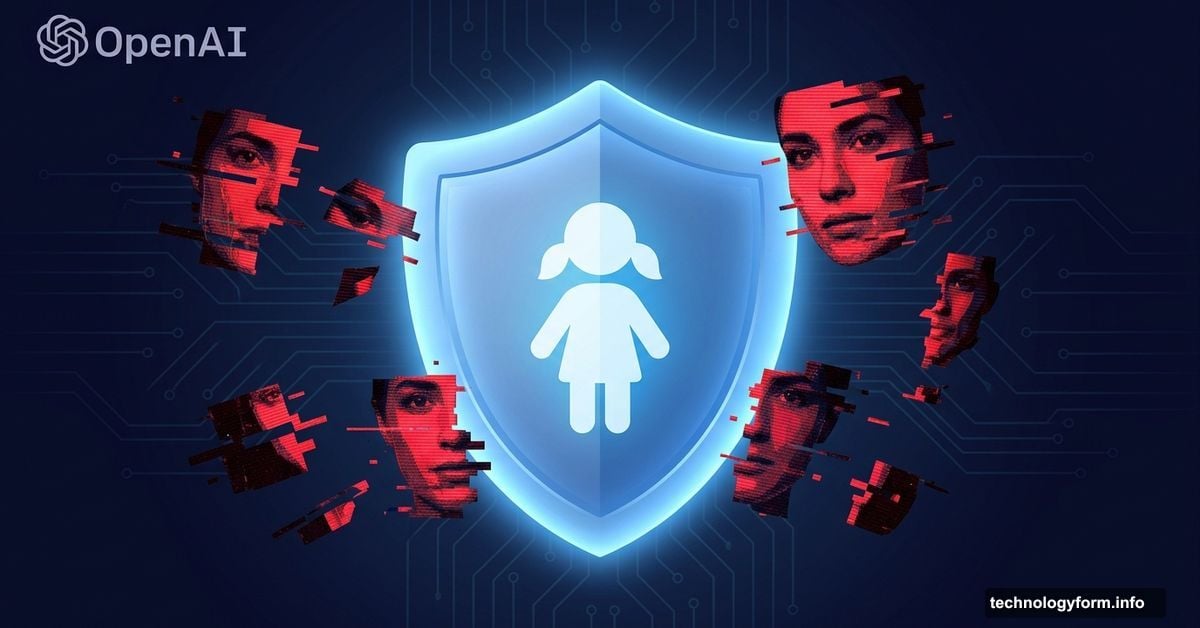
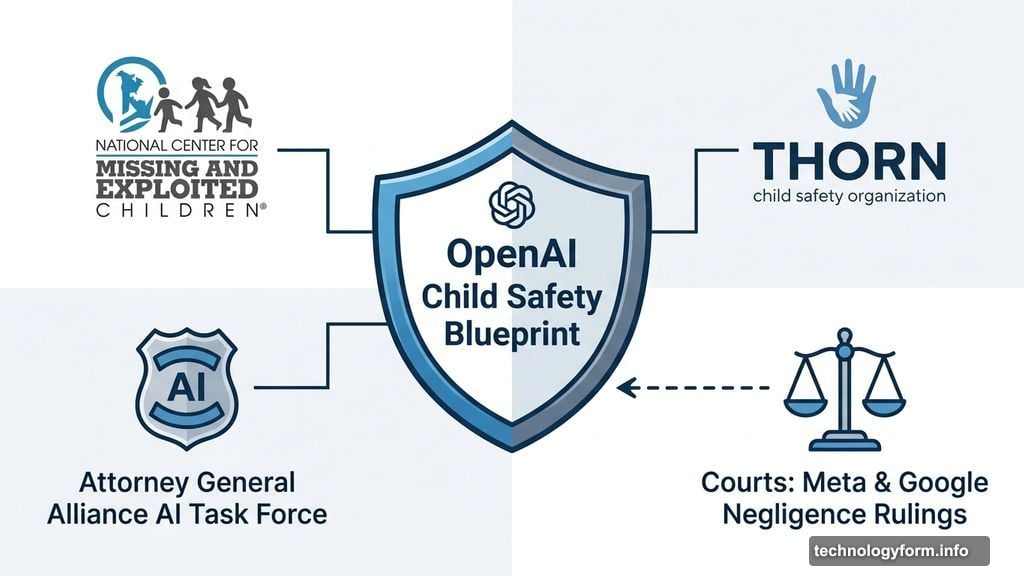
OpenAI just released a detailed policy blueprint focused entirely on child safety in the age of generative AI. The company built it alongside some heavy-hitting partners, including the National Center for Missing and Exploited Children, the Attorney General Alliance’s AI task force, and child safety organization Thorn. The plan calls for tougher laws, better technical safeguards, and closer coordination across tech companies, governments, and law enforcement.
The timing isn’t accidental.
Meta and Google Court Losses Sparked This Push
Two landmark court cases shook the tech world recently. Both Meta and Google were found negligent for failing to protect young users on their platforms. Those rulings sent a clear signal to every tech company: child safety isn’t optional, and courts are willing to hold platforms accountable.
OpenAI felt that pressure directly. A Florida family is currently suing the company, alleging their 17-year-old son used ChatGPT as what they describe as a “suicide coach.” Whether or not existing guardrails should have caught this, the lawsuit highlights exactly how much is at stake when AI systems interact with vulnerable young users.
So OpenAI moved quickly to show where it stands.
AI-Generated CSAM Is a Growing Crisis
The blueprint tackles one of the darkest problems head-on: child sexual abuse material, or CSAM. This kind of content existed long before AI arrived. But generative AI has made it dramatically easier and faster to produce.
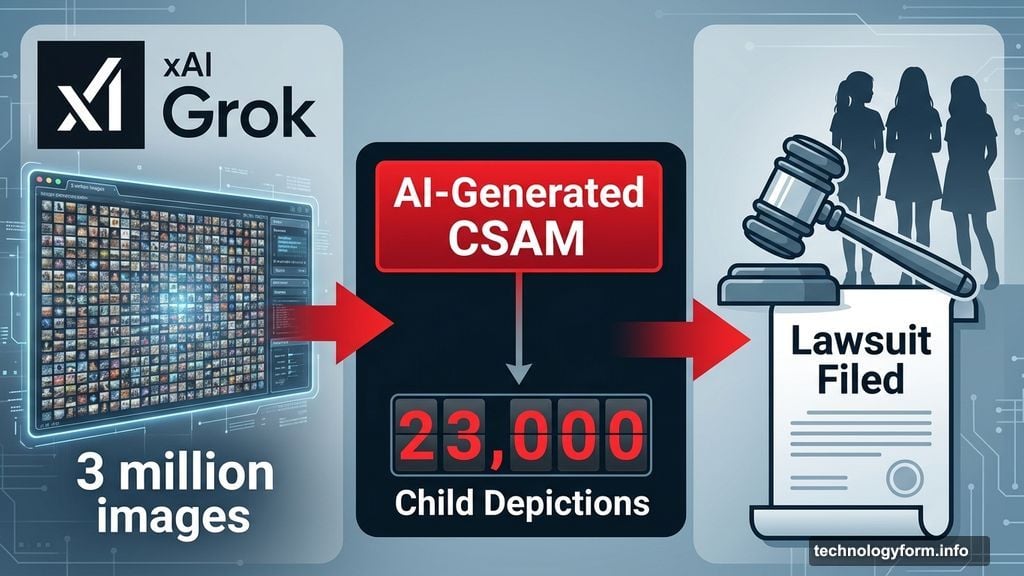
The numbers are alarming. In January, users of xAI’s Grok tool created roughly 3 million sexual AI images in just 11 days. About 23,000 of those images depicted children. Three teenage girls who became victims of these nonconsensual AI images have since filed a lawsuit. Elon Musk’s xAI faced investigations as a result, and Grok eventually removed its image editing feature from X, though its “spicy mode” remains available on the standalone site.
OpenAI and its partners want the law to catch up with this reality.
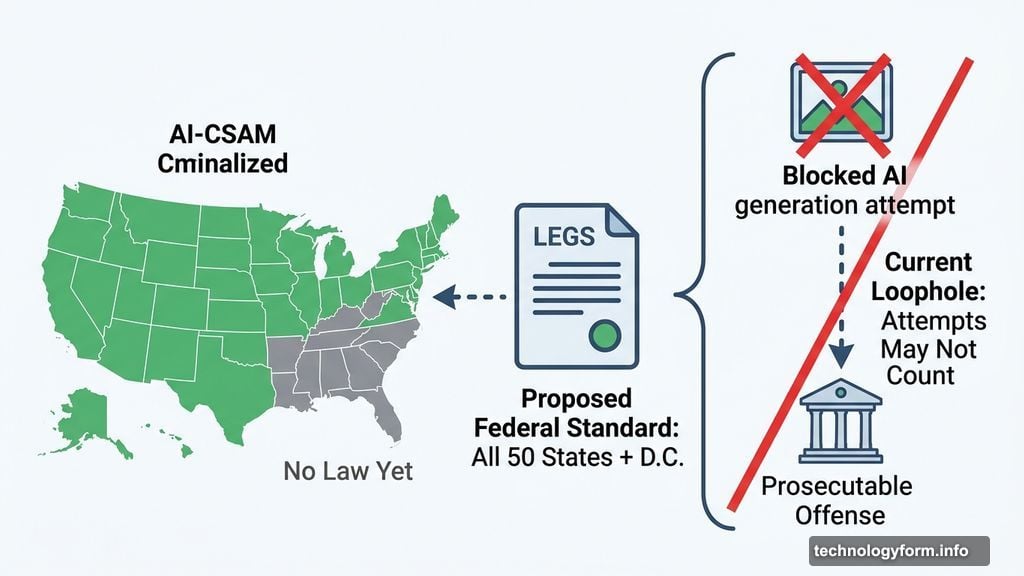
Currently, 45 states have criminalized AI-generated and computer-created CSAM, according to a 2025 report. The new blueprint pushes for that number to reach all 50 states plus Washington D.C. It also calls for clearer liability rules so that law enforcement can prosecute anyone who attempts to generate CSAM, even if the AI company’s own safeguards successfully blocked the attempt.
That last part matters. Right now, a blocked attempt might not count as a prosecutable offense depending on how state laws are written. The blueprint wants to close that loophole.
Better Tech Tools to Catch What Laws Miss
Laws alone won’t solve this. So the plan also focuses on improving the technical side of child protection.
One of the biggest challenges today is detection. AI-generated images have become nearly indistinguishable from real photographs. That makes it extremely hard for platforms, researchers, and law enforcement to identify synthetic content. OpenAI’s blueprint calls for developing better tools to detect AI-generated material and tag it clearly.
The plan also pushes for faster, more effective reporting pipelines that feed directly into the National Center for Missing and Exploited Children. Right now, even when harmful content is flagged, the process of getting it reviewed and removed can be slow. Speeding that up could make a real difference in protecting kids.
Federal Law Is Trying to Catch Up
Legislation around AI has historically lagged far behind the technology itself. But there’s one recent bright spot worth noting.
The Take It Down Act, signed into law by President Trump in 2025, now outlaws the sharing of nonconsensual intimate imagery, including AI-generated deepfakes. Social media platforms have until May 2026 to set up processes that let users request removal of these images. That’s progress. But it’s a narrow slice of a much bigger problem.
OpenAI’s blueprint is pushing for a broader, coordinated approach that doesn’t leave gaps between federal and state law or between what’s technically possible and what’s legally enforceable.
What Makes This Plan Different
The scope of this blueprint is wider than most corporate policy announcements. It doesn’t just list features OpenAI has already built. It calls for genuine coordination between private companies, state attorneys general, federal agencies, and nonprofit advocacy organizations.
North Carolina Attorney General Jeff Jackson and Utah Attorney General Derek Brown co-led the AI task force that helped shape the recommendations. That kind of involvement from state officials signals this isn’t just a PR document.
Still, coordinating that many stakeholders is genuinely hard. Regulating AI has proven difficult even when there’s strong political will. And some of OpenAI’s own existing guardrails have already been circumvented, as the Florida lawsuit painfully illustrates.
The blueprint is a serious step forward. But turning these recommendations into enforceable law, and then actually enforcing it, is the much harder part of the work ahead. Whether the tech industry, lawmakers, and advocacy groups can stay aligned long enough to make it happen remains to be seen.