Americans Trust AI Less Than Airlines. Grok Scores Dead Last.
A new survey just confirmed what many people already suspected. Americans aren’t exactly thrilled about artificial intelligence, and their trust in AI platforms sits below some surprisingly low bars.
The American Customer Satisfaction Index (ACSI) poll, released Thursday, gave AI an overall customer satisfaction score of 73 out of 100. That puts it below social media (74), airlines, and mortgage lenders. It’s roughly on par with energy utilities, which isn’t the company most tech companies want to keep.
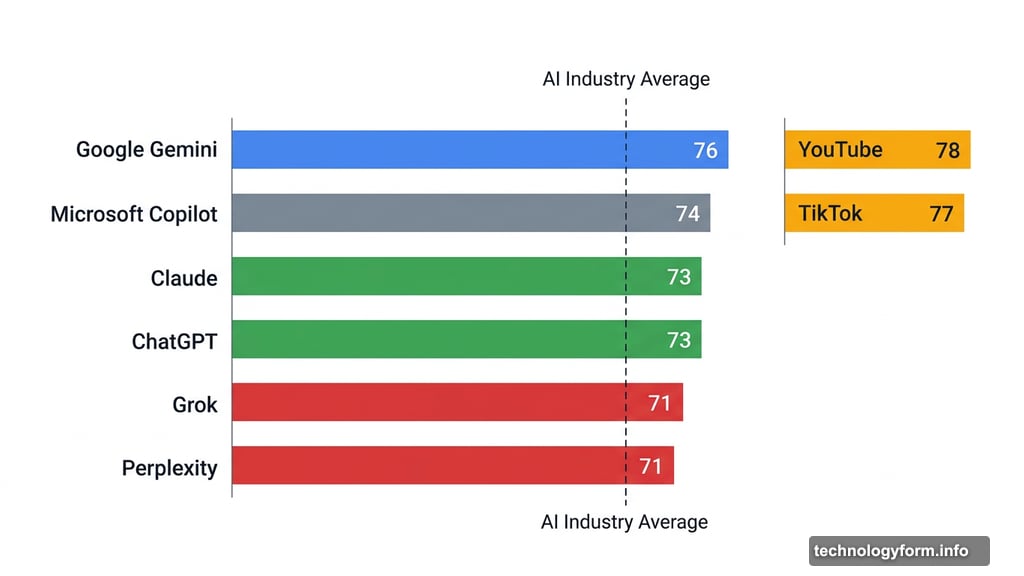
AI Satisfaction Scores Ranked
So how did the major AI platforms stack up against each other? Google Gemini led the pack with a score of 76. Microsoft Copilot came in second at 74. Claude and ChatGPT tied at 73. And Grok and Perplexity both landed at the bottom with 71.
For context, TikTok scored 77 and YouTube hit 78. Both beat every AI platform on the list. That’s a tough pill to swallow for an industry that’s spent years promising to reshape civilization.
Gemini’s top ranking makes some sense when you think about it. Google has baked its AI into smart speakers, TVs, phones, and computers. That kind of everyday familiarity tends to build comfort over time. Meanwhile, Grok lives primarily inside X, the social media platform, which probably doesn’t help its reputation.
The Real Concern Isn’t Job Loss
Here’s where things get interesting. Most people assume job loss drives AI anxiety. But the ACSI survey tells a different story.
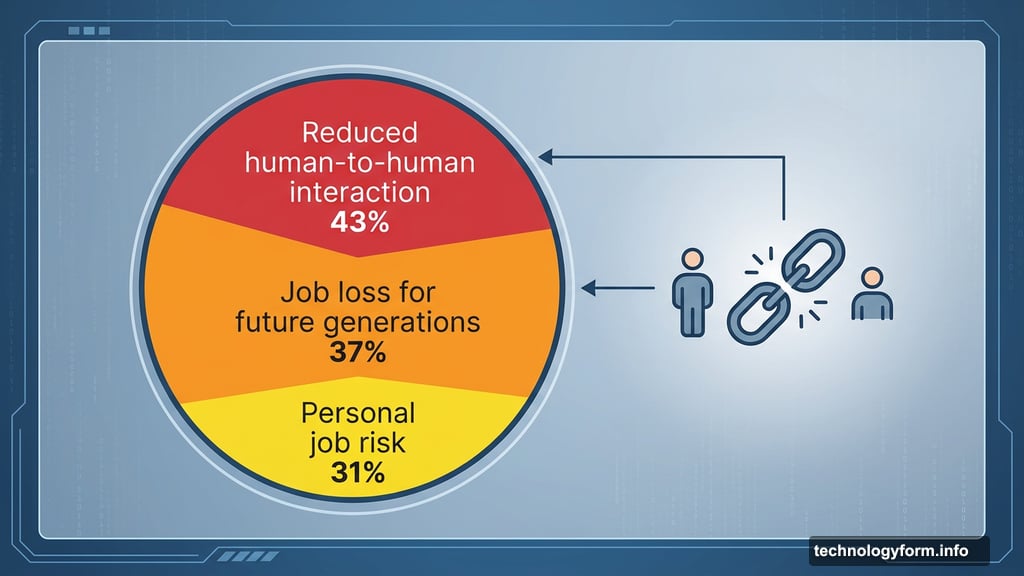
Based on interviews with 2,711 US adults, 43% of respondents said their biggest concern is reduced human-to-human interaction. Job loss for future generations came second at 37%. Personal job risk landed third at 31%.
People aren’t primarily worried about their paychecks. They’re worried about loneliness. They’re worried about a world where fewer conversations happen between actual people. That’s a more personal and harder-to-fix concern than employment statistics.
Baby Boomers Are the Skeptics. Young People Aren’t Convinced Either.
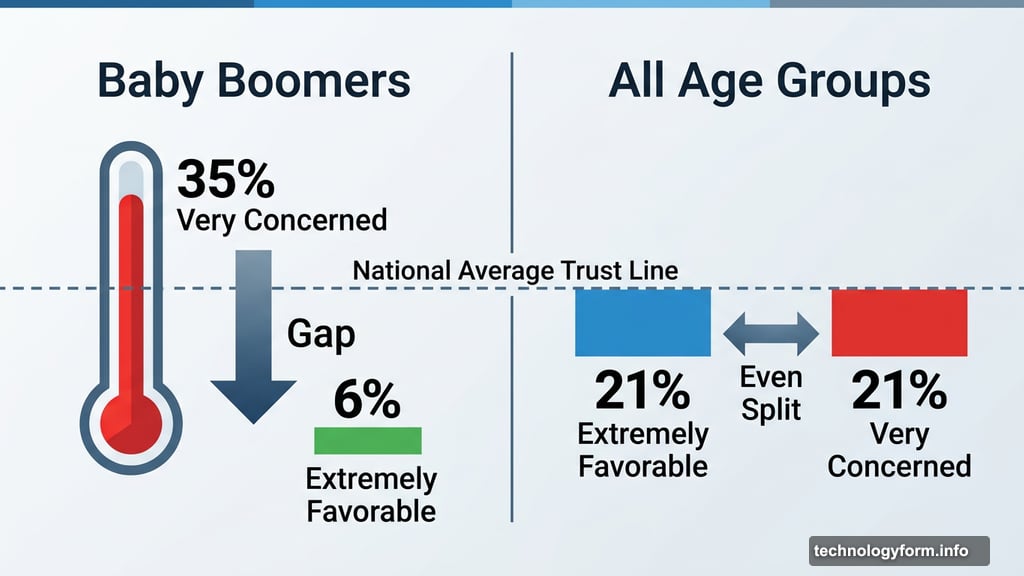
Baby Boomers showed the highest level of skepticism in the survey. A full 35% said they are very concerned about AI’s effects. Only 6% view it extremely favorably. That’s a massive gap between fear and enthusiasm within a single generation.
But the mixed feelings spread across age groups too. Just 21% of all respondents reported an extremely favorable outlook toward AI. An equal 21% said they are very concerned about its consequences. The split runs almost perfectly down the middle.
Privacy Skepticism Follows Users From Social Media
The ACSI findings connect directly to a broader pattern of tech distrust. Forrest Morgeson, associate professor of marketing at Michigan State University and director of research emeritus at the ACSI, put it plainly.
“Consumers spent the last decade learning to distrust how social media platforms handle their data,” Morgeson said, “and AI’s privacy scores suggest they’re carrying that skepticism forward.”
That’s a really important point. The privacy battles with Facebook, Google, and Twitter didn’t disappear. They simply transferred. People learned hard lessons about what happens when they hand personal data to tech companies. Now they’re applying that same caution to AI chatbots and assistants.
And honestly? That skepticism seems earned.
A Billion Users, But Public Perception Lags
ChatGPT reportedly reaches up to a billion weekly users. That’s a staggering number. Yet the gap between actual AI usage and public trust in AI remains wide.
The ACSI survey found that 56% of respondents had no recent experience with AI at all. But among the 44% who did use it, half engage with AI tools at least once a day. Usage also climbed noticeably among people earning over $100,000 a year.
So AI adoption is growing fast among certain groups while large parts of the population haven’t touched it yet. That creates a split perception problem. Power users see the benefits daily. Everyone else reads the headlines about misinformation, deepfakes, and job displacement.
A separate YouGov poll published the same week reinforced these findings. Only 29% of respondents believe AI’s positive effects outweigh the negative ones. A larger 36% think its net effects are negative overall.
And last month, an NBC poll suggested AI ranked among the least-liked things in America. Though for the record, it still polled better than the Democratic Party.
What This Really Means for AI Companies
The score of 73 isn’t catastrophic. But it’s a warning sign for an industry that expected smoother sailing by now.
Building trust takes time, and AI companies are essentially asking people to hand over their data, their work, and sometimes their most personal questions to systems that feel opaque and unpredictable. That’s a big ask. Especially when privacy explanations remain confusing, error rates stay visible, and the technology moves faster than most people can process.
The platforms landing at the bottom of these rankings, especially Grok, have extra work to do. Sitting below social media in public trust is not a great place to build a business case.
The concern about losing human interaction also deserves more attention from developers. People aren’t just worried about what AI does wrong. They’re worried about what it replaces. And that’s a harder problem to solve with a software update.
The industry knows how to build capable AI. Building trustworthy AI that people actually feel good about using? That’s a very different challenge, and the clock is ticking.