Meta Is Recording Your Every Click to Train AI. Workers Can’t Opt Out.
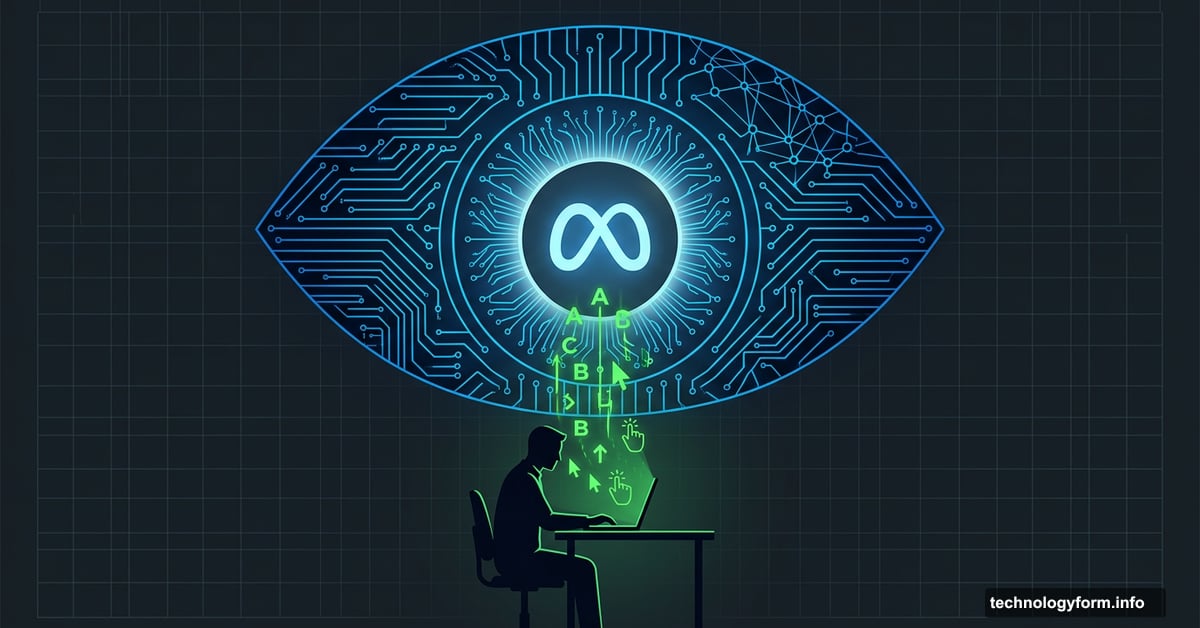
Meta just told its employees something most companies would never say out loud. Every keystroke, mouse movement, and click on their work computers is being recorded. And no, there’s no way to turn it off.
That’s the reality facing Meta’s US-based staff right now. The company is rolling out surveillance software called the Model Capability Initiative, and workers found out the hard way that their discomfort doesn’t change anything.
What the Model Capability Initiative Actually Does
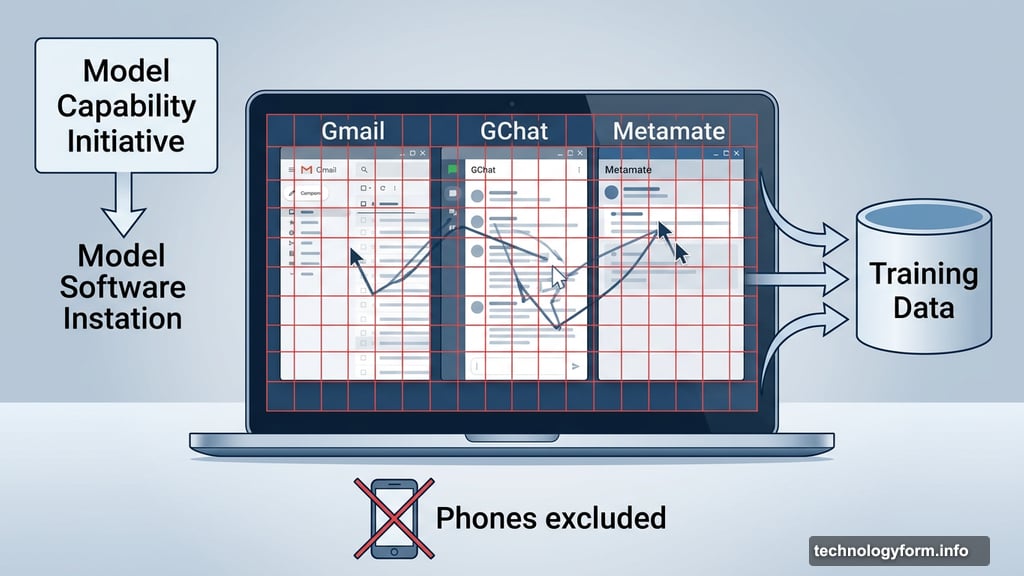
The software installs directly on employee and contractor computers. It watches everything happening in work-related apps and websites, capturing keystrokes, clicks, mouse movements, and even screenshots of what’s on screen.
Phones, at least, are off the table. But your work laptop? Completely fair game, according to Meta.
The monitored apps include Gmail, GChat, and Metamate, which is Meta’s own internal AI assistant. So yes, the AI assistant is being watched to help train better AI assistants. It’s surveillance all the way down.
“There Is No Way to Opt Out”
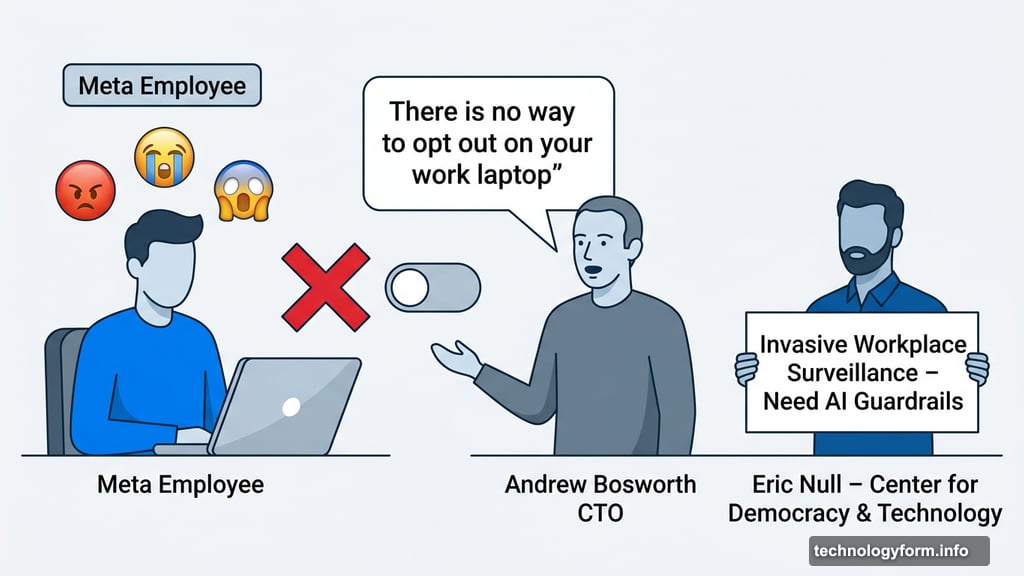
When employees saw the announcement posted internally, the reaction wasn’t great. One worker wrote on Meta’s internal communications platform, “This makes me super uncomfortable. How do we opt out?”
Meta CTO Andrew Bosworth had a blunt reply. “There is no way to opt out on your work laptop.”
According to Business Insider, staff responded with a flood of shocked, crying, and angry emoji. Probably not the engagement Meta was hoping for.
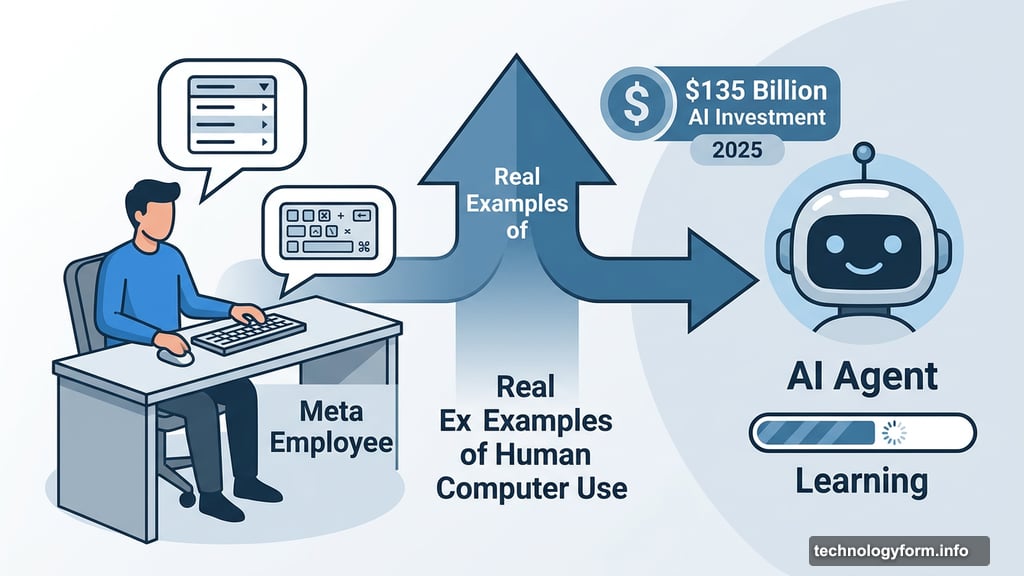
Bosworth did offer some context. His long-term vision involves AI agents doing much of the actual work while employees direct them and help them improve. The tracking, in theory, gives those agents real examples of how humans navigate computers, including things like selecting dropdown menus and using keyboard shortcuts. Tasks the AI can’t yet replicate on its own.
Why Meta Wants This Data
Meta is spending more than $135 billion on AI development this year alone. With that kind of investment, the company needs training data that reflects how people genuinely use computers in professional settings.
A Meta spokesperson told CNET the software captures “real examples” of how people interact with their machines. They also confirmed safeguards exist to protect sensitive content, and that the collected data won’t be used in performance reviews or visible to managers.
The memo framing was almost cheerful about it. “This is where all Meta employees can help our models get better simply by doing their daily work,” it read.
Not everyone found that framing reassuring.
Privacy Experts Are Worried
Eric Null, director of the Privacy and Data Project at the Center for Democracy & Technology, called Meta’s approach one of the most invasive forms of workplace surveillance he’s seen.
“That invasiveness underscores the need for clear privacy protections and AI guardrails,” Null told CNET. He also flagged a specific concern that goes beyond general discomfort. “This type of surveillance can cause real harm to people with disabilities, and workers in general chafe at this kind of tracking. Using this data for AI training in particular has the potential to replicate structural biases.”
That last point matters. If the AI learns from how employees interact with computers, it also learns from any biases, workarounds, or accommodations baked into those interactions. Structural problems don’t disappear when you feed them into a model. They get encoded into it.
The Bigger Picture Is Pretty Uncomfortable
Bill Howe, associate professor at the University of Washington’s Information School, put it bluntly when talking to CNET. “Employees everywhere are helping to train the systems that will take their jobs.”
That’s not a hypothetical. Meta plans to lay off about 8,000 employees starting May 20. That’s 10% of its 79,000-person workforce. The company has cut around 25,000 jobs since 2022.
So the same workers being monitored to train AI are also watching their colleagues get replaced. The memo doesn’t mention that part.
Meta did boost its profile in the AI race earlier this month with the debut of Muse Spark, the first AI model from its Superintelligence Labs. The company also broke ground on a new data center in Tulsa, Oklahoma this week, which will be its 28th US facility when completed.
Howe argues the situation points to a deeper structural problem. He told CNET that the federal government should consider new tax laws to address “the runaway inequity that is emerging” as tech companies boost investor returns while shrinking their workforces. “As Meta is demonstrating, companies ultimately are not incentivized to care about workers, so we need solutions at the federal level,” he said.
Meta does note that employees are informed when hired that work devices can be monitored. So technically this isn’t new policy. But there’s a difference between a general disclaimer and installing dedicated AI training software with no opt-out option.
Knowing your laptop might be monitored is one thing. Finding out every click is being captured to train a model that may eventually replace your role is something else entirely. The distinction matters, even if Meta’s legal team disagrees.