Google Dropped Gemini 3.0 Pro Without Fanfare. Smart Move
Google just released Gemini 3.0 Pro. No flashy keynote. No Sundar Pichai on stage. Just a quiet rollout across Chrome, Workspace, and Android.
This wasn’t an oversight. It’s a completely different AI strategy than what OpenAI or Anthropic pursue. Instead of positioning AI as a standalone product you interact with, Google embedded reasoning throughout tools people already use daily.
Let’s examine what actually changed and why this matters more than the low-key launch suggests.
What Makes 3.0 Pro Different
Gemini 2.5 Pro already handled multimodal reasoning well. It processed documents across Workspace and maintained context through long conversations. So what’s new?
Version 3.0 Pro delivers three core improvements. First, inference runs faster—noticeably so when processing mixed inputs. Second, factual consistency increased. The model produces fewer hallucinations and cites sources more accurately. Third, it understands visual and textual data simultaneously with better fidelity.
Google tested this internally on AI Studio and Vertex AI. Results showed clearer interpretation of complex layouts like spreadsheets embedded in PDFs or screenshots containing multiple data types. The model now maintains referential accuracy, meaning it correctly links text summaries to specific figures or page sections.
Chrome Gets Smarter Without You Noticing
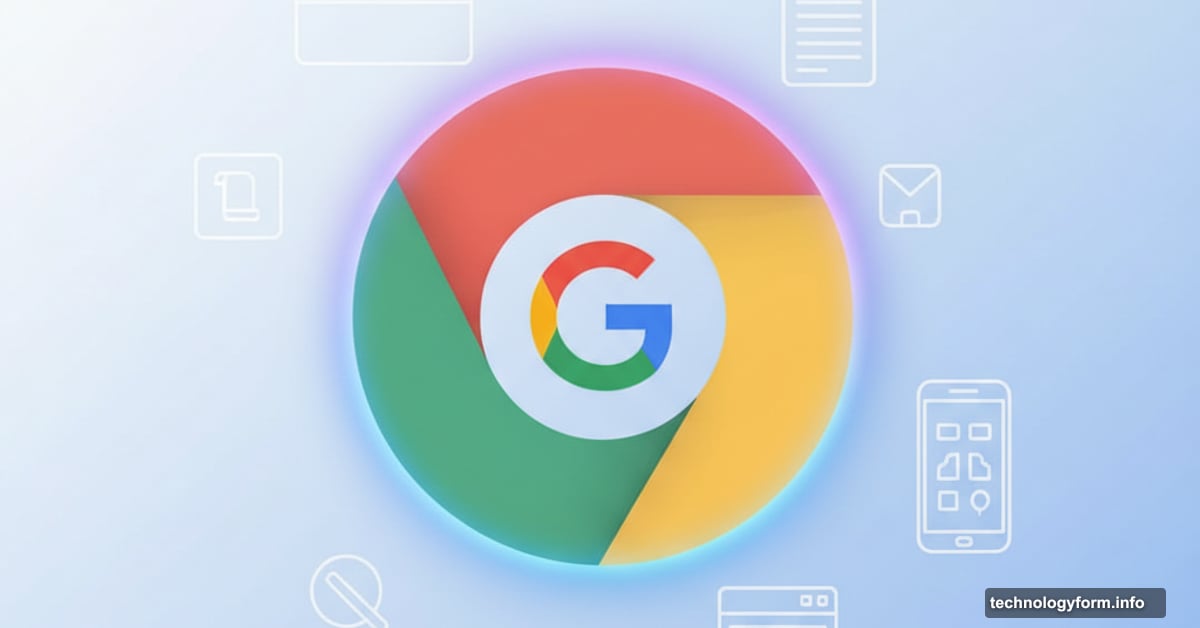
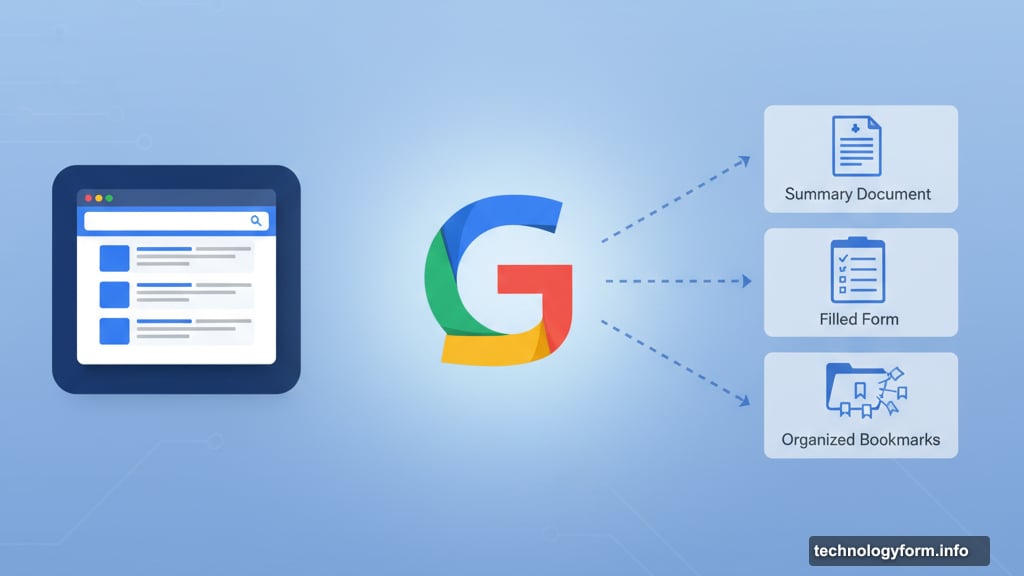
Recent Chrome Canary builds reveal “Contextual Tasks”—a framework letting Gemini analyze and act on web content directly in your browser.
This isn’t another chatbot tab. Instead, Gemini works in the background while you browse. It can summarize pages, extract structured information, and handle light automation like filling forms or organizing bookmarks. All without disrupting your workflow.
Google calls this “ambient AI.” The assistant stays aware of your context but doesn’t demand your attention. You browse normally. Gemini provides support when useful, stays invisible when not needed.
For power users juggling research across dozens of tabs, this changes productivity fundamentally. No more copying content to a separate AI chat. The reasoning happens where you work.
The Architecture Behind Better Reasoning
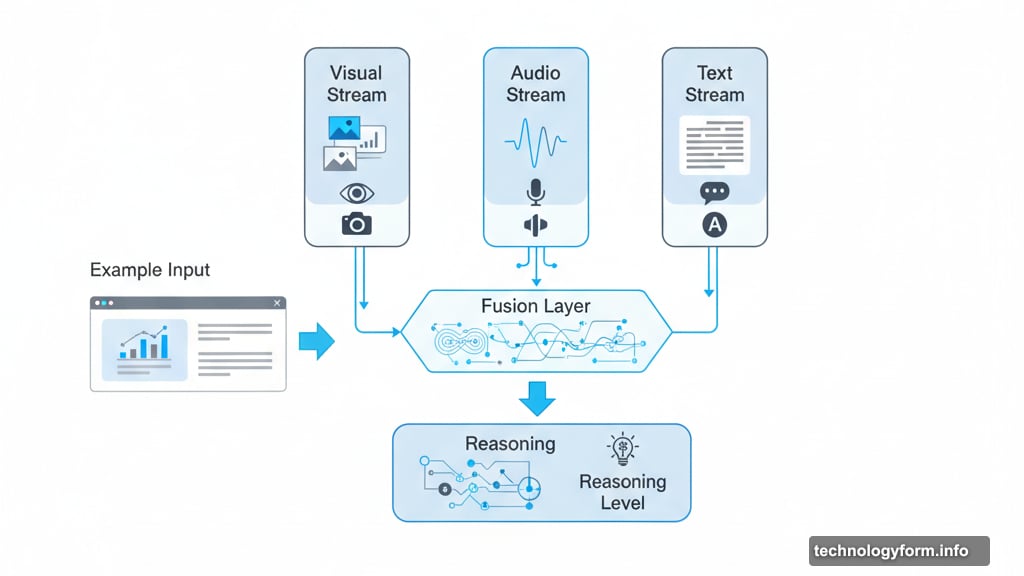
Gemini 3.0 Pro uses a multi-tower architecture. Visual, audio, and text streams get processed separately, then fused at the reasoning level.
This matters because previous models struggled with mixed inputs. A screenshot containing both text and graphs would confuse some AI systems. They’d interpret the text accurately but misread the visual data, or vice versa.
The new architecture maintains internal consistency. When you feed it a technical report with embedded charts, Gemini understands how the text relates to the visuals. It doesn’t treat them as separate elements requiring manual connection.
Key improvements include a better visual encoder that reads tables and diagrams more reliably. The textual reasoning component expanded its token window and added structured planning. Cross-modal fusion improved time synchronization, producing consistent output whether you input text or images.
Moreover, the output controller got smarter about citations. Summaries drift less from source material. When Gemini quotes a document, it actually references the correct section now.
These technical refinements make 3.0 Pro particularly useful for enterprise work. Legal analyses, technical reports, and policy assessments all involve mixing visual and textual data. Gemini now handles these scenarios with greater precision.
Workspace Integration Goes Deeper
Gemini 3.0 Pro didn’t arrive as a chatbot bolted onto Gmail. Instead, it became a reasoning layer running inside Google Workspace.
It can summarize email threads by pulling context from related Drive documents. In Docs, it maintains quote integrity when citing multiple sources. In Sheets, it interprets data while understanding the broader project context from connected files.
For enterprises using Vertex AI, the same model runs via API. Organizations can build specialized agents that leverage Gemini’s multimodal understanding while respecting data governance policies.
Planned applications span several Google products. Workspace gets automatic email digests and project briefings. Vertex AI enables multimodal RAG—combining text and images for data analysis. Google Cloud Search retrieves information with better contextual awareness. Android suggests actions based on screen content.
Essentially, Google positioned Gemini as shared reasoning infrastructure. Not a separate tool you switch to, but intelligence embedded in existing workflows.
How This Differs From Competitors
OpenAI focuses on autonomous agents with external tools. Anthropic emphasizes modular skills and secure personalization. Microsoft pushes direct file manipulation through Copilot.
Google took a different path: environmental embedding. Instead of building AI that operates independently, they integrated reasoning into environments where people already work.
This creates distinct advantages. Users don’t learn new interfaces or switch contexts. AI assistance appears exactly where needed, within familiar tools. Plus, governance and security policies extend naturally from existing Google Cloud infrastructure.
The tradeoff? Less theatrical. No “AI just booked my entire vacation” demos. Instead, Gemini quietly makes your existing Google tools smarter without demanding attention.
For regulated industries—finance, healthcare, law—this approach offers practical benefits. Context and traceability matter more than flashy capabilities. Organizations need AI that integrates with existing compliance frameworks, not standalone systems requiring separate oversight.
Why Launch Quietly
Most AI companies announce models like product launches. Press releases, demos, benchmarks published to leaderboards. Google shipped Gemini 3.0 Pro with minimal publicity.
This reflects their philosophy: AI should feel native, not novel. When you use improved Gmail search or better Chrome suggestions, you benefit from AI without thinking about it. The technology disappears into the interface.
For businesses, this matters more than launch hype. You get multimodal reasoning with deep context handling, governed by Google Cloud controls you already understand. No separate vendor relationship. No new security reviews. Just better performance from tools you’re already using.
Android 15 system assistants and Chrome Actions gain Gemini capabilities through silent updates. Users experience improvements without disruption. IT departments don’t scramble to evaluate yet another AI product.
The Bigger Picture
Gemini 3.0 Pro signals a shift from isolated AI models to distributed intelligence. Instead of one chatbot you visit for AI tasks, Google spreads reasoning across Chrome, Workspace, and Android.
Documents become surfaces where AI collaborates with you. Web pages transform into interactive data sources. Messages carry contextual understanding that extends across your entire communication history.
This isn’t just incrementally better AI. It’s a fundamentally different integration approach. The assistant doesn’t interrupt your work—it enhances it from within.
Whether this strategy wins against more prominent competitors remains uncertain. But for users who prefer their AI helpful rather than theatrical, Gemini 3.0 Pro delivers exactly that. Smarter tools. Same workflow. No fanfare required.