AI Can’t Steal Your Purpose. You Just Have to Reclaim It
OpenAI’s CEO asked a question that stopped me cold during a livestream last year. Sam Altman turned to his chief scientist and asked what meaning would look like when AI automates everything.
I’ve thought about nothing else since. And I finally have an answer.
The Question That Changed Everything
It happened 58 minutes into a forgettable October broadcast. I was barely paying attention, ready for lunch, when Altman dropped this: “What do you think meaning will look like? How do you think we’ll derive our fulfillment when AI automates everything?”
The question blindsided me. A billionaire tech CEO pondering existential philosophy? That got my complete attention.
His chief scientist gave a thoughtful answer about accessing incredible knowledge. The stream ended. My workday continued.
But the question stuck. I cornered friends about purpose and fulfillment. I thought about it at stoplights, on dog walks, in those moments before sleep.
Meaning Lives in What We Choose to Do Anyway
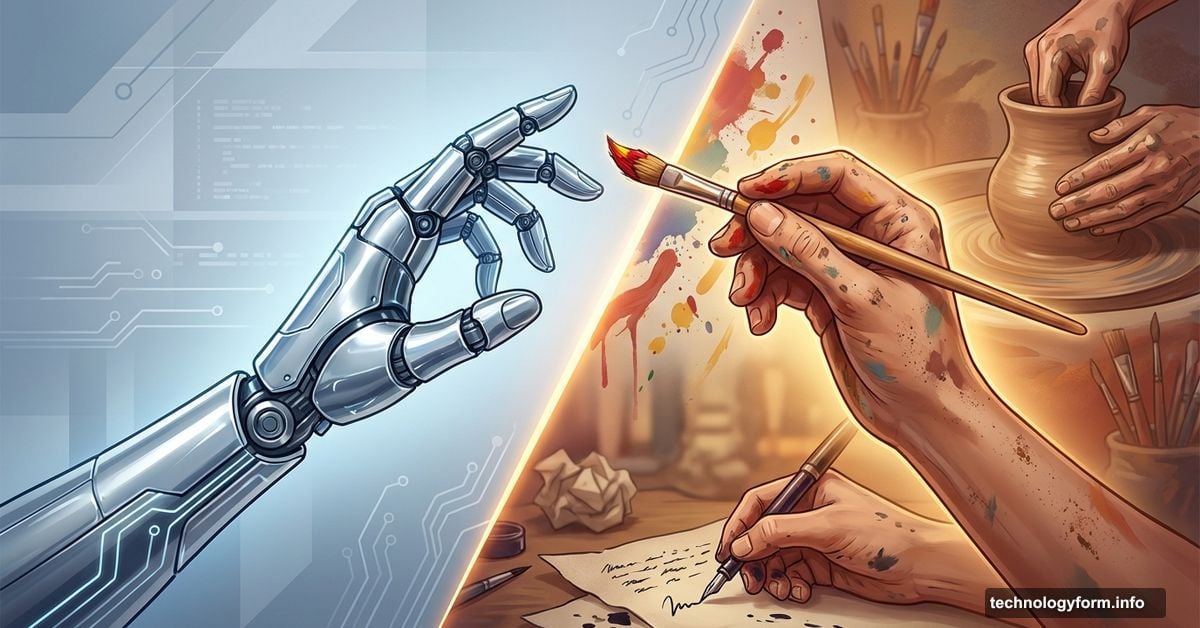
Here’s what I figured out, Sam. Meaning doesn’t come from what AI can’t do. It comes from what we choose to do despite AI being able to do it.
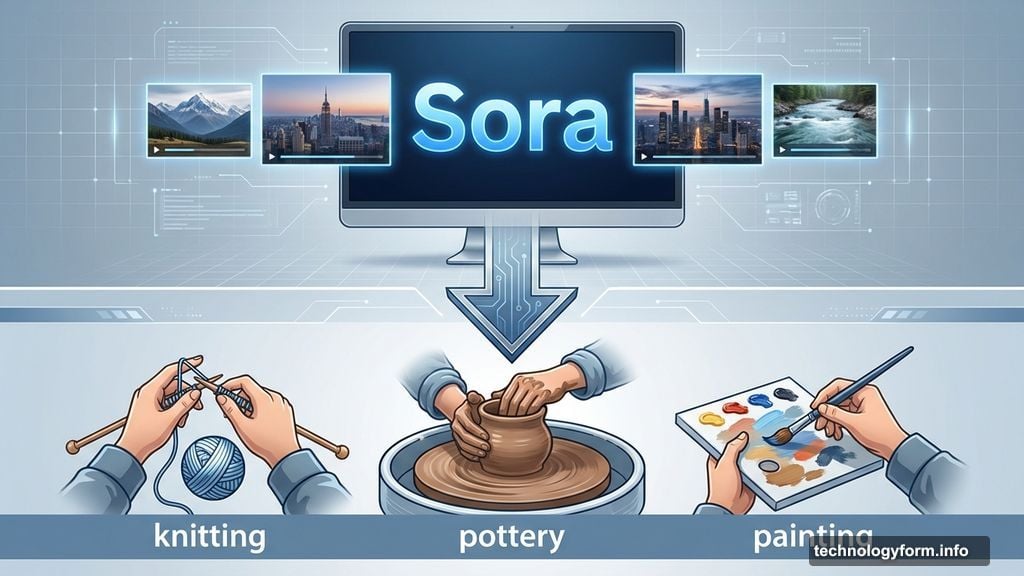
Think about it. We’ve been mechanizing crafts for centuries. Yet people still knit blankets by hand. They roll dough manually. They spread oils on canvas instead of using digital tools.
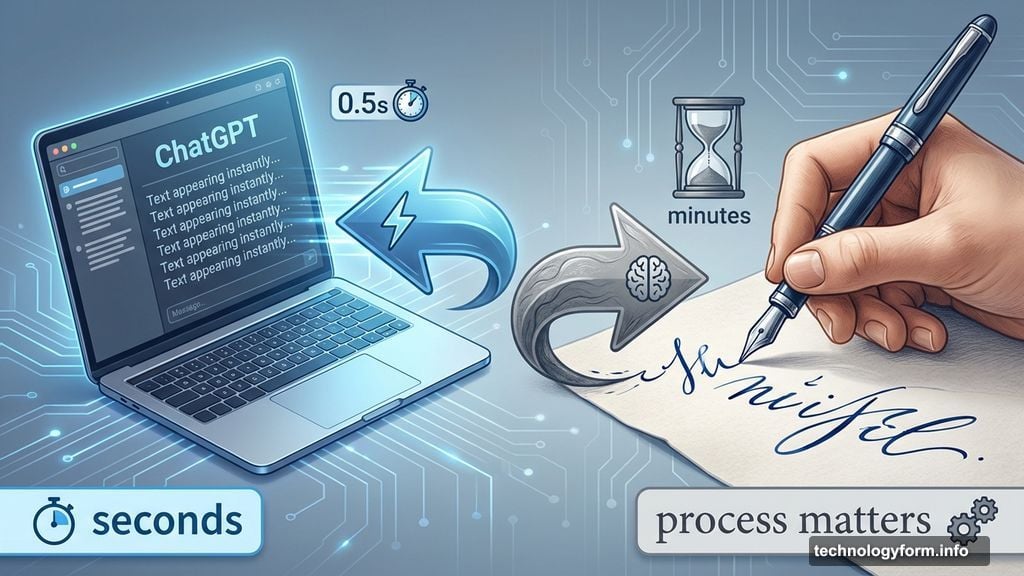
Why? Because the fulfillment isn’t in the output. It’s in our participation.
As generative AI seeps into everything, I’m more moved by process and craft than ever. I watch anime for the staggering artistry. I take pottery classes just to work with my hands. I read interviews with film sound designers because their craft captivates me.
Machines could imitate all of this. They might even execute it flawlessly. But what matters is that I’m part of the process. I’m involved in the time, effort, curiosity and attempt.
The Tangible Feels Precious Now
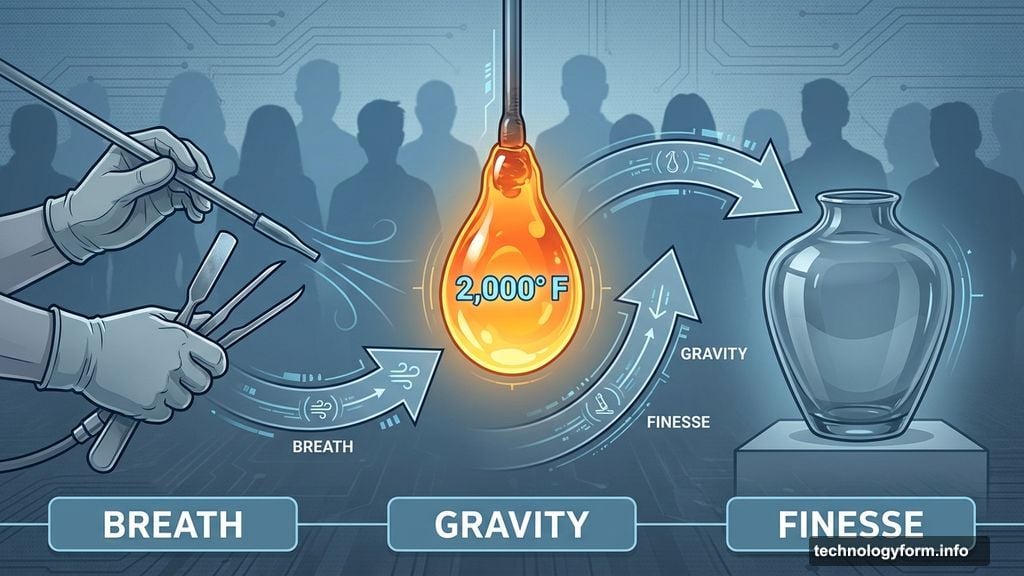
When ChatGPT spits out essays in seconds and Sora conjures photorealistic videos, the tangible feels newly precious. Last month at the Toledo Museum of Art, I watched a glassblowing demonstration for over 30 minutes.
The artist worked with molten glass exceeding 2,000 degrees. He shaped it with breath, tools and decades of embodied knowledge. When imperfections appeared, he compensated with gravity and finesse, turning flaws into intentional design.
The crowd stood silent, mesmerized. We weren’t just watching an object being made. We watched a human negotiate with physics, chance and his own limitations in real time.
No AI can replicate that specific negotiation. That particular dance with materiality and risk. The point wasn’t that AI can’t blow glass. The point was all of us being present, sharing this experience together.
Handwriting Contains the Person
While writing this, I got a letter from my best friend Sydney. Her handwriting made me tear up. That distinctive slant. The way she loops her Ys.
Her handwriting contains her. Her hand moved across that paper. She thought of me while forming those letters.
An AI could perfectly forge her script. But it couldn’t forge the fact of her having been there, pen in hand, thinking of me.
The Body Becomes Central
AI chatbots can do much of your thinking and outperform many work tasks. So let’s embrace hands-on pursuits where the body is central.
Martial arts, boxing, yoga, climbing, hiking, dance. These will become potent antidotes to AI oversaturation. The brain is physical reality too. Even a sedentary writer finds meaning as they try, choose, delete and shape.
An AI model can draft prose or generate videos of someone dancing. But it can’t generate muscle memory. It can’t capture how a dancer interprets music in that specific, unrepeatable moment. It can’t replicate how a writer wrestles with a sentence until it finally says what they need it to.
That’s reserved for us humans.
Beauty in Imperfection
I keep thinking about wabi-sabi, the Japanese concept that finds beauty in imperfection and impermanence. And kintsugi, the art of mending broken pottery with gold-dusted lacquer.
The result is often asymmetrical. The flaws are obvious. It’s evidence of having been made by human hands, subject to human mistakes and limitations.
We’re moved by evidence of other consciousnesses like our own. By proof that someone else was here, paying attention, making choices, leaving traces. By knowledge that something cost effort, risk or time.
These are the very things AI makes frictionless.
The Imperfect Becomes Valuable
In a world where AI generates “optimized” everything, the imperfect becomes valuable. The mark of a human hand becomes the signature of meaning itself.
Meaning is tied up in the mess, inefficiency, frustration and misunderstanding. These aren’t just human hallmarks since AI outputs show errors too. But for us, mistakes have real stakes.
On the line are our effort, ego, hope. Our very duration of life as we learn, grow, age, tire and need rest. All in such finite time.
When we err, we try again. That process changes us. That provides value.
So Sam, in the age of AI, meaning will look like everything AI was designed to eliminate. The slowness. The inefficiency. The imperfection. The risk.
The human parts. The embodied, thoroughly human experiences we keep doing not because we have to, but because doing them changes us in wondrous ways.