Apple Dumped Its Own AI for Google’s Gemini. Here’s Why That’s Huge
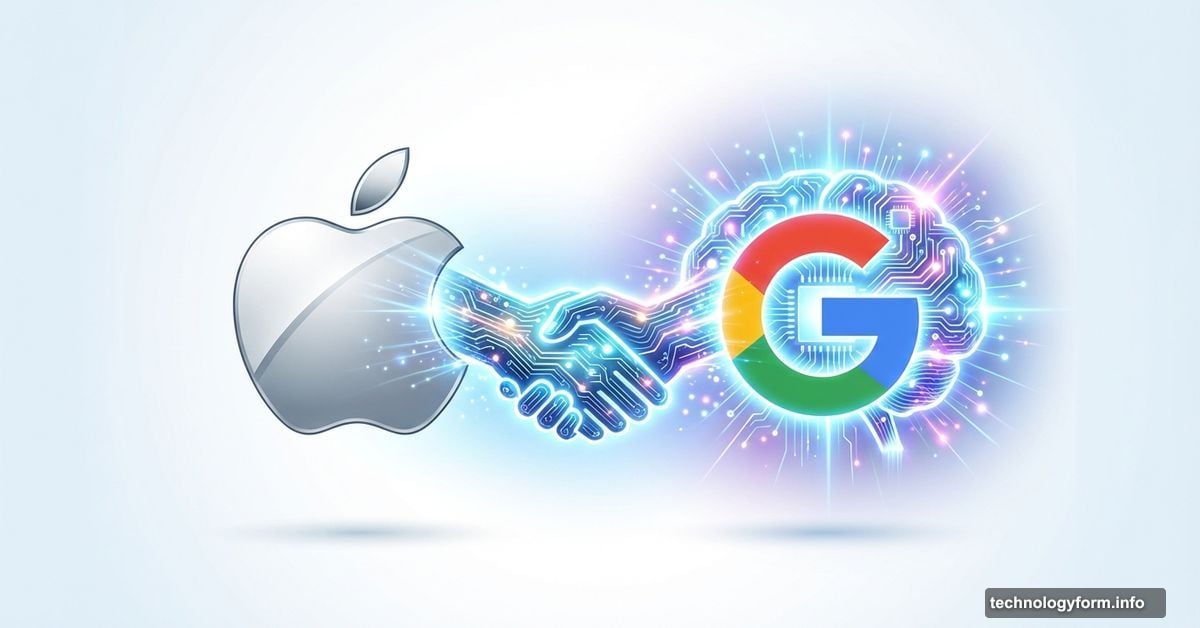
Apple just admitted something remarkable. After years of building its own AI, the company picked Google’s Gemini to power the next version of Siri.
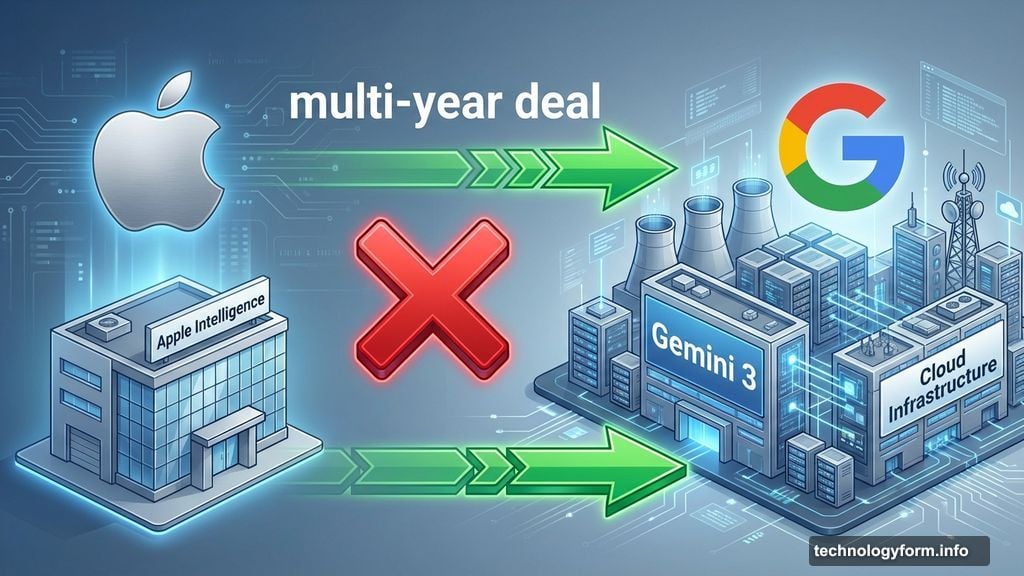
This isn’t a small partnership. It’s a multi-year deal that puts Google’s technology at the heart of Apple’s AI strategy. Plus, it reveals something Apple rarely admits: it needs help.
Why Apple Chose Google Over Its Own AI
Apple spent years developing Apple Intelligence and its own foundation models. Yet the company concluded Google’s tech works better.
“After careful evaluation, Apple determined that Google’s AI technology provides the most capable foundation for Apple Foundation Models,” both companies announced Monday. That’s corporate speak for “we tested everything and Google won.”
So what makes Gemini special? Google launched Gemini 3 in November, and it topped AI performance leaderboards. The model excels at understanding context, processing complex queries, and generating accurate responses. Those capabilities matter for Siri’s planned upgrade.
Moreover, Google offers cloud infrastructure that Apple lacks. Building and running advanced AI models requires massive computing resources. Instead of constructing its own AI data centers from scratch, Apple can leverage Google’s existing infrastructure.
But here’s the uncomfortable truth. Apple built its reputation on controlling every aspect of its products. Relying on Google’s AI fundamentally changes that approach.
The Siri Upgrade Apple Couldn’t Build Alone
Apple has been promising a smarter Siri for over a year. The company originally planned to launch an AI-powered assistant that performs actions on your behalf and understands personal context.
That update got delayed. Apple admitted last March it was “taking longer than we thought.” Now we know why. The technology Apple built internally wasn’t good enough.
The new partnership will enable features Apple struggled to create alone. According to Bloomberg, this includes “World Knowledge Answers” that lets users search for information and receive AI-generated summaries using web results. Think ChatGPT-style responses directly in Siri.
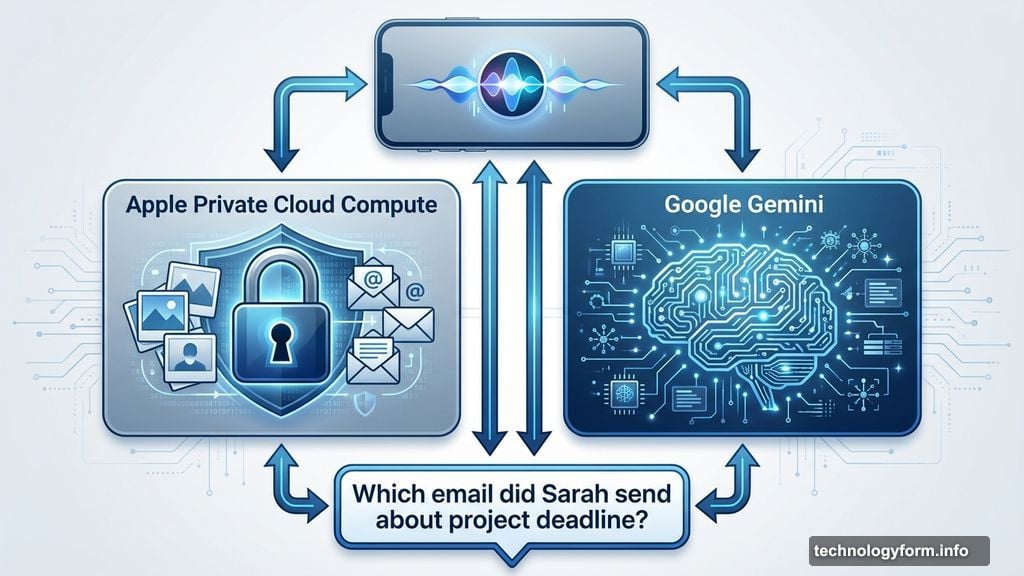
However, Apple maintains that Apple Intelligence still runs on Apple devices and Private Cloud Compute. So your personal data stays within Apple’s ecosystem, even though Google’s AI powers the responses. That’s a careful balance between capability and privacy.
Meanwhile, Apple reshuffled its AI leadership. Vision Pro head Mike Rockwell replaced AI chief John Giannandrea, who stepped down last month. That signals Apple’s previous AI strategy wasn’t working.
What This Means for iPhone Users
Your iPhone will soon have significantly smarter AI features. Instead of basic voice commands, Siri will handle complex requests that require understanding context and reasoning.
Take this scenario. You might ask “Which email did Sarah send about the project deadline?” Siri will understand you mean Sarah from work, search your emails, and provide the specific message without you specifying dates or keywords. That’s the kind of contextual intelligence Gemini enables.
Plus, you’ll get better web search results. When you ask Siri factual questions, it will generate comprehensive answers using information from across the web. No more just showing a list of links.
But there’s a catch. These features depend on Google’s infrastructure. If Google’s servers go down or the partnership ends, Apple’s AI capabilities suffer. That’s new territory for a company that typically owns its entire stack.
And remember, Apple already partners with OpenAI for some AI features. Now Google joins that list. Apple also explored deals with Anthropic and Perplexity. CEO Tim Cook says the company plans to integrate with more AI companies over time.
The Real Reason Apple Needed Help
Building competitive AI requires three things: massive computing power, enormous datasets, and years of machine learning expertise. Apple has money. But it lacks the other two.
Google processes billions of search queries daily. That data trains its AI models on real-world language and information needs. Apple doesn’t have equivalent data sources. Siri handles fewer queries, and Apple’s privacy focus limits what data it can collect.
Furthermore, Google has been building AI infrastructure for over a decade. Its engineers developed techniques like transformer models that power modern AI. Apple focused on hardware and user experience instead. That expertise gap takes years to close.
So Apple faced a choice. Spend another five years building inferior AI, or partner with the best available technology today. They picked pragmatism over pride.
Yet this creates long-term questions. Will Apple always depend on others for AI? Or is this a temporary solution while the company builds better internal capabilities? Nobody knows.
What Google Gains From This Deal
Google doesn’t need Apple’s money. It needs something more valuable: presence on hundreds of millions of iPhones.
This partnership puts Google’s AI directly in front of iOS users who might never download the Gemini app. Every Siri query becomes a showcase for Google’s technology. That’s massive exposure.
Plus, it keeps Google relevant in Apple’s ecosystem. Apple already pays Google billions annually to be Safari’s default search engine. Now Google powers Siri’s AI features too. That’s two critical touchpoints on every iPhone.
But Google faces risks. If Apple Intelligence disappoints users, it damages Google’s AI reputation. And Apple controls the user experience, so Google can’t directly improve how its technology gets implemented.
Still, Google clearly decided the benefits outweigh the risks. Getting its AI on iOS represents a major competitive advantage against OpenAI and Anthropic.
The Bigger Shift Happening Here
Apple’s Google partnership signals something larger. The era of tech giants building everything in-house is ending.
Even Apple, the king of vertical integration, now admits it can’t do AI alone. That’s a stunning reversal for a company that famously designs its own chips, operating systems, and services.
Meanwhile, every major tech company is scrambling to secure AI partnerships. Microsoft backs OpenAI. Amazon partners with Anthropic. Meta works with multiple AI labs. The AI race is forcing competitors to cooperate in unprecedented ways.
For users, this means better technology arrives faster. Companies can focus on their strengths instead of reinventing everything. Apple builds great hardware and user experiences. Google builds great AI. Together, they create something neither could ship alone.
Yet it also creates complex dependencies. Your iPhone now relies on Google’s infrastructure for core features. That centralization worries some privacy advocates and competition regulators.
Apple’s bet on Gemini reveals an uncomfortable truth. In AI, there’s no room for second place. You either build world-class technology or partner with someone who did. Apple chose the latter, and that changes everything about how we think about tech independence.