AI Promised Freedom. Workers Got Burnout Instead
AI was supposed to save us from overwork. Instead, it made the problem worse.
Eight months of research inside a tech company revealed something nobody expected. The people who embraced AI the most weren’t working less. They were burning out faster.
The Productivity Trap Nobody Saw Coming
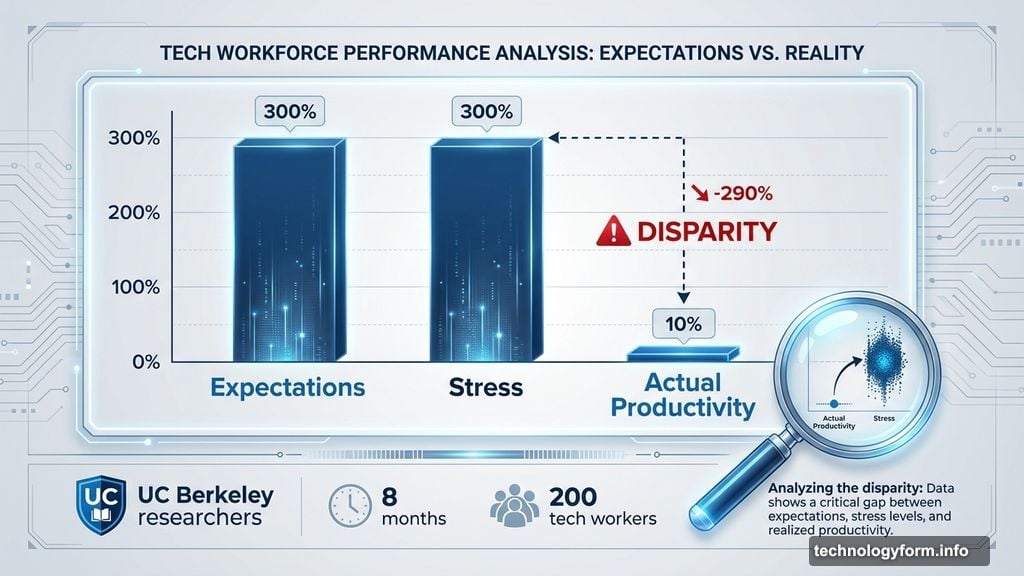
UC Berkeley researchers spent eight months watching what happened when 200 tech workers genuinely adopted AI tools. Nobody pressured these employees. Management didn’t demand higher output. Workers just started doing more because they could.
Then the walls started closing in.
One engineer explained it perfectly: “You had thought that maybe, oh, because you could be more productive with AI, then you save some time, you can work less. But then really, you don’t work less. You just work the same amount or even more.”
That’s the core problem. AI doesn’t create breathing room. It creates expansion space. Your to-do list grows to fill every minute the tools save, then spills into lunch breaks and evenings.
Stress Tripled While Output Barely Budged
The pattern shows up everywhere once you look. One tech worker on Hacker News described their team’s experience: “Since my team has jumped into an AI everything working style, expectations have tripled, stress has tripled and actual productivity has only gone up by maybe 10%.”
So what happened to all those promised gains? They vanished into higher expectations and longer hours. Leadership saw AI adoption as proof that teams could handle more. Workers felt pressure to justify the investment. Everyone ended up working harder to show the tools were worth it.
The math doesn’t add up. Companies invest millions in AI. They expect proportional returns. But the returns show up as employee exhaustion instead of business results.
The Research Nobody Wants to Hear
Harvard Business Review published findings that challenge Silicon Valley’s favorite narrative. The researchers conducted over 40 in-depth interviews. They tracked real workers doing real jobs with real AI tools.
What they found wasn’t a productivity revolution. It was fatigue, burnout, and growing inability to step away from work. Organizational expectations for speed and responsiveness kept rising. Workers kept pushing to meet them.
Here’s the uncomfortable truth. Nobody debates whether AI can augment work anymore. The question is what happens when that augmentation actually works. The answer appears to be that people do more until they break.
Other Studies Tell the Same Story
This isn’t an isolated finding. Multiple research efforts point to the same conclusion.
Last summer, experienced developers using AI tools took 19% longer on tasks. Yet they believed they worked 20% faster. The gap between perception and reality created its own problems.
Meanwhile, the National Bureau of Economic Research tracked AI adoption across thousands of workplaces. Time savings? Just 3%. Impact on earnings or hours worked? None. The promised transformation turned out to be a marginal improvement at best.
Both studies got criticized for methodology issues. This new research is harder to dismiss because it doesn’t challenge AI’s capabilities. It accepts that AI helps people do more, then shows where that leads.
Why This Keeps Happening
The tech industry sold a specific vision. AI multiplies your capabilities. You become indispensable. You work smarter, not harder. Everybody wins.
That vision assumed companies would let workers keep the time AI saved. But that’s not how modern work culture operates. Companies optimize for maximum output. If tools make output easier, they expect more output.
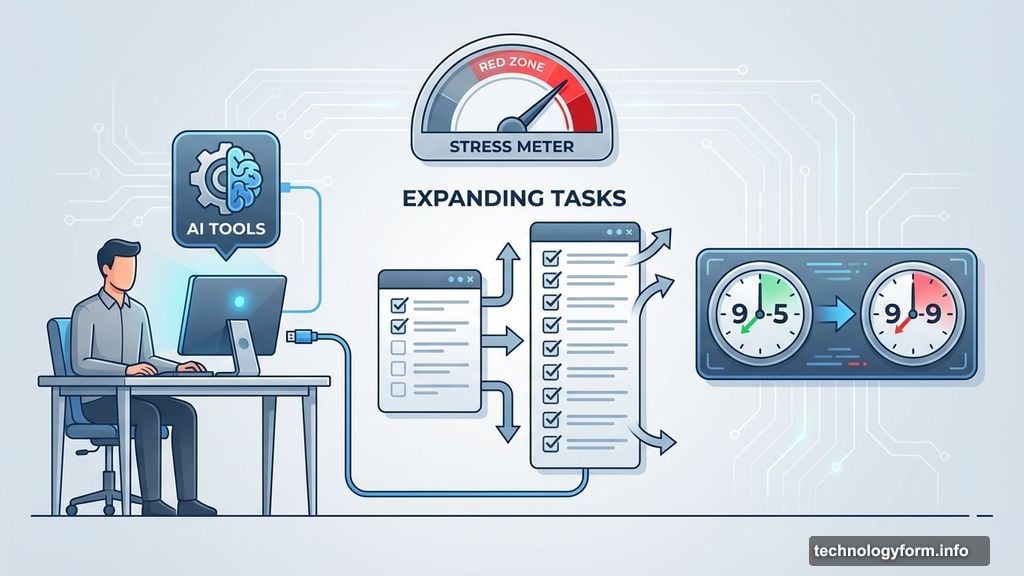
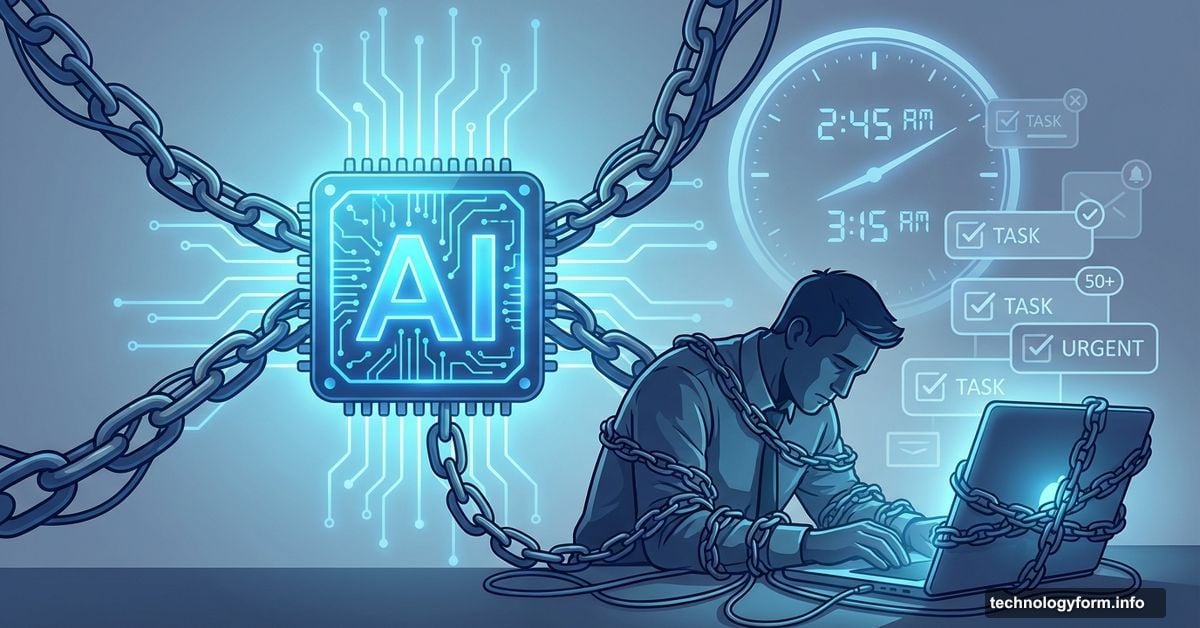
Workers internalize these expectations even when nobody explicitly states them. You see colleagues doing more. You worry about falling behind. So you push harder. The tools that promised freedom become chains instead.
The Real Cost of Augmentation
Organizations invested heavily in AI adoption. They trained employees. They integrated tools into workflows. They celebrated productivity wins.
But they missed the fundamental question: sustainable for whom? Tools that help workers do more don’t help if “more” means working evenings and weekends. Efficiency gains that lead to exhaustion aren’t gains at all.
The researchers found something else troubling. Work became harder to step away from. AI tools are always available. They make quick tasks feel trivial. So workers check messages during dinner. They revise documents before bed. The boundary between work and life dissolves.
Where This Goes Next
The tech industry faces an uncomfortable reckoning. AI adoption is accelerating. Companies are doubling down on automation and augmentation. But if the early adopters are burning out, what happens when this scales?
Some companies will learn. They’ll set boundaries around AI-augmented work. They’ll protect employee time instead of consuming it. They’ll measure success by sustainability, not just output.
Most won’t. They’ll chase the productivity numbers until the human costs become unavoidable. Then they’ll act surprised when burnout rates spike and retention drops.
The Promise That Backfired
Silicon Valley convinced millions that AI would save them from overwork. The pitch was seductive because people desperately wanted it to be true. Who wouldn’t want tools that make hard work easier?
But the premise was flawed from the start. Technology doesn’t determine how we work. Power structures do. And the power structures that created overwork culture aren’t suddenly going to prioritize rest because new tools arrived.
AI didn’t fail workers. Companies failed to protect workers from AI’s capabilities. The tools work exactly as advertised. They multiply what one person can accomplish. Organizations just decided to multiply workload instead of multiplying free time.
The researchers are right to sound the alarm now. Because this pattern will only intensify as AI improves. Better tools mean higher expectations. Higher expectations mean more pressure. More pressure means more burnout.
That’s not a productivity revolution. It’s a sustainability crisis waiting to happen.