Anthropic’s Claude Haiku 4.5 Just Beat Models Twice Its Size
Anthropic dropped Claude Haiku 4.5 this week. And it’s punching way above its weight class.
The new model costs less, runs faster, and somehow matches performance of much larger AI models released just months ago. That’s a big deal. Most small models sacrifice capability for speed. This one doesn’t.
Let’s break down what makes this launch interesting and why it matters for anyone using AI tools right now.
What Makes Haiku 4.5 Different
Small models usually mean compromises. Not this time.
Claude Haiku 4.5 outperforms Claude Sonnet 4 at computer use tasks. That’s impressive because Sonnet 4 launched in May as a midsized model with significantly more computing power. Yet the smaller Haiku matches it.
The coding performance tells the same story. According to SWE-bench Verified testing, Haiku 4.5 performs similarly to both Claude Sonnet 4 and OpenAI’s GPT-5 at software development tasks. Those are larger, more expensive models that companies launched as their flagship offerings.
“It punches way above its weight,” Mike Krieger, Anthropic’s chief product officer, told CNBC. That’s not marketing speak. The benchmarks back it up.
Speed Versus Intelligence Trade-offs
Claude Sonnet 4.5 remains Anthropic’s smartest model. But Haiku 4.5 wins on speed and cost.
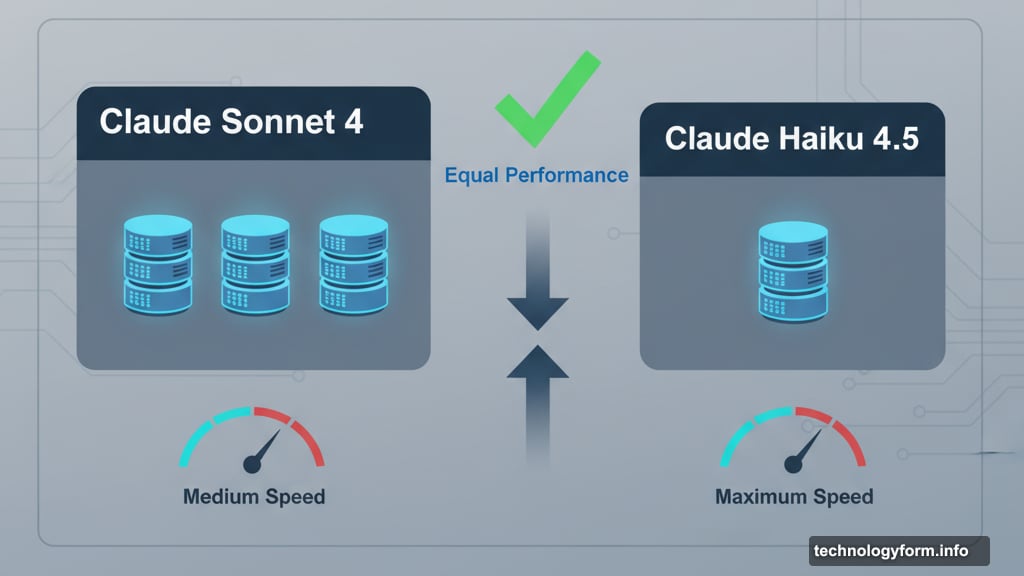
For many tasks, that speed matters more than raw intelligence. Getting a good answer in two seconds beats getting a perfect answer in ten seconds. Especially on mobile devices where network latency already slows things down.
Krieger himself switched to using Haiku 4.5 as his default model on mobile. “It’s just much faster getting an answer,” he explained. Even though Sonnet 4.5 technically performs better, the speed difference makes Haiku more practical for everyday use.
Plus, free users get more capacity with Haiku 4.5 since it consumes fewer resources. That’s a real benefit. Instead of hitting usage limits quickly with Sonnet, free tier users can make more queries with Haiku before running into restrictions.
Two Models Working Together
Here’s where things get interesting. The models can collaborate.
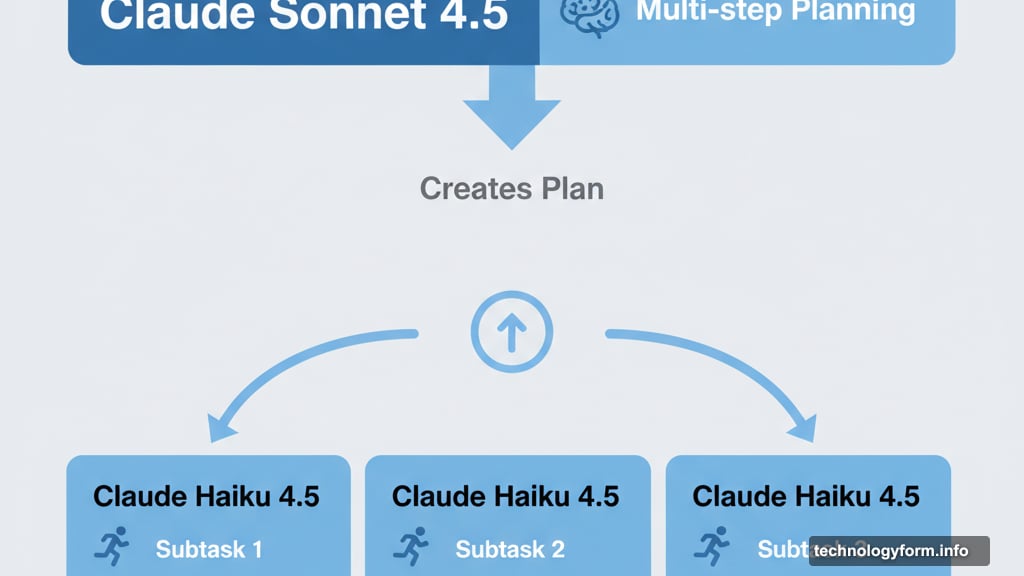
Anthropic designed Claude Sonnet 4.5 to create multi-step plans for complex problems. Then Claude Haiku 4.5 can execute subtasks within those plans. Running them in parallel splits the workload intelligently.
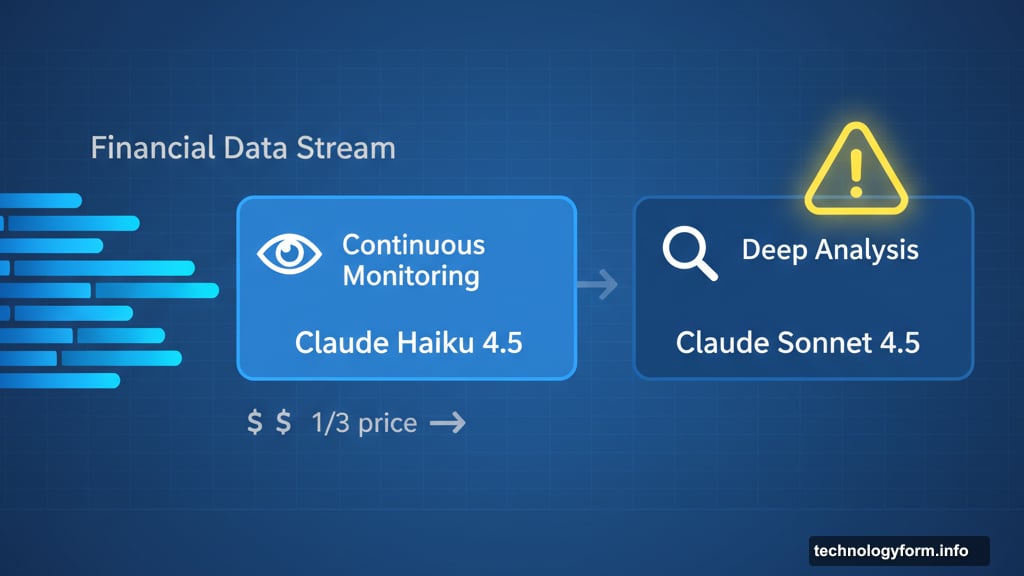
For businesses, this opens up new workflows. Haiku could monitor financial data streams continuously since it’s cheaper to run at high volume. When it spots something interesting, it hands off to Sonnet for deeper analysis.
Think of it like having two employees with different strengths. One scans for issues quickly. The other digs deep when needed. Together they accomplish more than either could alone.
The Pricing Reality
Cost matters in AI deployment. Haiku models typically cost one-third the price of Sonnet models for paid users. Meanwhile, Sonnet models run at one-fifth the cost of Opus models.
Those price differences add up fast at scale. A company making millions of API calls monthly could save tens of thousands of dollars by routing appropriate tasks to Haiku instead of always using Sonnet.
Free users benefit too. They still access Claude Sonnet 4.5 if needed. But defaulting to Haiku 4.5 gives them more queries before hitting capacity limits. That’s a practical improvement in daily usability.
Anthropic’s Aggressive Release Schedule
The company isn’t slowing down. They launched Claude Sonnet 4.5 in September and Claude Opus 4.1 in August. Now Haiku 4.5 arrives just weeks later.
And there’s more coming. Krieger confirmed they’re working on another model, likely an updated Opus, targeting release by end of year or early 2025. That’s an incredibly fast cadence.
The parallel development explains the pace. While training Sonnet 4.5, Anthropic already started work on Haiku 4.5. They’re not waiting for one launch to complete before beginning the next. “We’re really firing on all cylinders,” Krieger said.
The Competitive Pressure
Anthropic faces serious competition. OpenAI’s valuation hit $500 billion compared to Anthropic’s $183 billion. After launching GPT-5 in August, OpenAI inked multibillion-dollar infrastructure deals and released the Sora video app.
But Anthropic’s numbers look strong. The company serves over 300,000 business customers. Their annual revenue run rate approaches $7 billion this month according to company statements. That’s real traction.
Still, the AI race doesn’t allow much breathing room. Every company pushes to release better models faster. Last year’s breakthrough becomes this month’s baseline. The only constant is acceleration.
Who Should Use Which Model
The choice depends on your specific needs. Claude Sonnet 4.5 still wins for maximum intelligence on complex tasks. Use it when you need the absolute best reasoning and analysis.
But Claude Haiku 4.5 makes more sense for many everyday tasks. Quick questions, simple coding problems, data monitoring, and mobile use all favor the faster, cheaper model. You’ll get good answers without overpaying for capability you don’t need.
For developers, the parallel approach offers the most flexibility. Route simple queries to Haiku. Reserve Sonnet for complex problems. Let the models work together on multi-step projects. That optimization saves money and improves performance simultaneously.
What This Means for AI Development
Small models matching large model performance changes the economics of AI deployment. Companies can serve more users at lower cost. That expands who can afford to build AI-powered applications.
The trend also suggests model efficiency matters as much as raw size. Throwing more parameters at a problem isn’t the only path to better performance. Smarter training, better architectures, and clever optimization all contribute.
Expect other AI companies to follow this pattern. Small, efficient models that punch above their weight will become standard. The days of “bigger is always better” are ending. Now it’s about finding the right model for each specific task.
Anthropic just made that easier with Claude Haiku 4.5. And judging by their release schedule, they’re not done pushing boundaries.