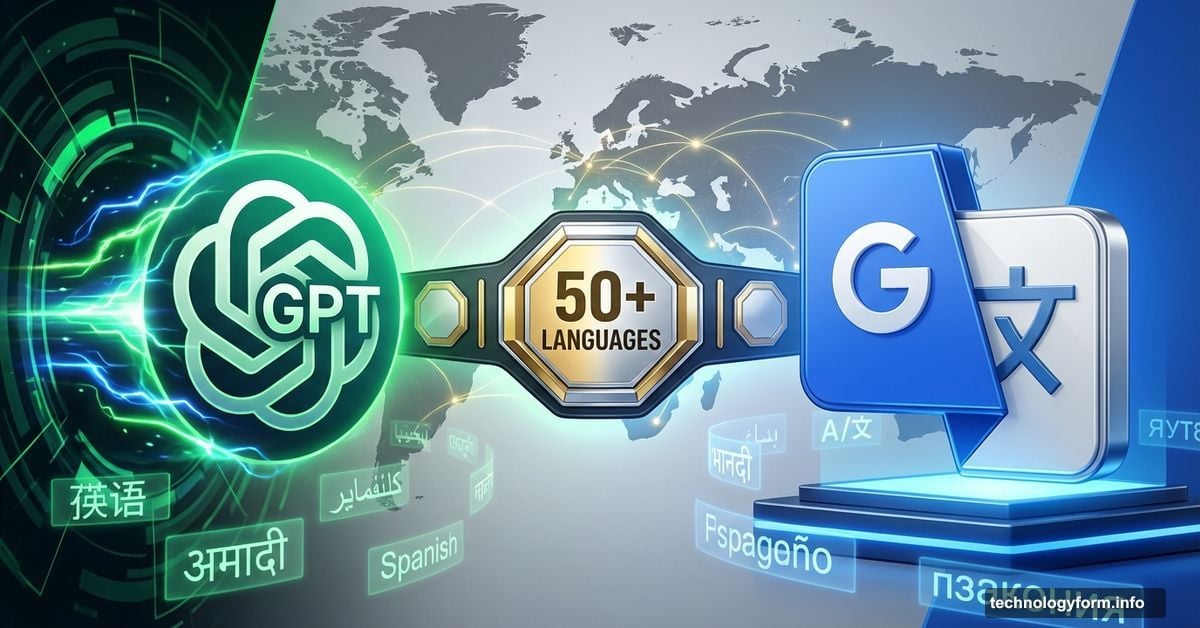
ChatGPT Just Built a Google Translate Killer
OpenAI dropped a new translation tool that directly challenges Google’s decade-long dominance. No fanfare. No announcement. Just a standalone webpage at chatgpt.com/translate that converts text across 50 languages.
Here’s the twist. This isn’t just another text translator clone. Scroll past the basic interface and you’ll spot hints of what’s coming: voice translations and image recognition for translating signs or documents. Those features aren’t live yet, but OpenAI clearly signals where this is heading.
The timing matters. Google just crushed CES 2025 with live translation headphones and added 110 languages to its translation arsenal last year. Meanwhile, companies like Macy Meyer tested at CES are building pocket devices that let you hold real-time conversations across language barriers without speaking a word of the other person’s language.
What Makes This Different From Regular ChatGPT
You can already translate in ChatGPT’s main chat interface. So why build a separate page?
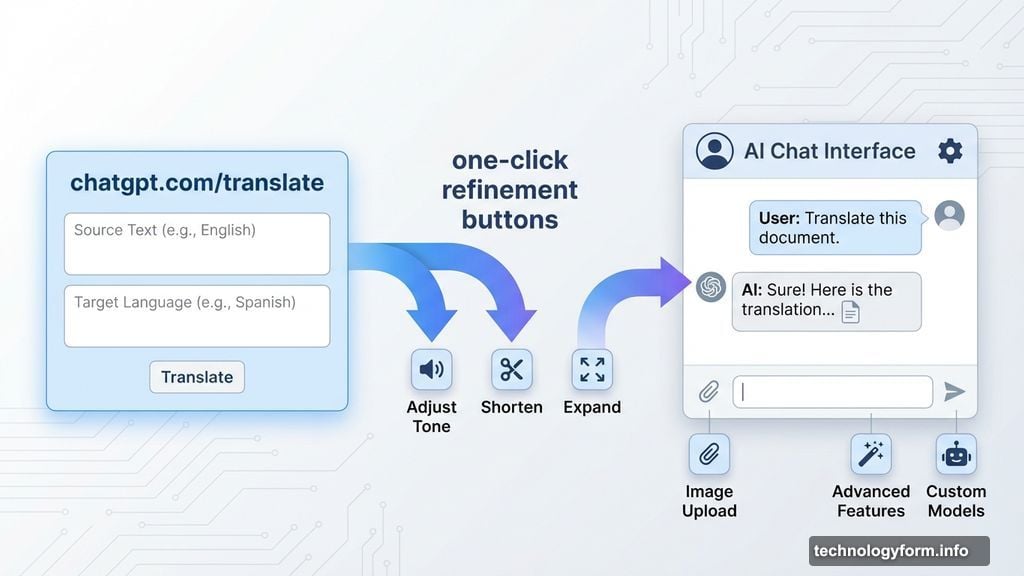
The standalone tool strips away complexity. You paste text. Select languages. Hit translate. Done. No navigating conversational threads or crafting the perfect prompt.
But here’s where it gets interesting. After translation, ChatGPT offers one-click refinement buttons like “make this sound more fluent” or “explain this like I’m five.” Click those and you jump into a full ChatGPT conversation where image uploads and other advanced features become available.
So the translation page works as an entry point. A gateway that funnels users from basic translation needs into ChatGPT’s deeper capabilities. Smart positioning.
The Voice and Image Features That Aren’t Here Yet
The translation page teases two features with no launch date:
Voice input for spoken translation. Upload an image (like a restaurant menu or street sign) for instant translation.
Those capabilities would directly compete with Google Lens and Google Translate’s real-time camera translation. Plus voice translation would challenge services like iTranslate and Microsoft Translator that already offer speech-to-speech translation.
The question isn’t whether ChatGPT can build these features. Obviously it can. The question is whether OpenAI can match Google’s speed and accuracy when translating casual speech or weird fonts on physical objects.
Google Isn’t Standing Still
Google launched 110 new languages in 2024. It built live translation directly into Pixel Buds. It created language-learning tools powered by Gemini. And Google Translate already handles 133 languages with features ChatGPT hasn’t announced yet.
So OpenAI enters this fight late. Google owns brand recognition. People say “Google it” when they mean search. They’ll probably say “Google Translate it” even when using competitor tools.
But ChatGPT has momentum. It reached 100 million users faster than any consumer app in history. If it can deliver comparable translation quality with better context awareness, some users will switch.
Why Translation Matters for AI Dominance
Language translation isn’t just a nice feature. It’s strategic infrastructure for AI adoption.
Most of the world doesn’t speak English. If your AI only works well in English, you’ve capped your addressable market. But if you nail translation across dozens of languages, suddenly your AI becomes useful to billions more people.
That’s why Google, OpenAI, Meta, and others are racing to improve multilingual AI performance. Whoever wins translation wins distribution. Simple as that.
OpenAI even created new evaluation standards for how AI performs across different languages and cultures in India specifically. They’re not just adding languages. They’re optimizing for cultural nuance and regional dialects.
The Interface Feels Intentionally Basic
ChatGPT Translate looks almost too simple. White background. Two text boxes. Language dropdowns. Translate button.
Compare that to Google Translate’s cluttered interface with history, favorites, conversation mode, and camera options all fighting for attention. ChatGPT stripped all that away.
Is that better? Maybe. Maybe not.
Simple interfaces reduce cognitive load. But they also hide capabilities. If users don’t know voice and image translation are coming, they won’t wait for them. They’ll stick with Google because it already does those things.
So OpenAI faces a marketing challenge. How do you convince people to try a new translation tool that currently does less than the market leader, based on promises of future features?
What You Can Do With It Right Now
The translation quality is solid. I tested Spanish, French, and Japanese translations. Results matched or slightly exceeded Google Translate’s output, particularly for context-dependent phrases.
Where ChatGPT excels is post-translation refinement. Those one-click buttons for making translations more fluent or age-appropriate actually work well. Google offers similar features but you have to know they exist and hunt for them.
Plus if you’re already a ChatGPT user, having translation inside your existing workflow helps. You can translate something, then immediately ask ChatGPT to summarize it, rewrite it for a specific audience, or extract key points.
That integration matters more than OpenAI probably realizes. Power users won’t just translate. They’ll translate, then manipulate that translated content with AI assistance. That’s hard to do with standalone translation tools.
The Real Competition Isn’t Google
Everyone focuses on Google Translate. But the real translation fight is happening in business software.
Microsoft embeds translation in Teams, Outlook, and Office. DeepL built a reputation for superior translation quality among professionals. Notion added AI translation. Slack will probably add it soon.
So ChatGPT’s translation page isn’t just competing with consumer tools. It’s positioning OpenAI to win enterprise translation contracts. If ChatGPT can translate documents, emails, and meeting notes inside business workflows, that’s where the money lives.
Consumer translation is table stakes. Enterprise translation is revenue.
My Take on Whether This Matters
Standalone translation pages feel like 2010 product strategy. We’re in 2025. Translation should be ambient, embedded everywhere you work and communicate.
ChatGPT building a separate translation site suggests OpenAI still thinks in terms of discrete tools rather than integrated experiences. But their post-translation prompts hint they understand the real opportunity is chaining translation with other AI capabilities.
The webpage itself doesn’t threaten Google. But if OpenAI executes on voice and image translation while maintaining integration with ChatGPT’s broader features, then yeah, Google should pay attention.
For now though, this feels like OpenAI planting a flag more than disrupting a market. The real battle starts when those promised features actually ship.