ChatGPT Just Started Showing Ads. Here’s What That Means for You
OpenAI flipped the switch on advertising this week. Free ChatGPT users will now see sponsored content at the bottom of their responses.
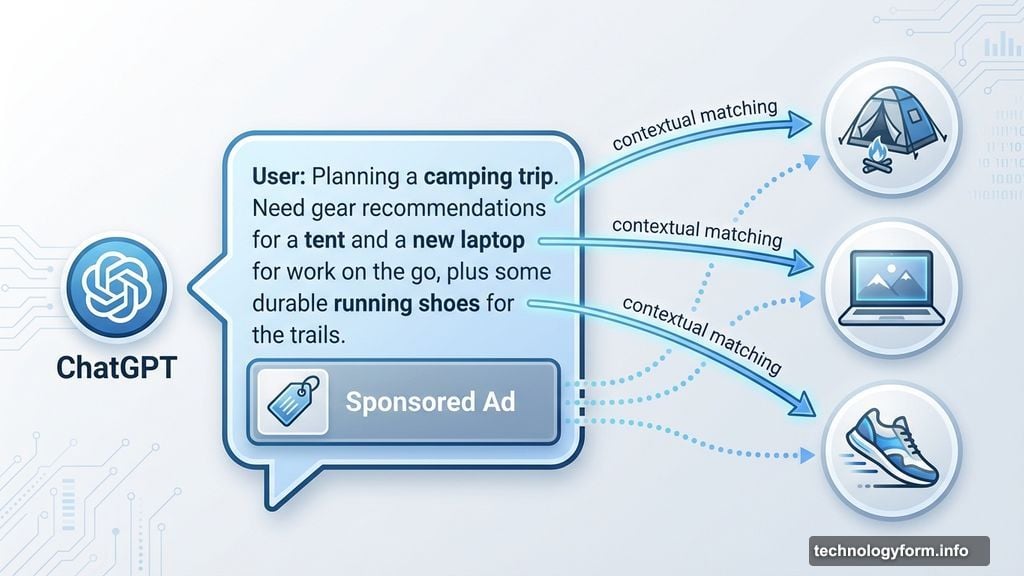
But this isn’t random banner ads cluttering your screen. OpenAI designed the system to show relevant products based on your current conversation. So if you’re asking about camping gear, you might see outdoor equipment ads. Ask about coding tools? Expect software recommendations.
Plus, the company launched a new $8 monthly tier called ChatGPT Go. That gives you more messages, uploads, and better memory than the free version.
How the Ad System Actually Works
The ads appear clearly marked at the bottom of ChatGPT’s answers. They’re contextual, meaning they relate to what you’re discussing right now.
OpenAI promises strict limits on ad categories. You won’t see promotions for health products, mental health services, or political campaigns. Those topics stay ad-free regardless of your tier.
Moreover, the system tries to identify minors. Anyone under 18 or flagged as potentially underage won’t see ads at all. That’s a smart move given the scrutiny tech companies face around kids and advertising.
Here’s what matters most for privacy. OpenAI says it keeps your conversations private from advertisers. Companies buying ads won’t see what you discussed. They only know their ad appeared in a certain category of conversation.
The company also won’t sell your data to advertisers. You can turn off personalization or clear ad-related data whenever you want.
The New $8 ChatGPT Go Tier
Go slots between free ChatGPT and the $20 Plus subscription. For $8 monthly, you get 10 times more messages than free users.
That means more file uploads, more image generations, and more back-and-forth conversations before hitting limits. The system also remembers more details about you over time.
So now OpenAI offers four tiers:
- Free with ads
- Go at $8 per month
- Plus at $20 per month
- Pro at $200 per month
Each step up removes limits and adds features. But the free tier remains functional for casual users who don’t mind occasional ads.
Why This Shift Matters
OpenAI needs revenue. Running AI systems costs serious money. The company reportedly spends billions on compute resources annually.
Advertising creates a new income stream beyond subscriptions. That could fund continued development while keeping a free tier available. Plus, it lets OpenAI compete with ad-supported competitors like Google’s Gemini.
But privacy advocates already raised concerns. Last week, OpenAI announced ChatGPT Health for uploading medical data. Privacy experts warned that service lacks standard health provider protections.
Now ads enter the picture. Even with OpenAI’s privacy promises, some users worry about data collection creep. The company collects conversation data to personalize ads, even if advertisers don’t see specific chats.
Furthermore, there’s no guarantee these policies stay permanent. Companies often start with strict privacy rules and gradually relax them. Remember when Google said it wouldn’t read your Gmail for ads? That changed.
What Free Users Should Know
Ads will appear. That’s the trade-off for free access to powerful AI. But you control how personalized those ads become.
Turn off personalization in your settings if targeted ads bother you. The system will show generic ads instead of ones matched to your interests. You’ll still see promotions, just less relevant ones.
Also, regularly review what data OpenAI collects. The company says you can clear ad-related information anytime. Take advantage of that if you’re concerned about data accumulation.
And remember, ChatGPT Plus at $20 monthly removes ads entirely. If you use the service heavily, that might be worth it just for the cleaner experience.
The Bigger Picture Nobody’s Discussing
OpenAI faces a legal battle that makes this ad move interesting. CNET’s parent company Ziff Davis sued OpenAI last year for copyright infringement. They claim OpenAI trained its systems on copyrighted content without permission.
Now OpenAI monetizes that same system through advertising. So companies potentially profit from content they allegedly used without authorization. That adds another layer to ongoing AI copyright debates.
Meanwhile, the industry moves toward ad-supported AI models. Google already shows ads in some Gemini experiences. Microsoft integrates ads into Copilot. AI chatbots are becoming another advertising channel.
For users, this means more decisions. Do you pay for ad-free experiences? Accept ads for free access? Or avoid these services entirely?
The choice depends on your privacy comfort level and how much you value your attention. AI assistants are useful. But every convenience has a cost, whether that’s money or exposure to marketing.
OpenAI made its choice. Now you make yours.