Google Just Gave Every Headphone Live Translation Powers
Apple charges $249 for AirPods Pro to unlock live translation. Google just made it free for any headphones you already own.
That’s the story here. Google’s new Translate app beta turns whatever earbuds are in your pocket into real-time language interpreters. No hardware upgrade required. Just tap “Live Translate” and start talking.
The feature supports over 70 languages right now. Plus, it’s rolling out in the US, Mexico, and India this month. iOS users will have to wait until 2026, but Android owners can grab it today.
How Live Translation Actually Works
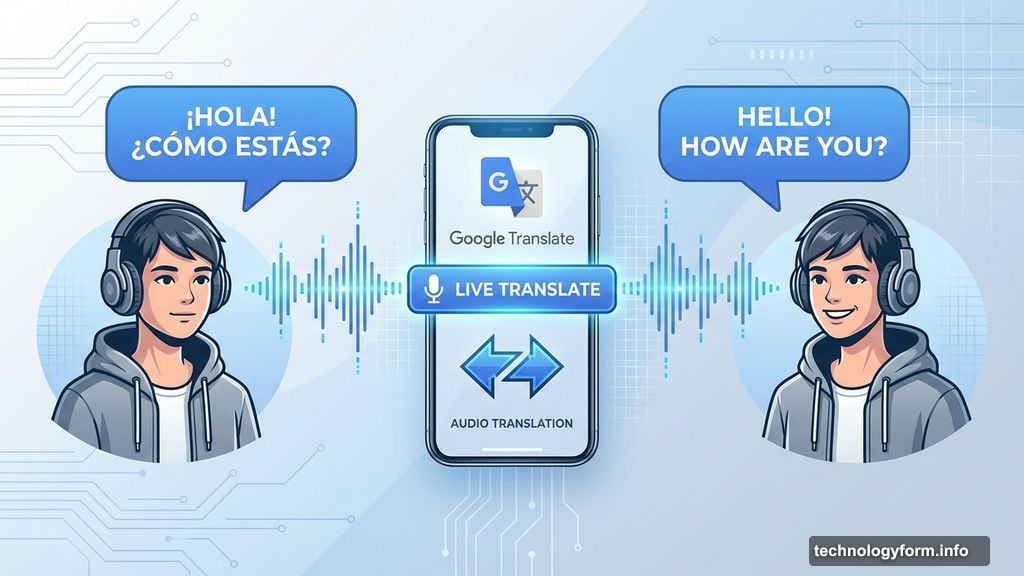
You’re wearing headphones. Someone speaks to you in Spanish. You hear their words in English instantly. Then you respond. They hear your English translated to Spanish in their language.
That’s live speech-to-speech translation. Both people keep their own headphones. Both hear the conversation in their preferred language. No awkward pausing to type into a translation app.
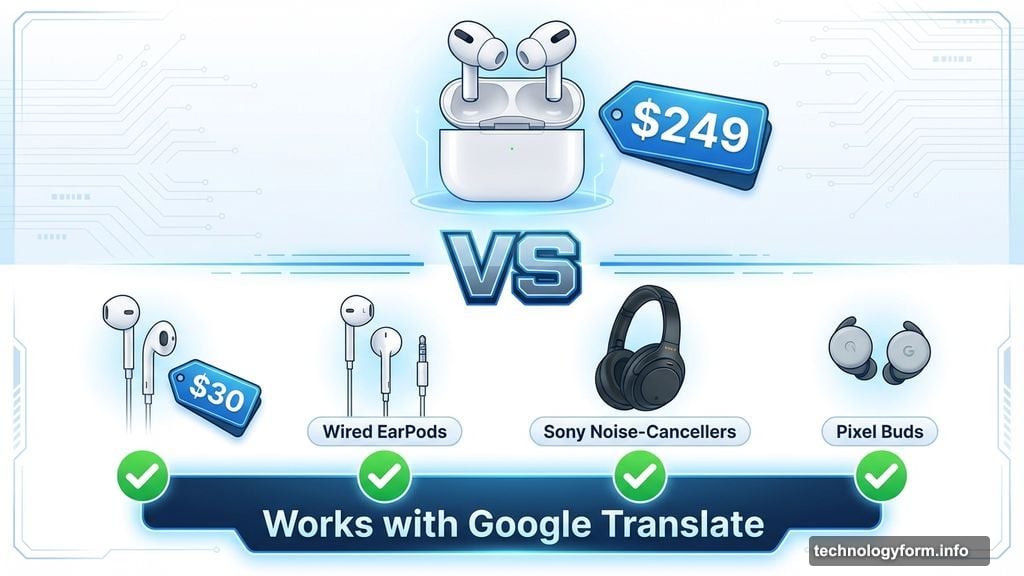
Google previously limited this feature to Pixel Buds. Now any Bluetooth headphones work. That includes your $30 budget earbuds, your wired Apple EarPods, or your premium Sony noise-cancellers.
Moreover, the app doesn’t just translate words. It understands context. So idioms and colloquial phrases come through naturally instead of as confusing literal translations.
Apple’s Version Costs $249 Minimum
Apple launched Live Translation with iOS 18. But here’s the catch. You need AirPods Pro 2 ($249) or AirPods 4 ($129 minimum) to use it.
Google’s approach? Use whatever you’ve got. Your existing headphones suddenly gained a powerful new capability at zero additional cost.
That’s a massive difference in accessibility. Most people already own headphones. Few want to buy specific models just for translation features.
Furthermore, Google supports 70+ languages at launch. Apple started with fewer language pairs. Google’s multi-year head start with Google Translate shows here.
Gemini AI Powers Better Translations
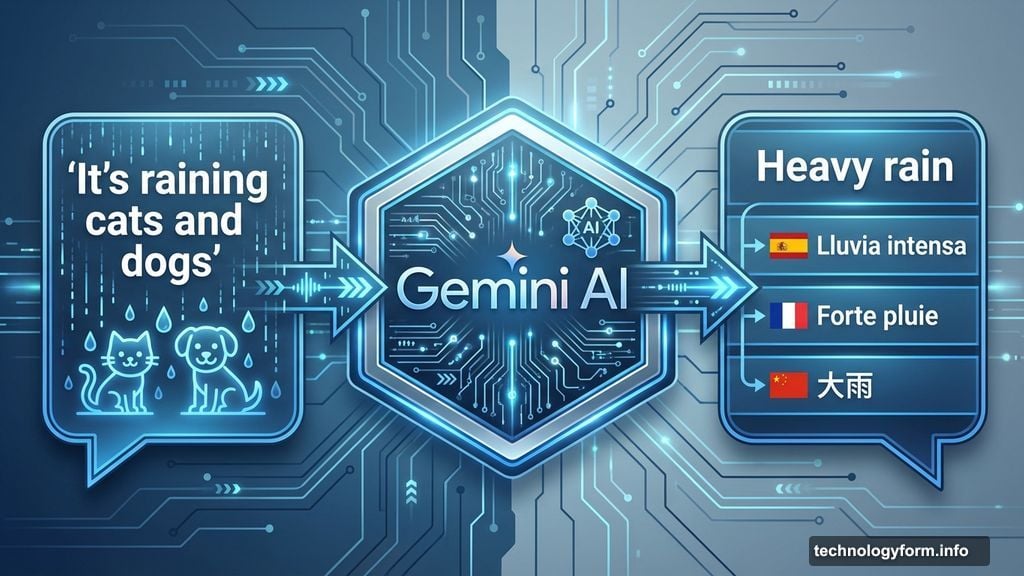
Google integrated its Gemini AI model into the translation engine. The result? More natural, contextually aware translations.
Take the English phrase “it’s raining cats and dogs.” Old translation tools would literally translate that word-for-word. Gemini understands it means “heavy rain” and translates the actual meaning.
In fact, Google says idioms are no longer literal translations but properly localized expressions. So “break a leg” becomes whatever phrase means “good luck” in the target language.
This matters for real conversations. People don’t speak in textbook sentences. They use slang, idioms, and cultural references. Better AI handles that complexity.
Language Learning Gets Smarter Too
Google didn’t stop at translation. The Translate app now includes enhanced language learning tools.
You’ll get personalized feedback on pronunciation. Daily challenges help build vocabulary. The app tracks your progress and adapts difficulty accordingly.
So it’s not just about communicating abroad. It’s also about actually learning languages over time. The same app that translates live conversations can teach you to understand them yourself.
However, the learning features work best with written content. Live translation remains the headline feature for travelers and international business.
Real-World Use Cases
Imagine traveling in Tokyo. You walk into a restaurant. The menu is entirely in Japanese. You hold your phone up, and the camera translates text instantly. Then the server approaches. You tap Live Translate. You order in English. They hear Japanese.
Or consider business meetings. Your company partners with a firm in Mexico City. Instead of hiring interpreters, everyone wears their own headphones. The conversation flows naturally with real-time translation.
Family situations matter too. Maybe your in-laws speak limited English. Video calls become easier when everyone hears their preferred language automatically.
These scenarios were possible before. But they required expensive equipment or professional interpreters. Now they need just an app and headphones you already own.
The Timing Seems Deliberate
Google announced this feature just weeks after Apple launched iOS 18 with Live Translation. That’s not coincidence.
Apple positioned translation as a premium feature requiring specific hardware. Google immediately undercut that strategy by making it universally accessible.
Plus, Google opened beta access during holiday travel season. Millions of people are traveling internationally right now. Perfect timing to showcase the feature’s value.
The iOS version arrives in 2026. So Google gets a full year of Android exclusivity. That gives Android users a compelling reason to stick with their platform.
Privacy Questions Remain
Real-time speech translation requires processing audio continuously. That raises obvious privacy concerns.
Google says processing happens on-device when possible. But complex translations may route through servers. The company hasn’t detailed exactly when data stays local versus when it uploads to the cloud.
Moreover, there’s no physical indicator showing when translation is active. You could be recorded without obvious signs. That’s concerning in sensitive conversations or private settings.
Apple’s approach ties translation to specific hardware with visual indicators. Google’s any-headphone strategy is more convenient but potentially less transparent about when listening happens.
The Translation Arms Race Heats Up
This announcement signals the start of a real competition in live translation technology.
Apple has hardware advantages. Their H2 chip in AirPods Pro enables advanced audio processing. That could deliver lower latency and better quality eventually.
But Google has software and AI advantages. They’ve operated Google Translate for over 15 years. Their language datasets and AI models are more mature.
So the question becomes: Does better hardware beat better software? Or can Google’s AI compensate for using generic Bluetooth headphones?
We’ll find out as both companies iterate. Apple will improve their translation AI. Google might partner with headphone makers for optimized hardware. The competition benefits everyone.
What This Means For Travelers
International travel just got significantly easier for Android users.
You no longer need to learn basic phrases before every trip. You don’t need to rely on gesture-based communication. You don’t need to find English speakers everywhere you go.
Just bring your existing headphones. Install the free Translate app. Tap a button. Suddenly you can have real conversations in dozens of countries.
That removes a major barrier to travel. Language anxiety keeps many people from exploring places where they don’t speak the local language. This technology helps eliminate that concern.
However, translation technology isn’t perfect. Accents, background noise, and complex topics still create challenges. Don’t cancel that language class just yet.
Why This Actually Matters
Translation technology has existed for years. Google Translate itself launched in 2006. So what makes this different?
Accessibility. Previous solutions required expensive equipment, professional services, or awkward text-based typing. This works with hardware you already own and feels like natural conversation.
The barrier to entry just dropped to nearly zero. That fundamentally changes who can benefit from translation technology. It’s no longer a luxury for business travelers. It’s a tool for anyone with a smartphone.
Plus, making it free removes another barrier. You don’t need to justify the cost or commit to specific hardware. Just download an app and try it.
Google essentially democratized real-time translation. That’s bigger than any single feature improvement. It means millions more people gain access to a capability that was previously out of reach.
Choose whatever headphones you already love. Google just made them smarter at no extra cost. That’s how translation should work in 2025.