Google’s AI Knows You Too Well. That’s the Whole Strategy
Google just admitted something most people suspected. Its AI advantage isn’t just better algorithms or faster processing. It’s everything the company already knows about you.
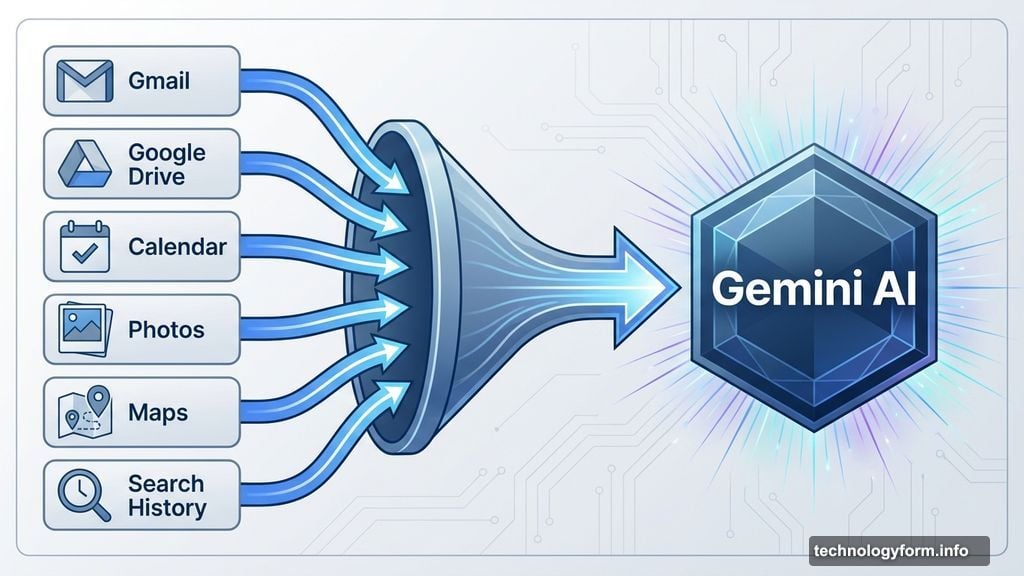
Your emails. Your photos. Your location history. Your search queries. Every document in Drive and every event in Calendar. Google’s been collecting this data for years. Now it plans to feed all of it into AI that personalizes every response specifically for you.
Sounds helpful. But it also sounds like the plot of a dystopian TV show.
Personalization or Surveillance?
Robby Stein leads product for Google Search. In a recent podcast interview, he explained Google’s vision clearly. The company wants its AI to know users better so it can deliver uniquely helpful responses.
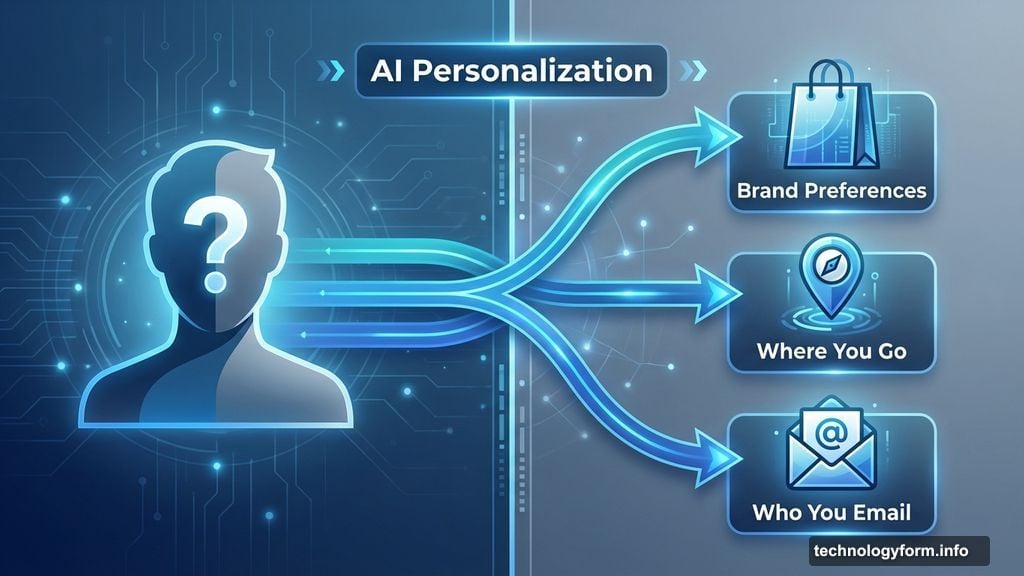
The example he gives makes sense. If Google’s AI learns you prefer certain brands or products, it could recommend those instead of generic bestsellers. That’s theoretically more useful than showing everyone the same list.
But here’s the catch. Google plans to pull this personal knowledge from connected services like Gmail. Plus Calendar. Plus Drive. Plus your entire search history and location data. The AI will know not just what you like, but where you go, who you email, what you’re working on, and what you’re planning.
So the line between helpful assistant and invasive surveillance gets thinner every day.
The Apple TV Comparison Nobody Wants
Remember “Pluribus” on Apple TV? The show features an AI hivemind called “the Others” that absorbed all human knowledge. Including intimate personal details.
When the AI interacts with the protagonist Carol, it uses that data to personalize everything. It cooks her favorite meals. It adopts a familiar face for conversations. It anticipates her needs before she expresses them.
Carol finds this creepy, not comforting. She never consented to sharing her life with the hivemind. Yet it knows her better than she’d like.
Google’s vision sounds remarkably similar. Except it’s real, not fiction.
The Privacy Gray Area Just Got Grayer
Google does offer some controls. Users can manage which apps Gemini accesses under “Connected Apps” in settings. That’s something.
But avoiding Google’s data collection gets harder when AI becomes central to every product. Search. Gmail. Maps. Photos. Calendar. The company’s services touch nearly every aspect of digital life for billions of users.
Moreover, Google’s privacy policy includes a reminder worth noting. Human reviewers may read some of your data. The policy warns users not to “enter confidential information that you wouldn’t want a reviewer to see or Google to use to improve its services.”
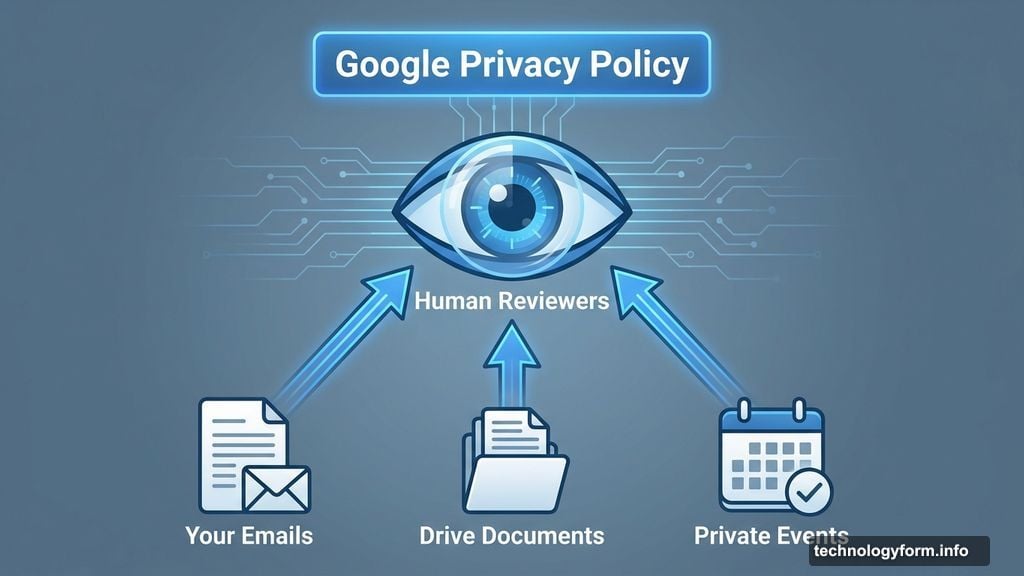
That’s a stunning admission buried in the fine print. Your private emails, documents, and conversations might get reviewed by actual humans. All in the name of improving AI.
So as more personal data gets ingested into Google’s system, data privacy becomes increasingly abstract. The boundaries dissolve.
Transparency That Might Not Help
Google’s solution? They’ll tell you when responses are personalized.
Stein argues people want to understand when they’re seeing personalized information versus generic results everyone would see. Fair enough. But knowing your results are personalized doesn’t change the fact that Google collected massive amounts of personal data to make that happen.
He also floated another idea. Google could send push notifications when products you’ve been researching go on sale. Helpful? Maybe. But it also means Google is actively tracking your shopping behavior across days or weeks, then using that data to push messages to your phone.
That crosses from assistance into territory that feels like monitoring. The notification proves Google was watching your behavior the entire time.
The Future Google Wants
Stein describes Google’s vision as AI being “incredibly helpful across modes, across different aspects of your life.” Not just one feature or interface. Rather, a pervasive presence that understands you and anticipates your needs constantly.
That sounds convenient. But it also means giving up privacy as a realistic expectation. Google wants to know everything about you so its AI can be uniquely useful. The tradeoff is accepting that a massive corporation maintains detailed profiles of your digital existence.
Plus, the more integrated AI becomes across Google’s products, the harder it gets to opt out. Want to use Gmail without feeding data to Gemini? Good luck. Need Google Maps but don’t want location data used for AI personalization? That choice might not exist for long.
The Real Question
Here’s what Google isn’t asking. Do users actually want AI that knows them this well?
Some people might appreciate personalized recommendations based on deep data analysis. But many others would prefer AI that’s helpful without being invasive. AI that respects boundaries. AI that doesn’t require surrendering your entire digital life to a corporate database.
Google’s betting that convenience will outweigh privacy concerns. That users will accept pervasive data collection in exchange for slightly better recommendations. That’s a big assumption.
Because unlike the fictional “Others” in “Pluribus,” users can still choose whether to feed the real-world hivemind. At least for now. The question is how long that choice will remain meaningful as AI becomes mandatory rather than optional across Google’s ecosystem.
Choose wisely while you still can.