Microsoft Drops Its Lawsuit Threat. OpenAI’s Amazon Deal Is Finally Safe
For months, a legal cloud hung over OpenAI’s blockbuster deal with Amazon. Now it’s gone.
On Monday, Microsoft and OpenAI announced yet another renegotiation of their landmark partnership. And while some corners of the internet are declaring this a win for OpenAI over Microsoft, the reality is more nuanced. Both companies walked away with something valuable. More importantly, enterprises everywhere just got a whole lot more choice.
The Amazon Deal That Almost Triggered a Lawsuit
To understand why this matters, you have to go back to February 2026.

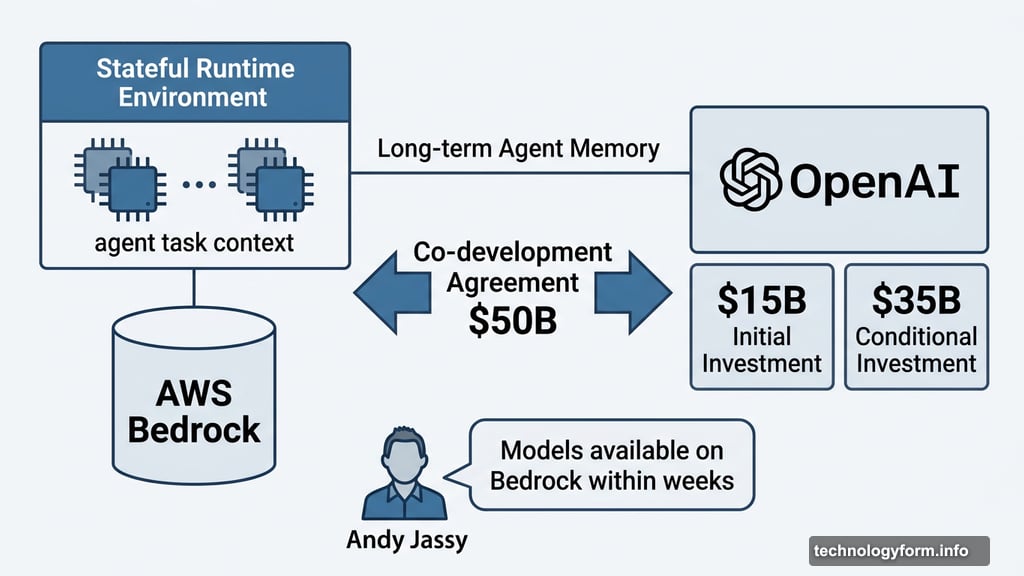
That’s when Amazon announced an investment of up to $50 billion in OpenAI. The deal included a $15 billion initial investment with another $35 billion to follow once certain unnamed conditions were met. In exchange, OpenAI agreed to co-develop stateful runtime technology on AWS Bedrock — the infrastructure that lets AI agents remember tasks and contexts over long periods of time.
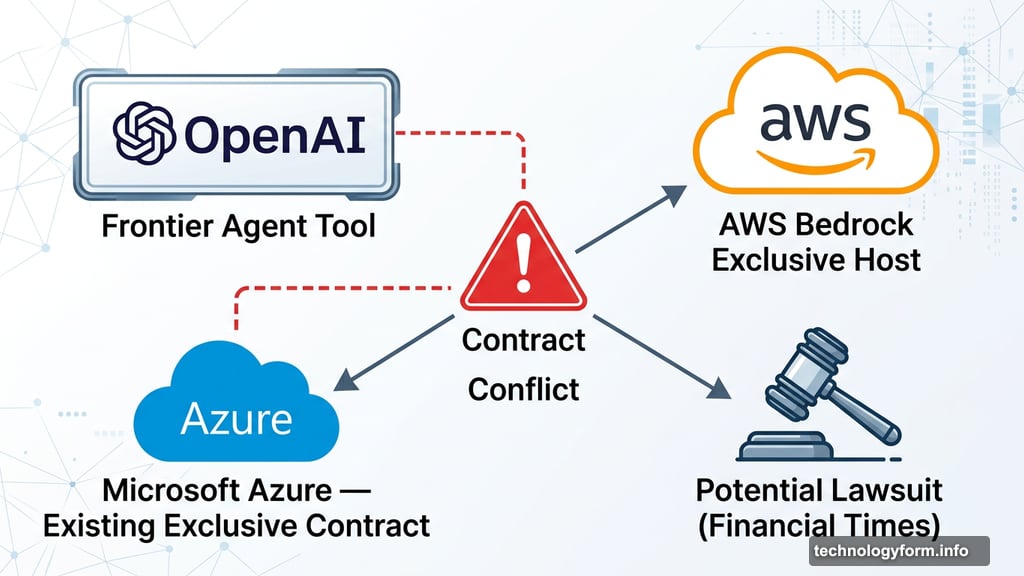
OpenAI also promised AWS exclusive rights to host Frontier, its new agent-making tool.
That exclusivity promise created a serious problem. OpenAI’s existing contract with Microsoft gave Microsoft exclusive access to all OpenAI products and IP accessed through an API. Frontier fell squarely into that category. On the very same day the Amazon deal was announced, Microsoft fired back publicly, writing that “Azure remains the exclusive cloud provider of stateless OpenAI APIs” and that “OpenAI’s first party products, including Frontier, will continue to be hosted on Azure.”
The Financial Times later reported that Microsoft was actively considering legal action to enforce those terms.
The New Deal Changes Everything
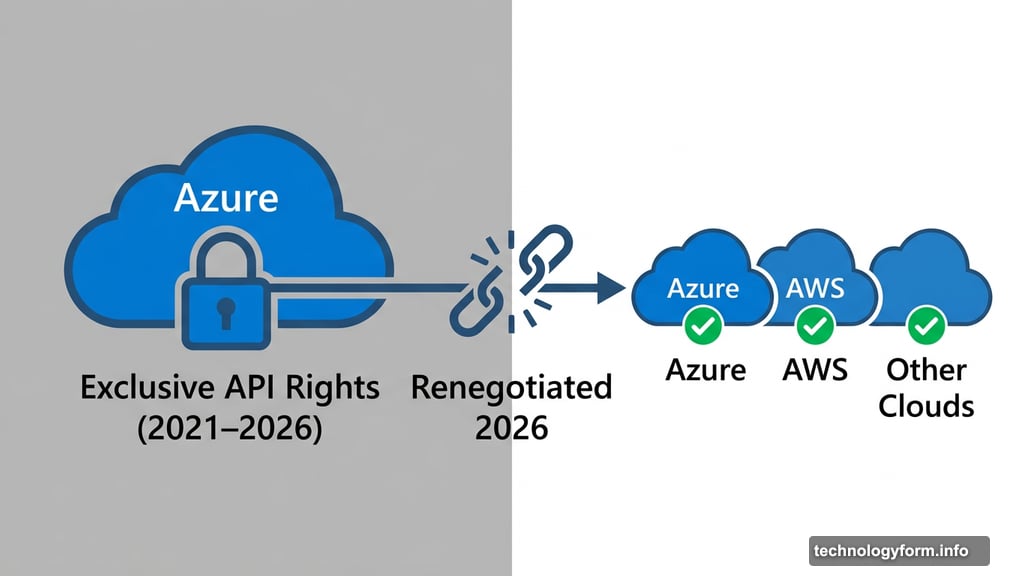
Monday’s renegotiated agreement cuts through all that tension with a single, decisive change. Microsoft’s exclusive rights are gone.
Instead, Microsoft now holds a nonexclusive license to OpenAI’s IP for models and products through 2032. The two companies still describe Microsoft as OpenAI’s “primary cloud partner,” and OpenAI products will ship first on Azure unless Microsoft cannot or chooses not to support the necessary capabilities. But here’s the critical shift: OpenAI can now serve all its products to customers across any cloud provider.
That single sentence removes the legal threat hanging over the Amazon deal. Andy Jassy, Amazon’s CEO, celebrated almost immediately on X, confirming that OpenAI’s models would become available to AWS Bedrock customers within weeks, alongside the upcoming Stateful Runtime Environment.
Microsoft’s Trade-Off Makes Sense
So did Microsoft lose here? Not really.
Yes, Microsoft surrendered its exclusive grip on OpenAI’s products. But it secured some meaningful compensation in return. Under the new terms, Microsoft no longer has to pay a revenue share to OpenAI. Meanwhile, OpenAI will continue paying a revenue share to Microsoft through 2030, subject to a cap. The exact dollar amounts aren’t public, but context helps here. Last quarter alone, Microsoft reported $7.5 billion from a single quarter tied to its OpenAI investment. That is a substantial return.
Plus, Microsoft still owns roughly 27% of OpenAI’s for-profit entity. Every sale OpenAI makes on AWS still financially benefits Microsoft as a shareholder. The cloud revenue Microsoft might lose from ending exclusivity is partly offset by equity appreciation every time OpenAI grows.
And Microsoft isn’t sitting still on AI partnerships, either. The company has quietly built a closer relationship with Anthropic, using Claude to power its own agentic products. So losing OpenAI exclusivity stings less when you have a credible alternative.
Why AI API Access on AWS Bedrock Is the Real Story
The bigger picture here isn’t about Microsoft or OpenAI at all. It’s about enterprises and AI API access.
For months, large companies had to route OpenAI API calls through Azure if they wanted the latest models. That created friction for businesses already running workloads on AWS or Google Cloud. Now that restriction is over. Companies can access OpenAI’s models directly through Bedrock, pick their preferred cloud infrastructure, and mix and match AI vendors without worrying about which platform holds what exclusive deal.
That kind of flexibility is genuinely valuable. Multi-cloud strategies are already standard for most enterprise IT teams. Being forced into a single cloud provider for AI workloads contradicts the whole point of that approach.
A Timeline of a Complicated Partnership
This deal didn’t happen overnight. The Microsoft-OpenAI relationship has been renegotiated repeatedly over the past several months, each time adjusting to new commercial realities.
In October 2025, Microsoft and OpenAI struck a new agreement that helped OpenAI handle Elon Musk’s lawsuit about its corporate structure. That deal also gave OpenAI permission to run certain non-API products on other clouds. A month later, in November, OpenAI signed a multi-year agreement with Amazon worth $38 billion in AWS cloud services. Then in February 2026, Amazon announced the full $50 billion investment deal, which immediately triggered Microsoft’s public pushback over exclusive rights. By March, the Financial Times had confirmed that Microsoft was weighing legal action. April’s announcement finally resolves all of it.
Each step in that timeline shows how quickly the AI industry’s commercial dynamics are shifting. Deals that seemed locked in six months ago are already being renegotiated.
What this tells me is simple. The AI infrastructure race is moving faster than any single partnership agreement can keep up with. The companies that stay flexible — and the enterprises that demand choice — are the ones who come out ahead. This deal is proof that even the biggest players have to keep adapting.