Stack Overflow Just Became an AI Training Ground. Developers Are the Product Now
Stack Overflow stopped being a developer forum. Now it’s selling your expertise to AI companies.
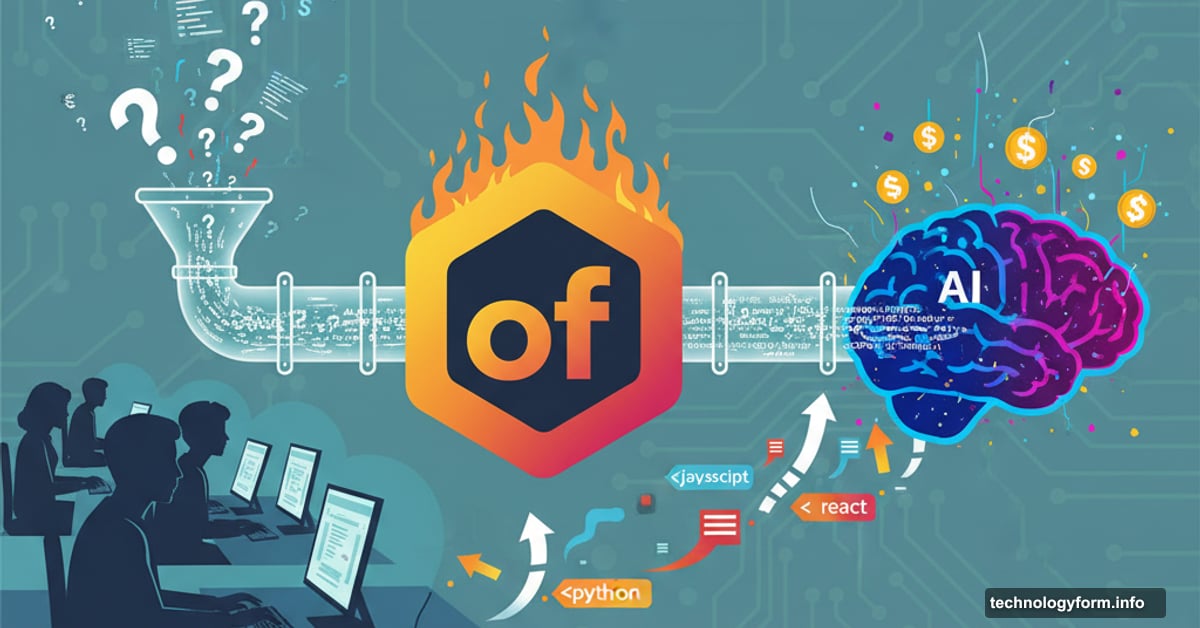
The company just launched Stack Overflow Internal at Microsoft’s Ignite conference. But this isn’t just another enterprise forum. It’s a systematic way to package developer knowledge into AI-digestible chunks. Your answers, my answers, everyone’s hard-earned solutions—all feeding the machine learning pipeline.
The Business Model Shifted Overnight
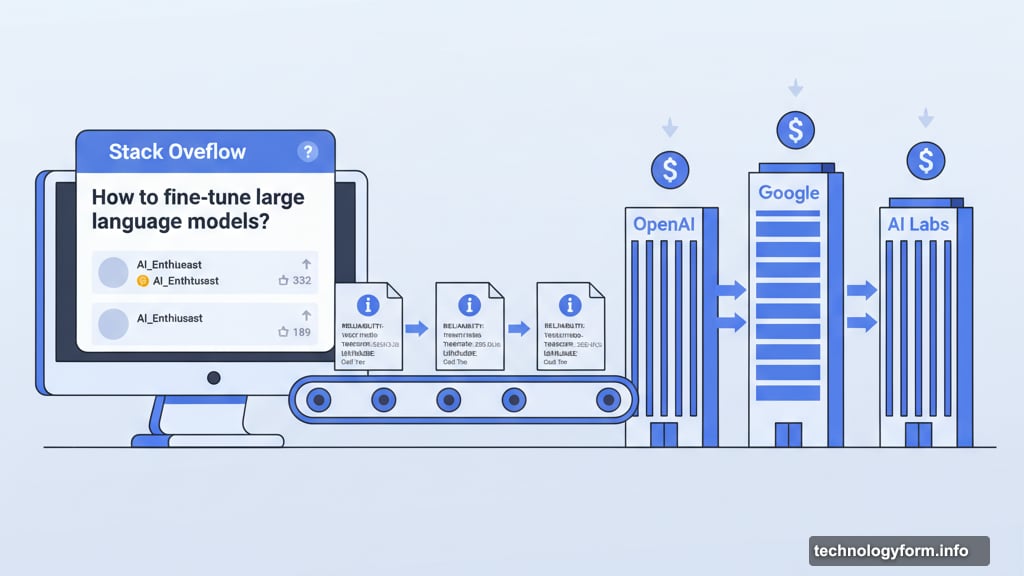
Stack Overflow signed content deals with multiple AI labs this year. CEO Prashanth Chandrasekar compared them to Reddit’s arrangements, which pulled in over $200 million.
Think about that. Reddit monetized user-generated content by licensing it to OpenAI and Google. Stack Overflow is doing the same thing. Except Stack Overflow’s content is more valuable—specific technical solutions instead of general discussions.
The company won’t name clients or reveal numbers. But they’re clearly betting big on AI training data as a revenue stream. Meanwhile, the developers who wrote those answers see nothing.
Metadata Makes Everything Worth More

Stack Overflow exports more than just question-answer pairs now. Each piece of content includes layers of metadata.
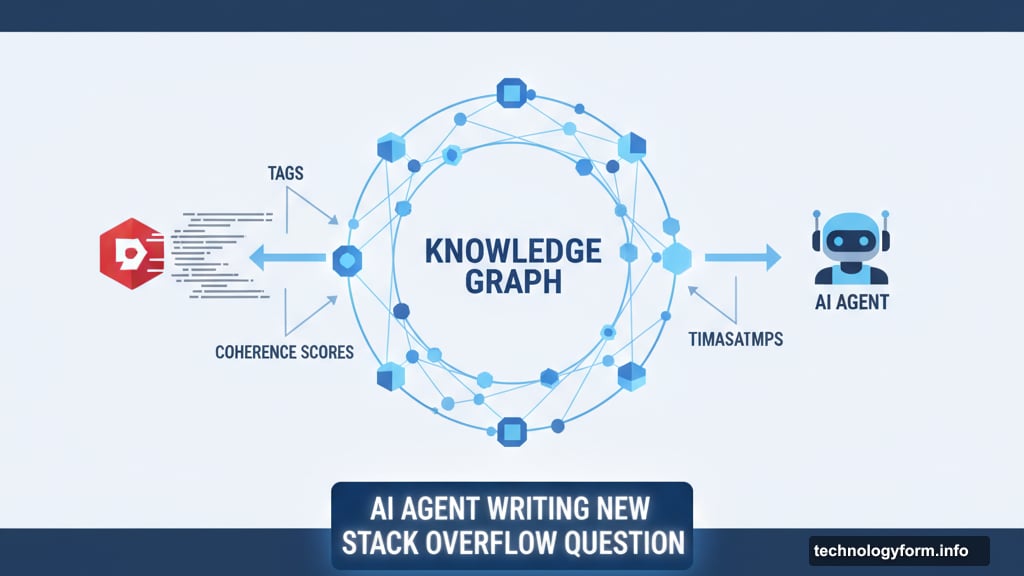
Who answered the question? When did they answer? What tags apply? How coherent is the response? All of this feeds into a reliability score that tells AI agents which answers to trust.
CTO Jody Bailey explained the tagging system. Companies can create custom tags or let Stack Overflow generate them automatically. Then Stack Overflow builds a knowledge graph connecting concepts across thousands of answers.
So AI doesn’t just get raw text. It gets structured, scored, interconnected technical knowledge. That’s worth a lot more to AI companies than unprocessed forum posts.
AI Agents Will Write Questions Too
Here’s where things get weird. Bailey is excited about write functionality for AI agents.
If an agent can’t answer something, it could create its own Stack Overflow post. Notice a knowledge gap? Post a question. Need clarification? Ask the community.
Bailey believes this will “require less and less effort from developers to capture unique information.” Translation: AI will harvest developer expertise without humans needing to manually document anything.
That sounds efficient. But it also means Stack Overflow becomes a passive surveillance system. Your Slack conversations, code reviews, and debugging sessions—all potential training data once AI agents can write queries automatically.
The Real Cost Nobody’s Discussing
Stack Overflow built its reputation on community. Developers helped each other for free because we all benefited from the collective knowledge.
Now that goodwill is being monetized. The company takes answers written for free, packages them with metadata, and sells access to AI companies. Those AI companies then compete with the developers who wrote the original answers.
Plus, Stack Overflow Internal isn’t just an enterprise forum. It’s an extraction mechanism. Companies pay Stack Overflow to turn their developers’ institutional knowledge into AI training data. Then that knowledge trains models that could replace those same developers.
The irony is brutal. Developers spend years building expertise. They share it freely on Stack Overflow. Then AI companies use that knowledge to build tools that devalue human expertise. Stack Overflow gets paid at every step.
Microsoft’s Angle
This launched at Microsoft Ignite for a reason. Microsoft owns GitHub Copilot, the most successful AI coding assistant. Copilot needs training data. Stack Overflow has decades of it.
Microsoft also invested heavily in OpenAI, which builds the models powering Copilot. So Microsoft benefits from both ends: they get the training data and they sell the resulting AI products.
Stack Overflow Internal even uses the Model Context Protocol, which Anthropic introduced specifically for AI agents. That protocol lets agents query external knowledge bases efficiently. So Stack Overflow is positioning itself as the standard knowledge base for development AI.
What Developers Should Know
If you’re using Stack Overflow Internal at work, understand what’s happening. Your answers aren’t just helping colleagues. They’re training AI models that your company doesn’t control.
Also, those reliability scores? They’re judgments about your expertise, quantified and packaged for algorithms. Companies can see which developers produce “high reliability” answers. That’s performance tracking disguised as knowledge management.
And if AI agents start writing questions automatically, you’re not just answering human colleagues anymore. You’re training machines that may eventually replace you.
Stack Overflow CEO Chandrasekar sees this as evolution. Developers were already using their API for training, so why not build products around it? Fair point. But evolution doesn’t always favor the species that started the process.
The Forum That Ate Itself
Stack Overflow became essential by solving a simple problem: developers needed answers fast, and search engines weren’t good enough.
Now it’s solving a different problem: AI companies need training data, and developers produce it for free. Stack Overflow is the middleman extracting value from both sides.
The original mission—helping developers help each other—still exists. But it’s now secondary to the AI business model. Your questions and answers are products being sold to the highest bidder.
That’s not necessarily wrong. Companies deserve to monetize their platforms. But developers deserve to know their contributions are being repackaged and resold to fund the very technology that threatens their careers.
Stack Overflow stopped being a community resource. It became a data brokerage. The sooner we accept that, the better we can decide whether to keep feeding it.