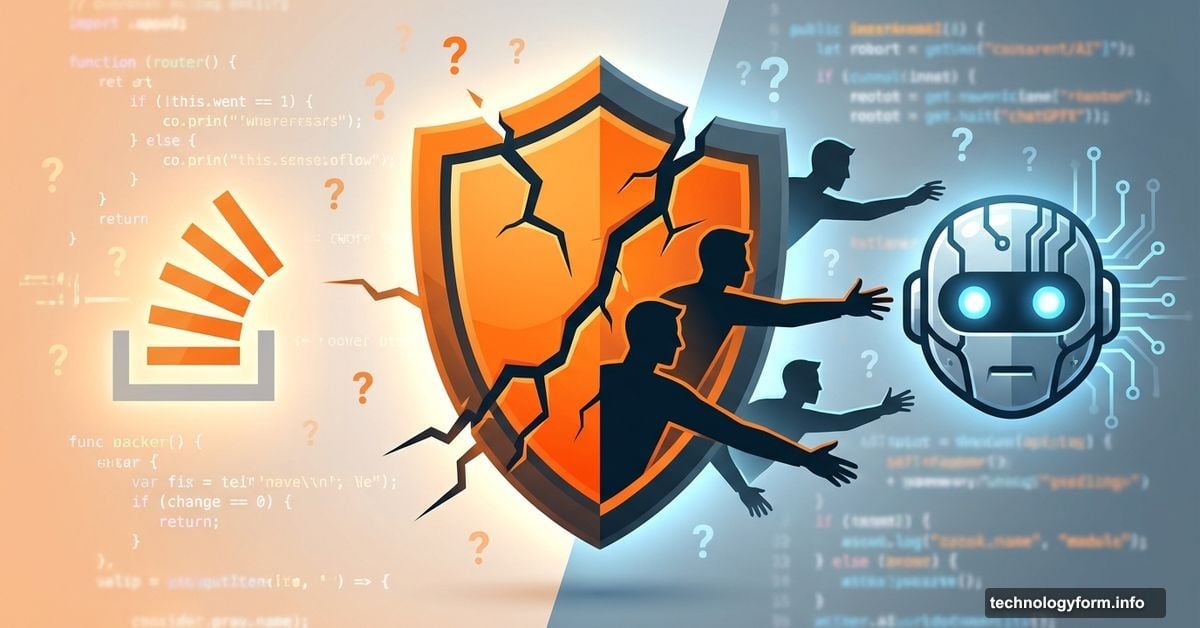
Stack Overflow Users Don’t Trust AI. They’re Using It Anyway
Stack Overflow faced an existential crisis when ChatGPT launched. Three years later, CEO Prashanth Chandrasekar reveals what happened next.
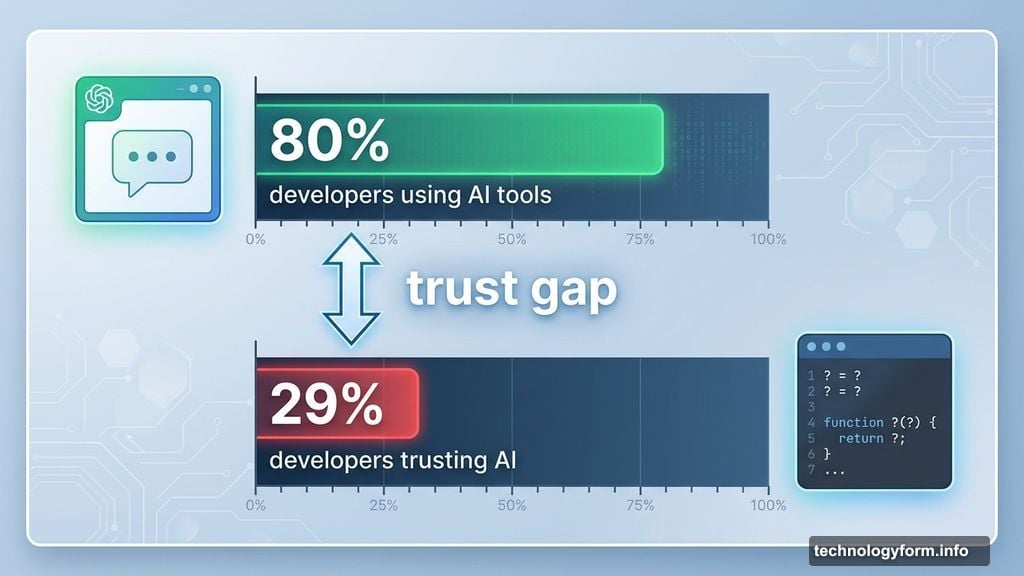
The numbers tell a strange story. Over 80 percent of Stack Overflow users want to use AI or already use it for coding. But only 29 percent actually trust it.
That’s not a typo. Four out of five developers are reaching for AI tools daily. Yet fewer than three in ten believe those tools produce reliable results.
This massive trust gap explains everything happening at Stack Overflow right now. Plus, it reveals why the company pivoted hard from community platform to enterprise SaaS business.
ChatGPT Created an Emergency
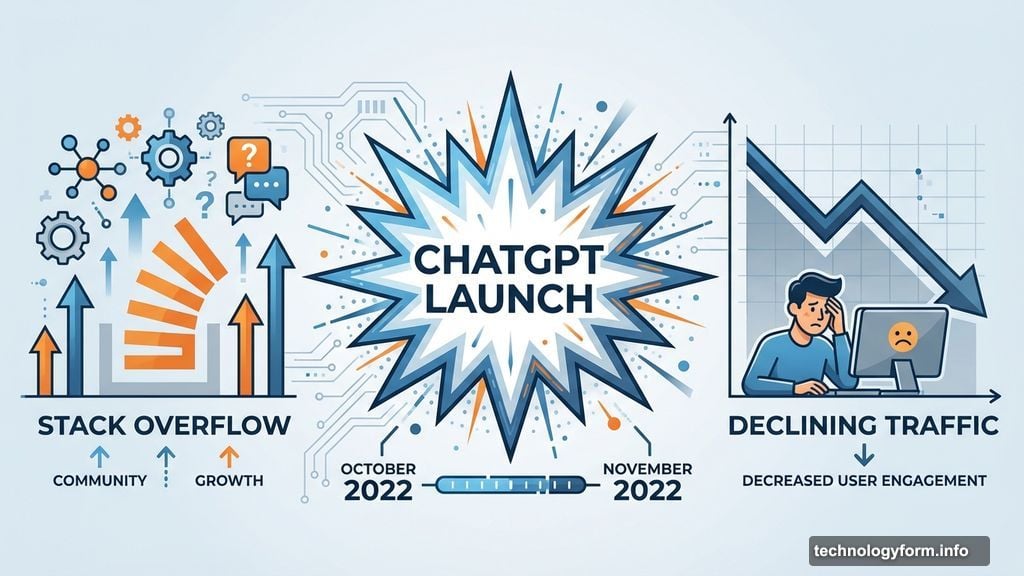
Prashanth Chandrasekar saw it coming immediately. One month after his last Decoder interview in October 2022, ChatGPT launched and upended his entire business model.
Stack Overflow built its reputation on developers helping developers. For years, programmers asked complicated questions and received human-curated answers. The community voted on quality. Experts earned reputation points.
Then suddenly, anyone could paste a question into ChatGPT and get instant code. No waiting. No community involvement. Just results.
“It became very clear what we needed to focus on,” Chandrasekar said. “This was going to be this very, very huge change to how people consume technology.”
He called a company-wide code red. Not metaphorically—an actual emergency mobilization.
The 10 Percent Solution
Chandrasekar pulled 40 people off their regular work. That’s roughly 10 percent of Stack Overflow’s workforce at the time.
Their mission? Deliver a meaningful AI response by summer 2023. Chandrasekar set a hard deadline: the WeAreDevelopers Conference in Berlin.
The decision came from experience. Years earlier at Rackspace, Chandrasekar helped build the cloud services business responding to Amazon Web Services. He saw firsthand how to organize against existential threats.
He also studied Clayton Christensen’s The Innovator’s Dilemma back in business school. The lesson stuck: carve out autonomous teams with different incentives to pursue disruptive opportunities.
So that’s what he did. The AI response team reported directly to him. They had freedom to break existing patterns and move fast.
“We specifically picked a combination of people,” Chandrasekar explained. “The people who are leading it were newer and came from the outside of the company.”
Fresh perspectives mattered. Stack Overflow needed people willing to challenge assumptions and ignore historical norms.
AI Flooded the Site With Garbage
Two immediate problems hit Stack Overflow when ChatGPT launched.
First, questions and answers spiked dramatically. People started using ChatGPT to generate answers, then pasting them into Stack Overflow to earn reputation points.
The community caught on quickly. Moderators identified AI-generated responses and demanded action.
Stack Overflow banned AI-generated answers outright. That ban still stands today. You cannot post ChatGPT output as answers on Stack Overflow.
“Our proposition is to be the trusted vital source for technologies,” Chandrasekar said. “For us, it’s all about making sure that there are only a few places where you can go and not deal with AI slop.”
The company wanted to preserve quality. Human-curated, expert-verified answers remained the standard.
But traffic kept declining anyway. Simple questions disappeared because ChatGPT handled them instantly. Only complex, thorny problems still drove people to Stack Overflow.
The Enterprise Pivot Happened Fast
Stack Overflow made a crucial bet: enterprise SaaS would save the company.
Today, Stack Overflow Internal serves 25,000 companies worldwide. Large organizations use it to share knowledge internally. That knowledge powers their AI assistants and agents.
Take Uber. The company runs Stack Overflow Internal with thousands of questions and answers. Uber Genie connects to that content through APIs. Then it automatically answers questions in Slack channels.
The enterprise business became Stack Overflow’s primary revenue source. Not advertising. Not community engagement. Enterprise subscriptions.
“Thankfully for us, we had an enterprise business, which is independent of all of this,” Chandrasekar noted.
That independence proved vital. While public platform traffic declined 30-40 percent, enterprise customers kept paying. In fact, they wanted more AI features.
Data Licensing Emerged as Business Two
Stack Overflow noticed AI labs scraping their site aggressively. So they deployed anti-scraper technology and changed data dump access policies.
Then they started calling those AI companies directly.
“Very quickly we got calls from a lot of them saying, ‘We need access to your data. Let’s work together to formally get access,'” Chandrasekar said.
Stack Overflow now licenses data to every major AI lab. OpenAI, Google, Databricks, Snowflake—all of them pay for access. These are recurring revenue deals, not one-time payments.
The arrangement makes sense from Stack Overflow’s perspective. The internet’s business model collapsed. Traffic dropped 30-40 percent across content sites. Advertising revenue fell accordingly.
Data licensing provided a lifeline. But it also created tension with the community.
The Community Revolted
Stack Overflow built its platform on volunteer contributions. Developers answered questions for free because they wanted to help others learn.
Then Stack Overflow started selling that volunteer work to OpenAI and other AI companies. Many users felt betrayed.
Some deleted their contributions before Stack Overflow could license them. The company banned those users. Moderators protested policies around AI-generated content detection.
The tension is real. Stack Overflow relies on free labor to create valuable data, then monetizes that data through licensing deals that don’t compensate contributors.
“We may consider other ways,” Chandrasekar admitted. “For example, should we pay our users, give them a piece of the data licensing revenue? Perhaps. We always ask that question.”
But for now, that revenue goes to Stack Overflow. The company needed it to survive, Chandrasekar argues. Without data licensing income, Stack Overflow couldn’t invest in new features like AI Assist, chat, and challenges.
Still, the 1-9-90 rule applies. One percent of users are hardcore contributors who spend significant time curating knowledge. Nine percent contribute moderately. Ninety percent mostly lurk and consume.
That vocal 1 percent creates most of the value. And they’re the ones most upset about AI integration and data licensing.
The Trust Problem Won’t Go Away
Here’s the core issue: 82 percent of Stack Overflow users want to use AI. Only 29 percent trust it.
That 53-point gap explains everything. Developers use AI tools because they’re fast and convenient. But they don’t believe the results are reliable.
“Trust is a very deep word,” Chandrasekar said. “Why don’t you trust something? You don’t trust something because you don’t think it’s producing high integrity, accurate answers.”
Plus, developers worry AI might replace them. So they’re learning to use it defensively—to stay relevant even if their jobs change dramatically.
This creates weird behavior. Everyone uses ChatGPT or Cursor or GitHub Copilot. But they verify everything against human sources. They check Stack Overflow to confirm AI-generated code actually works.
Stack Overflow launched AI Assist to address this. The feature uses retrieval-augmented generation (RAG) to search Stack Overflow’s corpus first. Only then does it fall back to OpenAI’s models for additional context.
“We believe we’ve actually unlocked a very important aspect of that trust issue,” Chandrasekar said. “Attribution is very important to us.”
But the fundamental problem remains. The underlying technology hallucinates. Models generate plausible-sounding nonsense. Developers know this.
So they keep using AI anyway, while trusting it less than a coin flip.
The Future Looks Like Enterprise
Stack Overflow’s public platform stabilized. Traffic stopped declining months ago. Complex questions still get asked and answered.
But the company’s growth strategy centers on enterprise customers now. Stack Overflow Internal provides a “knowledge intelligence layer” that grounds AI agents in accurate, human-curated information.
“Our biggest focus will be making sure that we build this enterprise knowledge intelligence layer for companies to truly use AI agents in a trustworthy way,” Chandrasekar said.
The pitch makes sense. Companies testing AI tools internally face the same trust problem individual developers do. They need reliable sources to train or ground their models.
Stack Overflow offers that reliability. Human experts curated the knowledge. The community voted on quality. Companies like HP, Eli Lilly, and Xerox are customers.
Meanwhile, the public platform serves a different purpose now. It’s where developers go for complex problems AI can’t solve. It’s where they prove they understand fundamentals, not just vibe coding shortcuts.
Stack Overflow added features beyond Q&A. Users can chat with experts in specialized rooms. They can tackle coding challenges to demonstrate skills. They can connect about jobs through a partnership with Indeed.
The mission expanded from “get answers to questions” to “cultivate community, power learning, and unlock growth.”
2026 Brings Rationalization
Chandrasekar predicts 2026 will be “the year of rationalization” for enterprise AI.
Companies tested countless AI tools in 2025. CTOs had open budgets to experiment. But now CFOs want proof of ROI.
“There’s going to be tremendous pressure in the system to prove what the real value is,” Chandrasekar explained.
Many companies report productivity gains in small test groups. But those are self-selecting enthusiasts. Broader rollouts show productivity drops because most employees resist tools that might eliminate their jobs.
This creates opportunity for Stack Overflow. Companies need that trust layer—verified knowledge to ground unreliable AI tools.
But it also exposes risk. If the AI bubble pops, enterprise customers might cut spending on knowledge management platforms too.
Stack Overflow survived by pivoting fast. The company went from 400 people to 300 after layoffs in 2023. It’s profitable now. The enterprise business and data licensing provide stable revenue.
Still, the core tension persists. Stack Overflow needs AI companies to keep training bigger models to sustain data licensing revenue. But it also needs developers to keep contributing free content to the public platform.
Those developers increasingly see AI as competition, not complement. They’re using tools they don’t trust. They’re contributing less because their volunteer work gets monetized without compensation.
That 53-point trust gap won’t close easily. Developers recognize AI’s power. They use it daily. But they verify everything because they know it’s unreliable.
Stack Overflow bet its future on being the verification source—for individual developers and enterprise customers alike. Whether that bet pays off depends on whether trust in AI improves or developers give up trying.
Right now, the numbers suggest neither is happening soon.