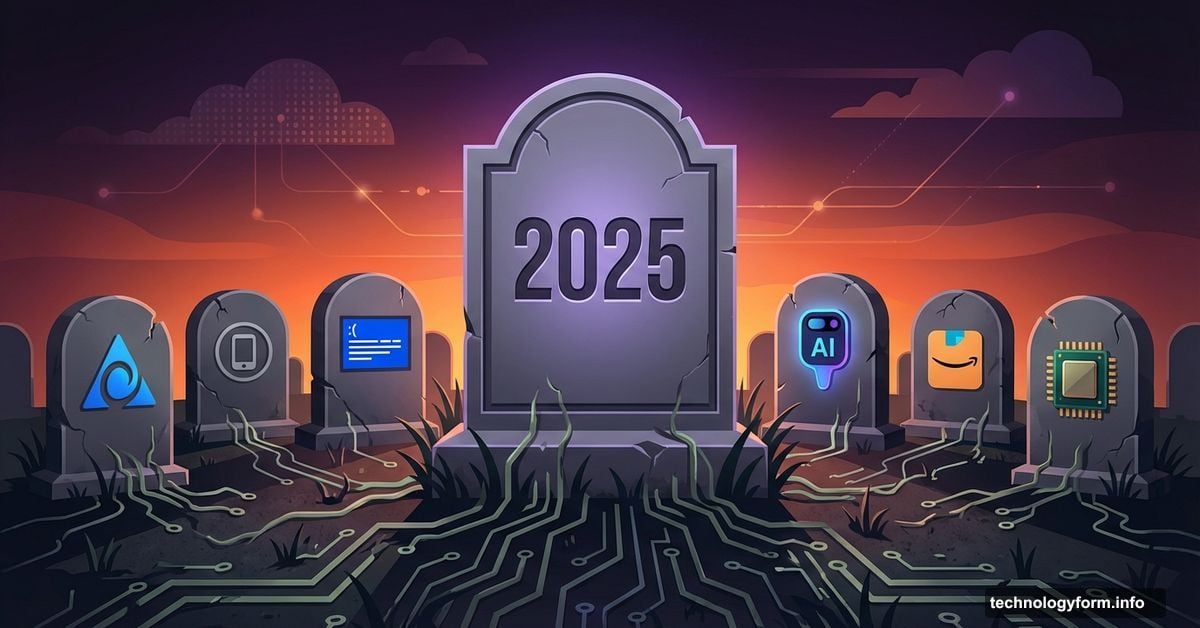
Tech’s Final Goodbye: 10 Products That Disappeared in 2025
The year started quiet. Then the shutdowns began.
2025 didn’t deliver dramatic tech failures like previous years. But it brought something more unsettling: slow erosions. Companies killed beloved products not because they failed, but because profit margins demanded it. Old standbys vanished. Buttons disappeared. Apps merged into oblivion.
Let’s document what we lost.
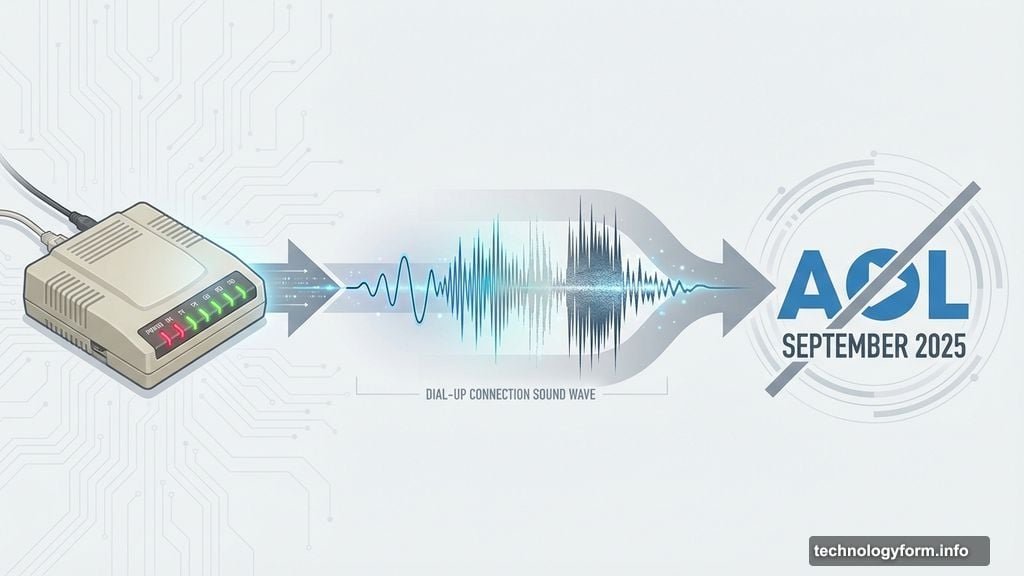
AOL Dial-Up Finally Goes Silent
Remember that screech? The modem handshake connecting you to the internet?
In September, AOL pulled the plug on dial-up service. 34 years after launch, the iconic screech died. For many rural customers, it meant losing their only home internet access. As of 2015, 2 million people still depended on that connection.
That number dwindled over time. But the shutdown marked the end of an era. The sound that defined early internet access for millions now lives only in memory.
Humane AI Pin Flamed Out Fast
The wearable AI device lasted barely a year. It promised voice-powered AI assistance without pulling out your phone.
Reality? It didn’t work well. Plus, our phones already handle everything the pin attempted. In February, HP acquired Humane AI for the talent and patents. The hardware itself? Dead on arrival.
The lesson repeats itself: single-purpose gadgets struggle against multifunctional devices already in our pockets. The pin joined a long line of one-trick ponies that couldn’t compete.
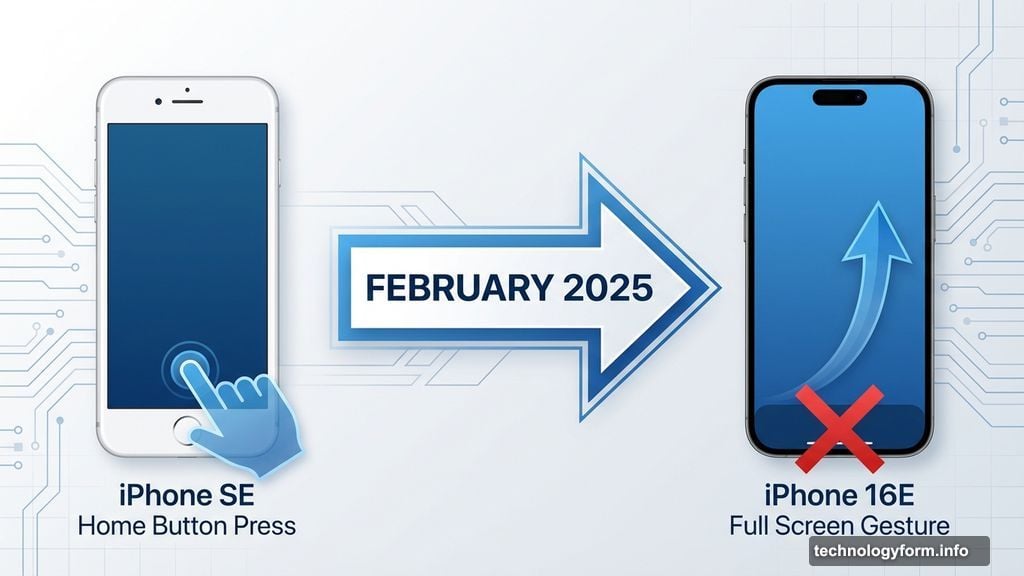
iPhone’s Last Home Button Left Town
The iPhone SE held out longest. It was the final model with a dedicated home button.
February brought the iPhone 16E. No home button. You can map other controls to simulate it, but that means sacrificing direct access to something else.
I curse this change constantly. My iPhone gets finicky about sensing upswipes from the bottom. That simple, reliable button? Gone. Navigation got more complicated, not better.
Micron Ditched Consumer Memory for AI Gold
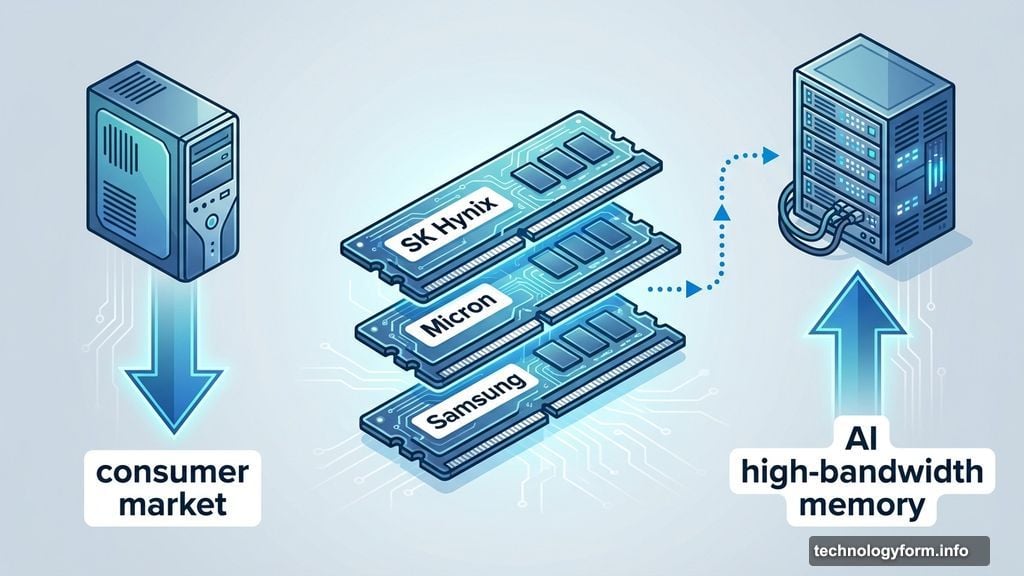
Memory manufacturers see dollar signs in AI. High-bandwidth memory for data centers pays better than consumer RAM.
In November, Micron announced it was pivoting away from consumer markets. Only three major manufacturers exist: SK Hynix, Micron, and Samsung. When one bails on regular customers, it hurts.
Expect continued shortages. Expect higher prices. AI companies have deep pockets. Your PC upgrade? Not as profitable.
Blue Screen of Death Turned Black
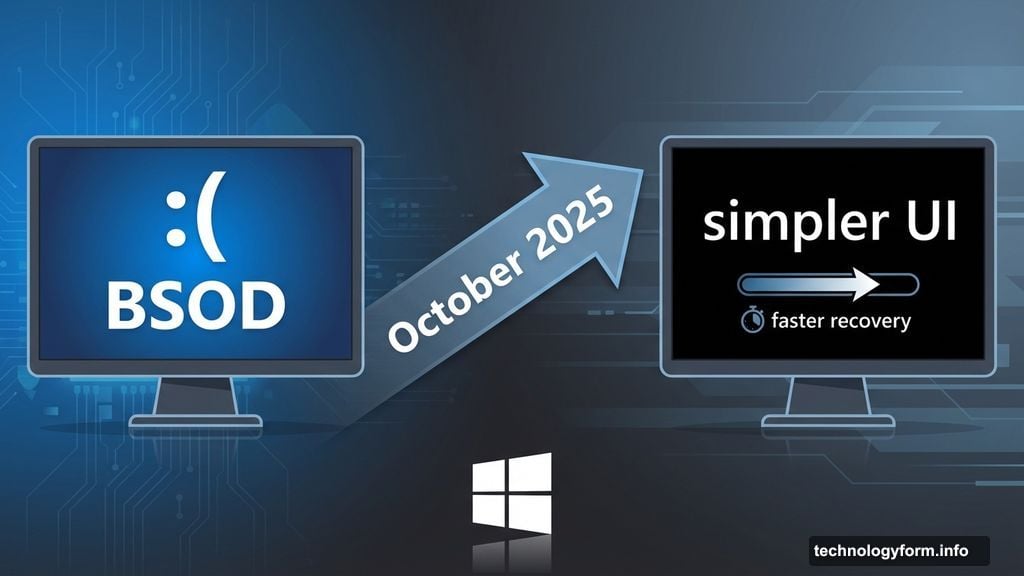
Windows’ blue screen of death terrorized users since the early GUI days. That giant frown emoticon signaled system crashes for decades.
Microsoft replaced it in October 2025. The new crash screen uses a black background with “simpler UI.” The company improved recovery speed and backend data collection too.
Still, I’ll miss that anxious blue glow. It’ll probably keep appearing on digital billboards and taxi entertainment systems running ancient Windows versions. Some things never truly die.
Amazon Killed Its Android App Store
Amazon sharpened its focus in August. It shut down the general Android app store that lasted 14 years since 2011.
Now? Only apps for Fire devices remain. Amazon’s custom Android version runs on Fire hardware. The company wants you buying their products, not running apps on competitors’ devices.
Bottom line thinking taken to extremes. If it doesn’t directly benefit Amazon’s ecosystem, it gets cut.
Skype Merged Into Teams Nobody Asked For
Skype pioneered cheap international calls in the early 2000s. Microsoft acquired it in 2011. It added video calling. It became mainstream.
In February, Microsoft folded Skype into the free version of Teams. Nobody wanted this. Teams remains less beloved than Skype ever was.
The standalone app? Gone. Another communication tool absorbed into corporate bloat.
Google Lobotomized Old Nest Thermostats
The first two generations of Nest Learning Thermostats work fine. The hardware launched in 2011 under Nest Labs. Google bought the company in 2014.
In October, Google disconnected them from the app. “Ending support” sounds better than “planned obsolescence.” Remote operation? Gone. Notifications? Dead. Security updates? Stopped.
The thermostats still function locally. But you lose the smart features you paid for. Google wants you buying the new model. Old hardware becomes dumb hardware.
Stadia Controllers Lost Their Last Lifeline
Google’s Stadia cloud gaming service died at the end of 2022. The custom controllers became worthless. Google refunded purchases and offered firmware upgrades to convert them to Bluetooth.
Smart move. The controllers were well-designed. Throwing them away seemed wasteful.
But as of December 2025, Google stopped offering the conversion firmware. If you didn’t upgrade by then, your controller becomes a shelf decoration. Function? Gone forever.
US Government Grounded DJI Drone Imports
December brought a ban on foreign-made drone imports. DJI, the most well-known manufacturer, took the biggest hit.
You can still fly existing DJI drones. You can still buy them secondhand. But finding new ones? Good luck. Import restrictions make that nearly impossible.
The reasoning involves national security concerns. The reality? One of the best drone makers just got harder to access in the US market.
The Pattern Behind the Losses
These shutdowns reveal uncomfortable truths. Companies don’t kill products because they fail. They kill them because higher-profit alternatives exist.
AI memory pays better than consumer RAM. Forcing users into new ecosystems drives hardware sales. Merging popular apps into corporate platforms increases engagement metrics.
We lose choice. We lose simplicity. We lose products that still work but don’t serve quarterly earnings goals.
That’s 2025’s real story. Not dramatic failures, but calculated abandonments. The tech worked. The business case didn’t.