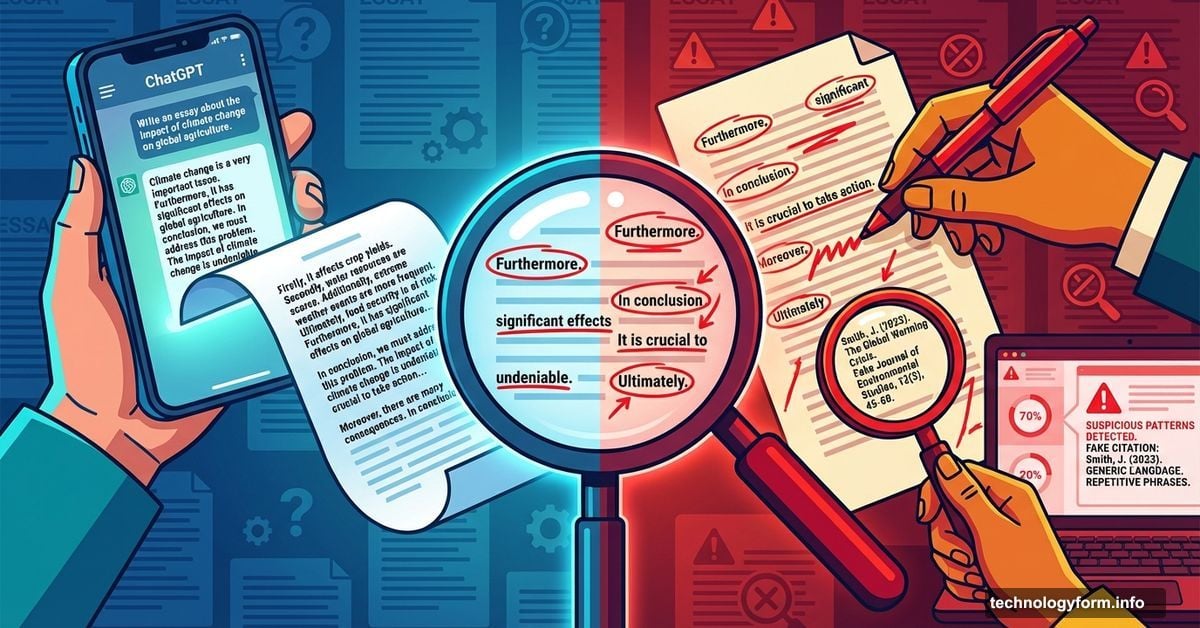
ChatGPT Wrote That Essay. Here’s How Teachers Know
Your student just submitted a flawless paper. Perfect grammar. Zero typos. But something feels off.
Teachers aren’t fooled anymore. AI-generated writing has telltale patterns that stand out like a sore thumb. After grading hundreds of ChatGPT submissions, I’ve learned exactly what to look for.
The Wikipedia Voice Gives It Away
AI writing sounds like a robot trying to impress you. It’s technically correct but completely lifeless.
Students who normally write in choppy sentences suddenly submit essays using “multifaceted analysis” and “tapestry of ideas.” That’s not growth. That’s ChatGPT.
The language feels borrowed from somewhere else. Plus, every paragraph wraps up with a neat little bow. AI loves to summarize things that don’t need summarizing.
Here’s the thing. Human writing has rhythm and personality. AI writing reads like a corporate memo trying to sound smart.
Prompt Parroting Screams AI
ChatGPT loves repeating your exact assignment language back to you. That’s a dead giveaway.
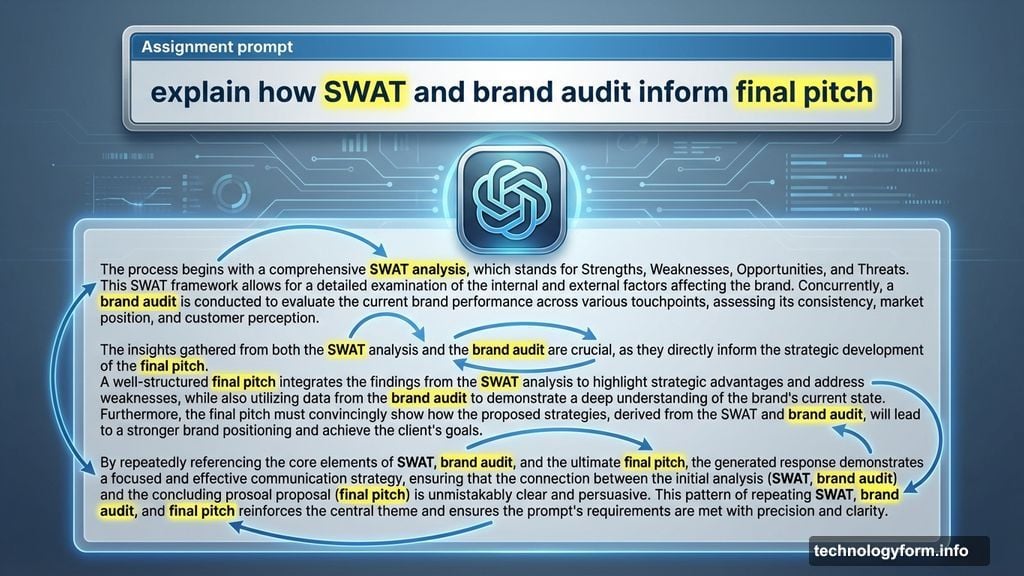
Take this prompt: “In 300 words or fewer, explain how this SWAT and brand audit will inform your final pitch.”
An AI response will hammer “SWAT,” “brand audit,” and “final pitch” into nearly every paragraph. Real students don’t write that way. They paraphrase or assume you know what they’re talking about.
Moreover, the definitions feel like SEO content from 2015. Instead of demonstrating understanding, the essay just defines terms over and over. No analysis. No original thought. Just keyword stuffing.
Hallucinated Facts Expose the Fraud
AI confidently invents things that never happened. We call these “hallucinations.”
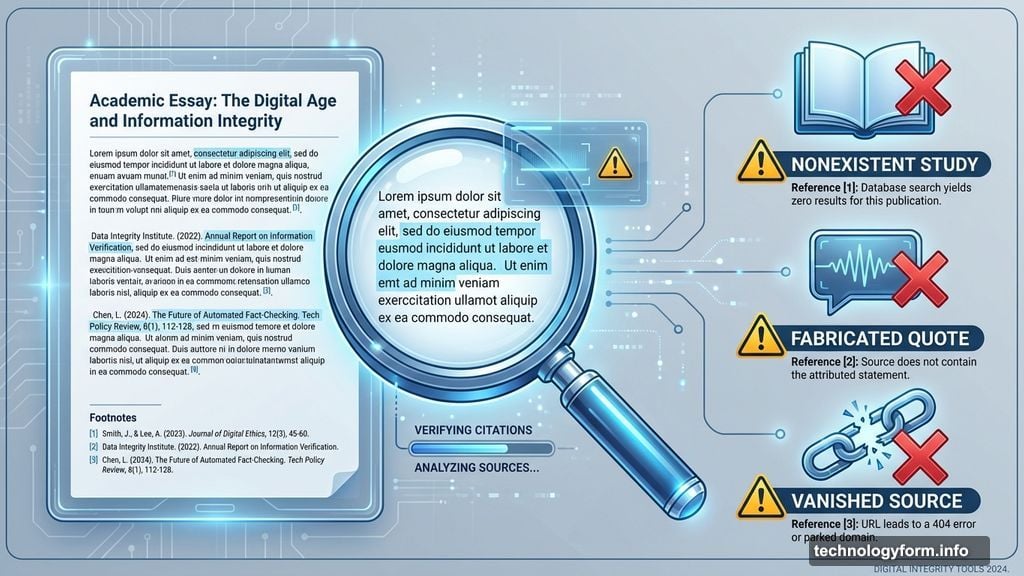
A student’s paper might cite a study that doesn’t exist. Or quote an expert who never said those words. ChatGPT fills gaps with plausible-sounding fiction.
So always fact-check suspicious claims. Google the citations. Verify the quotes. If sources vanish under scrutiny, you’ve caught AI red-handed.
Plus, hallucinations cluster together. Find one fake fact and you’ll usually find more.
The Tone Suddenly Changes
Students have consistent writing styles. AI doesn’t.
A sophomore who writes casual, conversational prose all semester suddenly submits formal academic language. That shift raises red flags immediately.
Indeed, voice consistency matters more than people think. Students develop patterns over time. Their vocabulary stays relatively stable. Sentence structure feels familiar.
But AI defaults to generic professional tone. It sounds like every other ChatGPT essay. No personality. No quirks. Just bland competence.
Generic Fluff Replaces Real Ideas
AI excels at saying nothing in many words. Real students actually try to make points.
ChatGPT responses feel repetitive and circular. The same idea gets restated three different ways without advancing the argument. It’s padding masquerading as depth.
For instance, an AI essay might explain cloud computing benefits, then restate those benefits using different words, then summarize the benefits again. Three paragraphs. Zero new information.
Meanwhile, human writing builds toward something. Each paragraph adds value or explores new angles. Even struggling students show some attempt at progress.
How Teachers Catch AI Cheaters Now
Forget AI detection tools. They produce false positives constantly. Smart teachers use better methods.
First, collect writing samples early. Have students submit something personal and fun in week one. “Describe your favorite childhood toy” works great. That baseline shows you their real voice.
Second, know what ChatGPT produces for your assignments. Copy your prompts into ChatGPT before the semester starts. See what results it generates. You’ll recognize those patterns later.
Third, ask AI to rewrite suspicious submissions. Take the student’s work and prompt ChatGPT: “Rewrite this essay.” AI rewrites its own work lazily, just swapping synonyms. Human writing gets restructured completely.
Here’s proof. I gave ChatGPT an AI-generated essay and asked for a rewrite. It kept the same structure and just switched a few words. Then I gave it my actual bio written by me. ChatGPT completely rewrote everything, adding explanations and changing phrasing throughout.
That difference reveals everything.
The Rewrite Test Works Every Time
When you suspect AI cheating, run this experiment. Feed the submission to ChatGPT with “Rewrite this completely.”
AI recognizes its own work. It’ll produce a lazy revision with synonym substitutions but identical structure. That’s because it’s already “optimized” the content.
But give ChatGPT human writing and it goes wild. Complete overhauls. Different sentence structures. Added context. The tool actually tries to improve genuinely human work.
So this test provides concrete evidence. You can show students and administrators side-by-side comparisons. The patterns don’t lie.
Building Your Case Against AI Cheating
Evidence matters when accusing students of academic dishonesty. Your gut feeling isn’t enough for disciplinary action.
Document everything. Keep the original submission. Save your AI test results. Maintain your writing baseline samples. Build a clear paper trail.
Plus, understand your school’s policies. Some institutions require specific proof levels. Others let professors handle integrity violations independently.
However you approach it, stay professional. Students cheat for lots of reasons. Fear. Laziness. Poor time management. Your job isn’t judging them. It’s maintaining academic standards.
Make Learning More Tempting Than Cheating
Fighting AI tools is exhausting. But making assignments AI-proof is smarter long-term.
Design prompts that require personal experience or specific class discussions. Ask students to reference in-class examples ChatGPT couldn’t know about. Require drafts showing work progression.
Better yet, shift away from generic essays. Presentations, creative projects, and practical applications are harder to fake with AI. Students actually have to engage with the material.
Look, AI isn’t going anywhere. These tools will only improve. So our teaching methods need to evolve too.
The goal isn’t catching every cheater. It’s creating environments where genuine learning beats the shortcut. Where students want to do the work because it’s interesting, relevant, or useful.
That’s harder than detecting ChatGPT essays. But it’s the only sustainable solution.