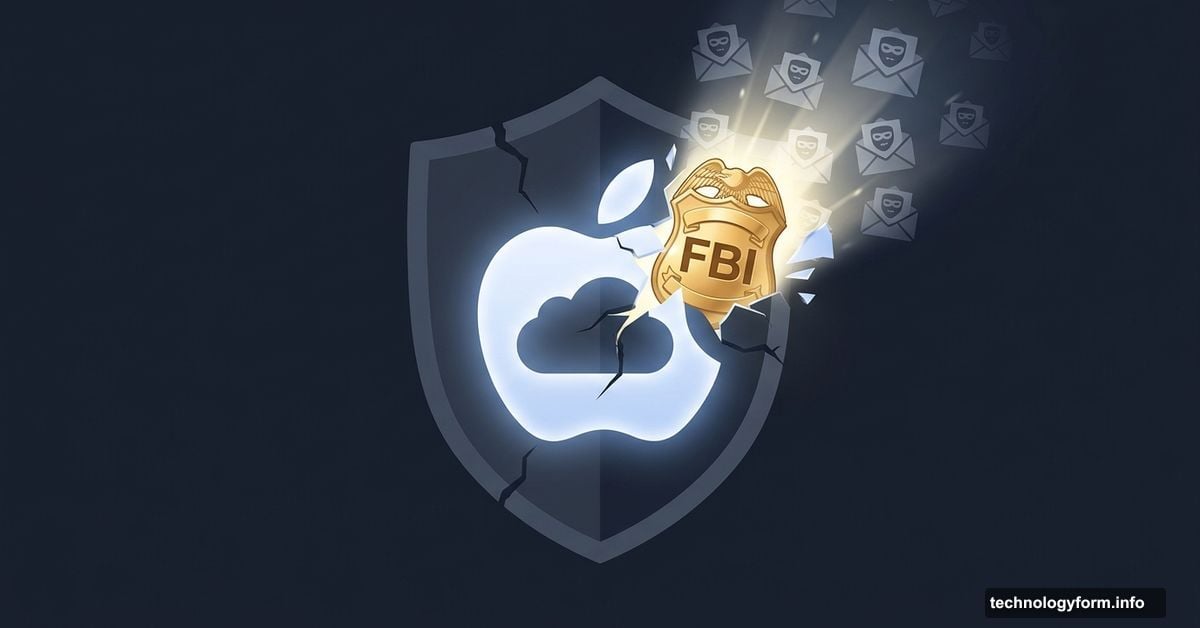
Apple’s Hide My Email Won’t Hide You From the FBI
Apple built a clever privacy tool that keeps your email address secret from apps and websites. But as two recent court cases just revealed, it can’t keep your identity secret from law enforcement.
And honestly? That’s a distinction worth understanding before you put too much trust in any privacy feature.
What Hide My Email Actually Does
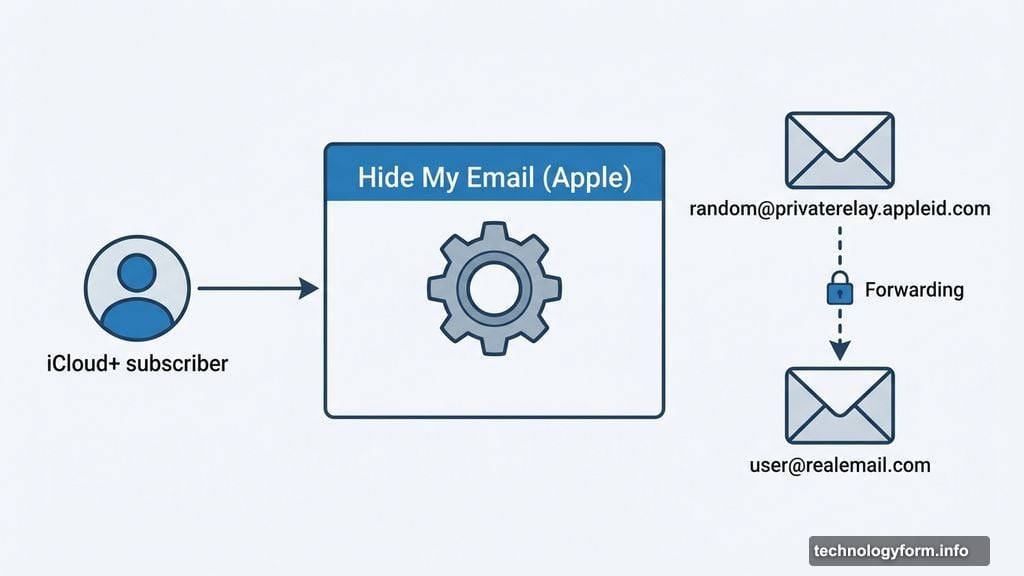
Hide My Email is an iCloud+ feature — meaning you need a paid Apple subscription to use it. The idea is simple and genuinely useful.
Instead of handing your real email address to every app, website, or newsletter you sign up for, Hide My Email generates a random, anonymous address. That address forwards messages straight to your actual inbox. So you get the emails. But the sender never learns who you really are.
Apple has also stated it doesn’t read the forwarded messages. From a spam-blocking and data-privacy standpoint, it’s a solid tool.
The catch? Apple still knows exactly who owns each anonymous address. And when law enforcement comes knocking with a warrant, that information flows freely.
Two Court Cases, Two Customers Exposed
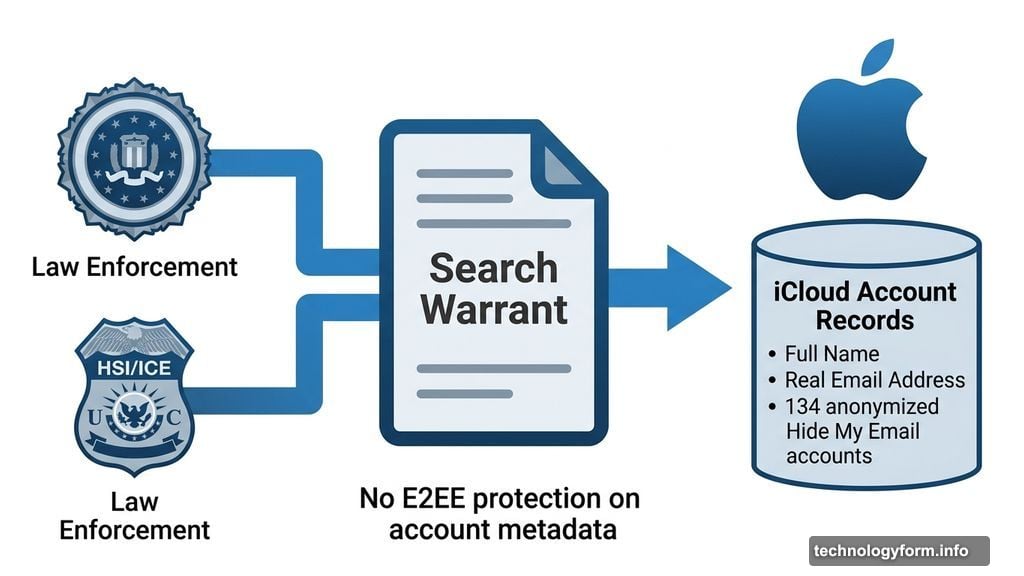
The story starts with a federal investigation into a threatening email allegedly sent to Alexis Wilkins, the girlfriend of FBI Director Kash Patel. According to an affidavit first reported by 404 Media, the FBI asked Apple for records tied to a Hide My Email address.
Apple delivered. The company handed over the account holder’s full name, their real email address, and records for 134 anonymized email accounts that person had created through Hide My Email.
But that wasn’t the only case. TechCrunch also reviewed a second search warrant involving a completely separate investigation. This one involved Homeland Security Investigations, a unit within ICE, looking into an alleged identity fraud scheme. An HSI agent cited Apple records from January 2026 showing the alleged fraudster had created multiple anonymized email addresses across several Apple accounts.
Same result. Apple provided the identifying information.
iCloud Encryption Has Real Limits
Apple markets iCloud heavily around end-to-end encryption (E2EE). And a good chunk of iCloud really is end-to-end encrypted — photos, notes, passwords, messages backed up to the cloud. For that data, even Apple can’t read it. Law enforcement can’t get it from Apple either, because Apple simply doesn’t have the keys.
But not everything works that way. Apple still stores plenty of customer information that isn’t encrypted in that same way. That includes your name, billing address, and account details. It also includes regular email, which by its very nature travels across the internet as readable plaintext.
Hide My Email sits in this second category. It’s a routing and anonymization tool. Apple manages the connection between your anonymous address and your real one. So Apple can always look that up — and so can anyone with a valid warrant.
The Bigger Lesson About Email Privacy
Here’s something that often surprises people. Even in 2026, the vast majority of email sent across the internet is not encrypted. The content travels as plaintext. The routing information — who sent it, who received it, when — is built right into the message headers.
This isn’t a flaw specific to Apple. It’s how email has worked since the beginning. The infrastructure was designed for delivery, not secrecy.
That’s a big reason why demand for end-to-end encrypted messaging apps like Signal has grown so sharply in recent years. Signal encrypts message content in a way that makes it unreadable to anyone except the sender and recipient — including Signal itself. Law enforcement with a warrant can ask Signal for data, but there’s very little Signal actually has to hand over.
Email, even with clever address-masking tools on top of it, doesn’t offer that same protection.
What This Means for You
If you use Hide My Email, don’t stop. It’s still genuinely useful. Keeping your real address away from data brokers, marketing companies, and sketchy apps is worth doing.
But understand what the tool actually protects you from. It limits commercial tracking. It reduces spam. It keeps random companies from building a profile around your email address.
It does not make you invisible to law enforcement. Apple responded to two separate federal requests and provided real identity information both times. That’s Apple following legal process — not a bug, not a betrayal, just the reality of how the service is built.
If your threat model involves government investigation, no email-based privacy feature will fully protect you. That’s when tools like Signal, with its minimal data retention and true end-to-end encryption, become much more relevant than any email alias.
Apple did not respond to TechCrunch’s request for comment on either case.