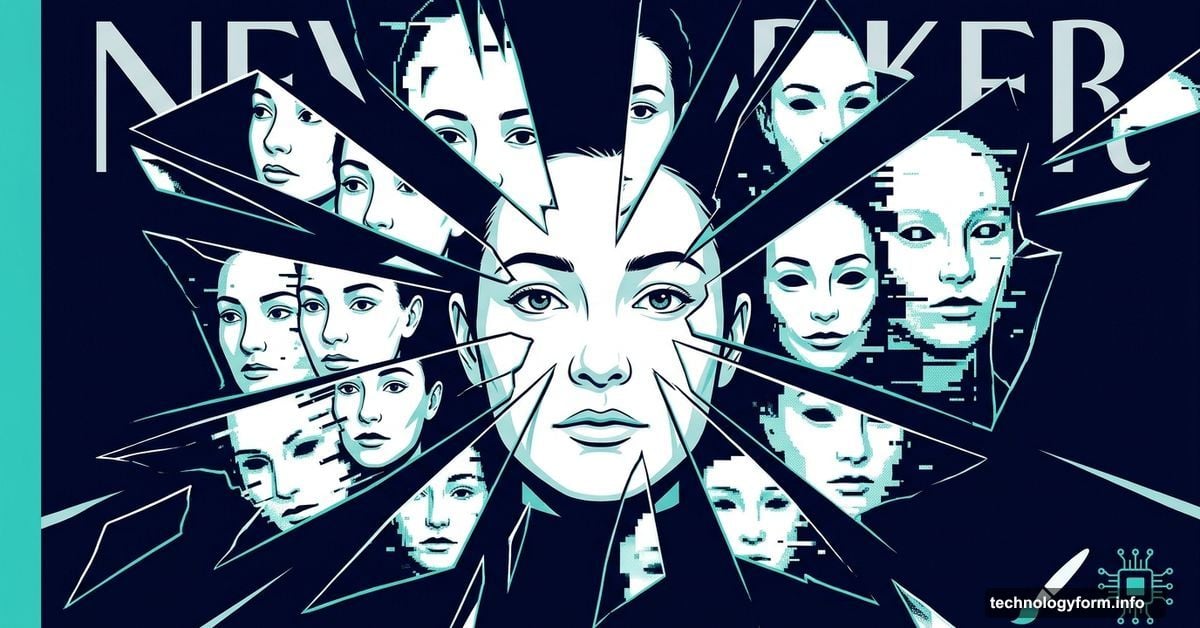
The New Yorker Used AI Art for Its Sam Altman Profile. Was It Worth It?
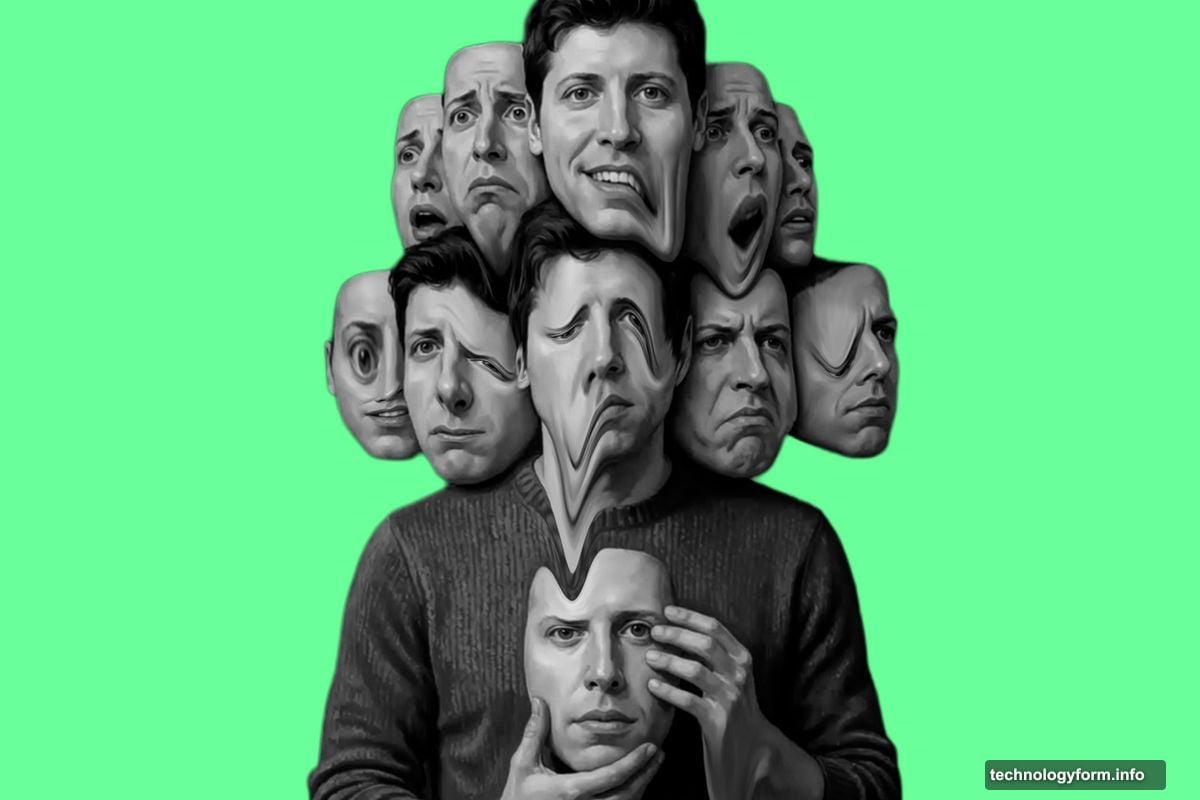
When The New Yorker published Ronan Farrow’s profile of OpenAI CEO Sam Altman, the accompanying illustration stopped people cold. Altman stands in a blue sweater, blank-faced, while a cluster of disembodied faces floats around his head. Creepy alt-Altmans. Expressions ranging from fury to open-mouthed anguish. One face rests in his hands like a broken mask.
Then you notice the disclosure at the bottom: “Visual by David Szauder; Generated using A.I.”
That small line triggered a very big conversation.
Who Actually Made This Image
David Szauder isn’t your average AI image prompter. He’s a Budapest-based mixed-media artist with over a decade of experience in collage, video, and generative art processes that predate commercial AI tools entirely. He recently taught art and technology at Moholy-Nagy University of Art and Design.
His process here was genuinely layered. The New Yorker’s digital design director, Aviva Michaelov, confirmed that Szauder submitted around 15 different sketches before landing on the final hydra-esque image. He combined classical editing methods like Photoshop with AI-based tools, refined facial expressions manually, and spent considerable time adjusting lighting and clothing variations.
Szauder also programs his own AI tools and feeds them archival imagery, including newspaper clippings and family photos. He uses what he calls “ethically clarified source materials.”
In his own words: “I strongly believe that even in the age of AI, an image must first be formed in the human mind, not in the machine.”
The Image Kind of Works. But Only Kind Of.
The visual concept is clever on paper. Use AI’s inherent uncanniness to illustrate Sam Altman’s many-faced, hard-to-trust public persona. The pained expressions and eerie motion smoothing all point toward the same thesis — this man can’t be fully known.
But does the execution land?
Cath Virginia, art director at The Verge, put it directly: the image basically succeeds in communicating the story, but feels like metacommentary that falls flat. The AI visual aesthetic comments on Altman being the face of job-stealing AI. That’s the idea. Yet if you don’t already recognize the telltale signs of AI-generated imagery, you’d miss the commentary entirely.
The inconsistent facial likeness across all those heads is a dead giveaway of AI’s limitations. A portrait illustrator could have controlled for that. The synthetic studio backdrop gives the whole thing a slightly unsettling but ultimately boring quality — like a Lifetouch elementary school photo that got weird. The murky intentionality raises more questions than it answers.
What This Means for Editorial Illustration
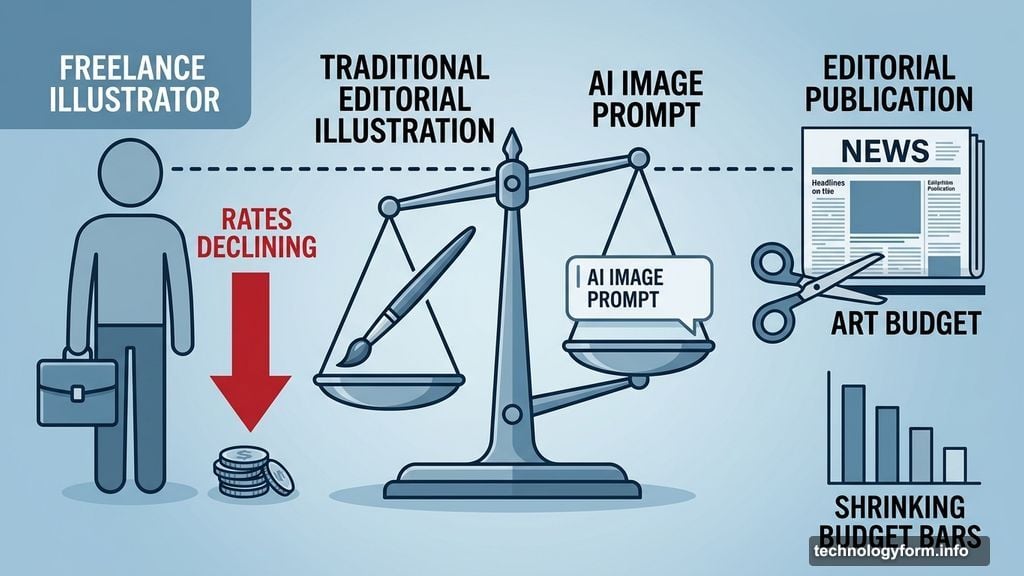
Here’s where things get uncomfortable. Art budgets are historically the first thing cut when publications tighten their belts. Freelance illustration is already a field plagued by exploitation, with rates in a race to the bottom and no realistic path to unionization because the work is so scattered.
AI is demonstrably stealing art jobs. That’s not speculation — it’s documented. And using AI’s visual aesthetic to illustrate the man most responsible for that disruption carries a certain irony that the image never quite fully confronts.
Human artists have designed sharp, self-aware parodies of AI-generated slop. But AI itself lacks the self-awareness to parody its own existence, even with a thoughtful human operating it. The image leans on AI’s unsettling qualities to tell the story without saying anything genuinely new about AI imagery or the industry behind it.
By contrast, Szauder’s earlier New Yorker AI illustration feels more alive. It’s more cinematic. The squirming texture echoes the chaotic early days of generative AI in a way that feels purposeful rather than atmospheric.
The Copyright Problem Nobody Can Ignore
There’s a legal dimension worth understanding here. According to the US Copyright Office’s guidance on AI-generated images, no matter how many times a prompt is revised, the final output reflects the user’s acceptance of the AI system’s interpretation — not authorship of the expression it contains.
That matters. The eye of a working artist is built from a lifetime of assembling internal libraries of taste, meaning, and intent. Those aren’t things Midjourney or ChatGPT possess. A text prompt can only influence output so much, and the gap between human artistic intention and machine execution is exactly where something gets lost.
At The Verge, the policy is clear: any AI-assisted image gets a yellow disclosure label, and the justification is stated openly every time.
Is This a Slippery Slope Worth Worrying About?
Inviting AI imagery into The New Yorker’s pages could be seen as normalizing its use across the illustration industry. That concern is legitimate. A publication of that prestige carries influence, and what it treats as acceptable tends to ripple outward.
But it’s also worth some perspective. The New Yorker didn’t create the economic conditions that made illustrators vulnerable. And Szauder’s process is genuinely more involved than the average AI image creator’s — it’s not a casual text prompt thrown at Midjourney during a deadline crunch.
Still, the result here is a missed opportunity. The story demanded something that cut deeper. A human illustrator would have brought controlled likeness, deliberate symbolism, and stylistic choices that couldn’t be mistaken for machine output. The concept called for that kind of precision. What it got instead was technically competent but ultimately hollow.
Szauder is doing what AI proponents always advocate — using it as one tool in a larger creative process. The problem is that even used thoughtfully, this particular image doesn’t clear the bar that The New Yorker’s illustration history has set for itself.
The conversation it started, though? That part was very human.