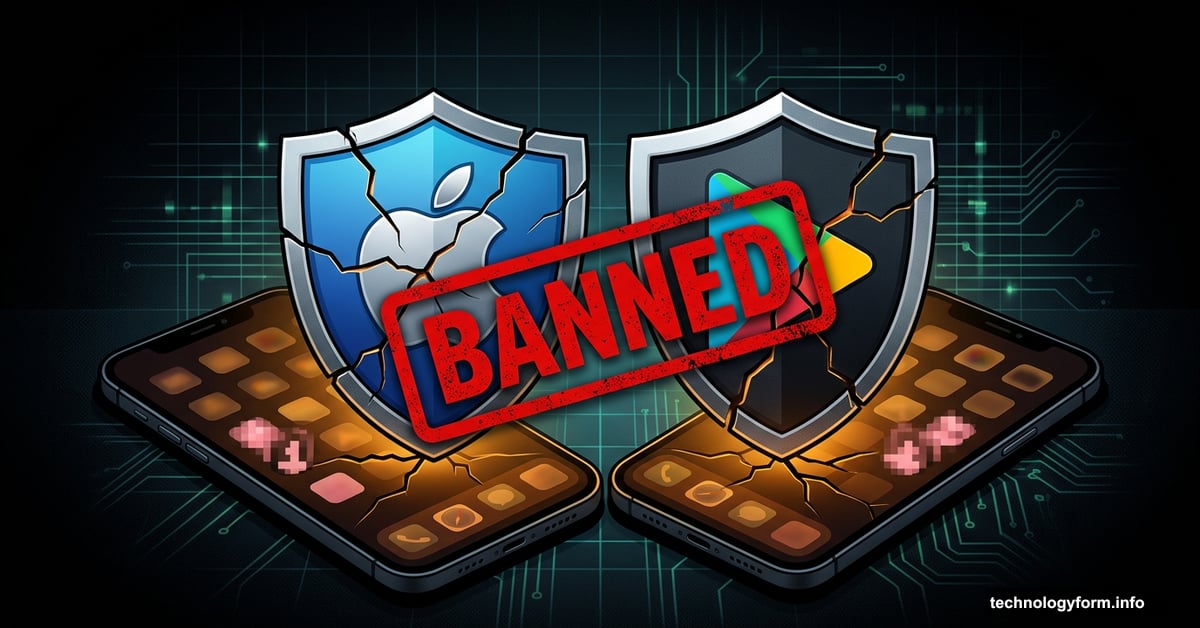
Apple and Google Promoted “Nudify” Apps While Their Own Policies Banned Them
Both tech giants have strict rules about sexual content. So why were they actively advertising apps designed to strip women naked using AI?
That’s the uncomfortable question raised by a new report from the Tech Transparency Project (TTP), a nonprofit tech watchdog. And the answer, frankly, is hard to swallow.
Over 100 Nonconsensual Deepfake Apps Found on Both Stores
TTP first flagged the problem back in January, when researchers discovered more than 100 so-called “nudify” or undressing apps living inside both the Apple App Store and Google Play Store.
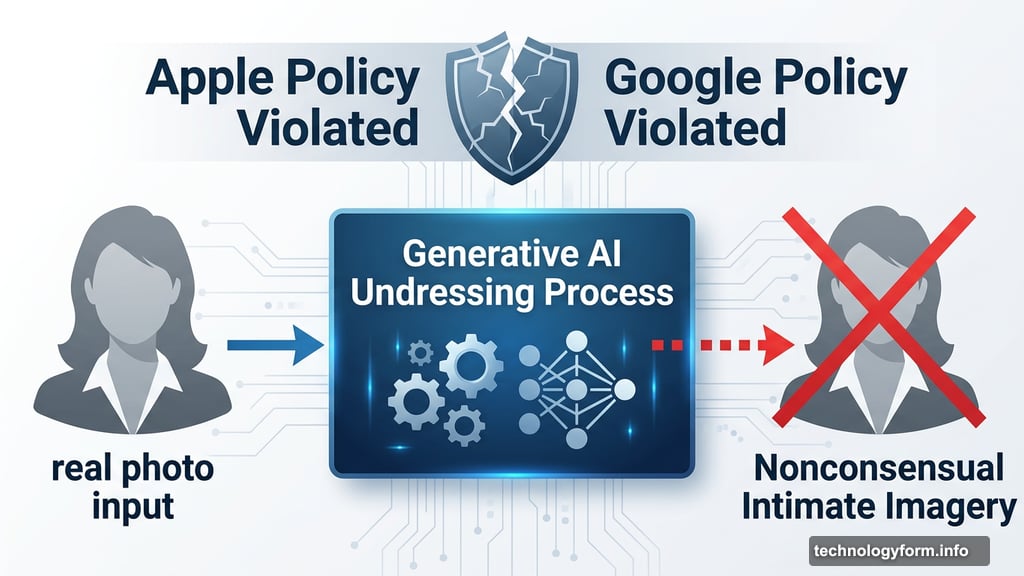
These aren’t ambiguous apps. Their entire purpose is taking photos of real people, usually women, and using generative AI to make those images appear nude. That’s nonconsensual intimate imagery. It’s abusive. And it’s clearly banned under both companies’ existing policies.
Apple removed some of the apps after that initial report. But many stayed up. So TTP went back for a closer look.
Both Companies Actually Promoted These Apps
Here’s where it gets worse. TTP’s April investigation didn’t just find that the apps were still available. It found that Apple and Google were actively promoting them.
Google, in particular, created what the report describes as “a carousel of ads for some of the most sexually explicit apps encountered in the investigation.” That means the platform wasn’t just tolerating these apps. It was boosting their visibility to users.
Researchers also found that users could still search for terms like “nudify,” “undress,” and “deepnude” across both stores. After reviewing the top 10 results on each platform, TTP found that 40% of those apps openly advertised their ability to “render women nude or scantily clad.”
The Policies Are Clear. The Enforcement Isn’t.
Both Apple and Google have written policies that should cover exactly this situation. Apple prohibits apps with “overtly sexual or pornographic material.” Google bans content featuring “sexually suggestive poses in which the subject is nude, blurred or minimally clothed.”
Both companies have enforced these rules before, particularly against traditional porn apps. So the gap here isn’t a policy problem. It’s a will problem.
TTP points to one likely reason: money. Analytics firm AppMagic found these nudify apps were downloaded 483 million times and generated more than $122 million in lifetime revenue. Apple and Google both profit from app developer advertising and subscription revenue splits. That financial relationship, TTP argues, may explain why enforcement has been so inconsistent.
What Each Company Said
Google told CNET that Google Play doesn’t allow sexual content and that many of the apps flagged in the report have since been suspended for policy violations.
Apple told CNET it removed 15 apps identified in the report, contacted six additional developers with warnings, and blocked several search terms that TTP flagged.
Those are real steps. But critics argue they’re reactive rather than proactive, and that the scale of the problem, 100+ apps and nearly half a billion downloads, suggests the enforcement systems weren’t doing their jobs in the first place.
This Is Part of a Much Bigger Problem
The nudify app situation doesn’t exist in isolation. Nonconsensual AI-generated sexual imagery is growing fast, and app stores are a key distribution point.
Earlier this year, Grok users generated 1.4 million sexualized deepfakes in just nine days. Several US senators called on Apple and Google to remove Grok from their stores entirely. Neither did. Apple privately reached out to Grok’s developers to raise concerns and threatened removal, but as of now, Grok remains available on both platforms and is reportedly still capable of generating abusive AI sexual images, despite the company’s claims to the contrary.
The pattern is frustratingly consistent. A report comes out. Companies promise action. Partial fixes follow. The underlying problem persists.
Why This Matters Beyond the Headlines
It’s easy to read a story like this and feel distant from it. But nonconsensual intimate imagery causes real, documented harm to real people. Victims experience harassment, job loss, damaged relationships, and serious mental health consequences.
When the two most powerful app gatekeepers on the planet not only allow these tools to exist but actively advertise them, they’re making a choice. They’re deciding that the revenue these apps generate is worth more than the safety of the people those apps target.
That’s not a technical failure. It’s a values failure.
The fixes Apple and Google announced are worth acknowledging. But 15 removed apps against a backdrop of 100+ identified violations, 483 million downloads, and active promotion doesn’t feel like accountability. It feels like damage control.
Users, regulators, and anyone who cares about how AI gets used deserve better enforcement, not just better excuses.