Block Just Slashed 4,000 Jobs. Jack Dorsey Says AI Made Them Expendable
Jack Dorsey didn’t mince words. Block, the fintech company behind Square and Cash App, is cutting nearly half its workforce — and the reason isn’t a struggling business. It’s artificial intelligence.
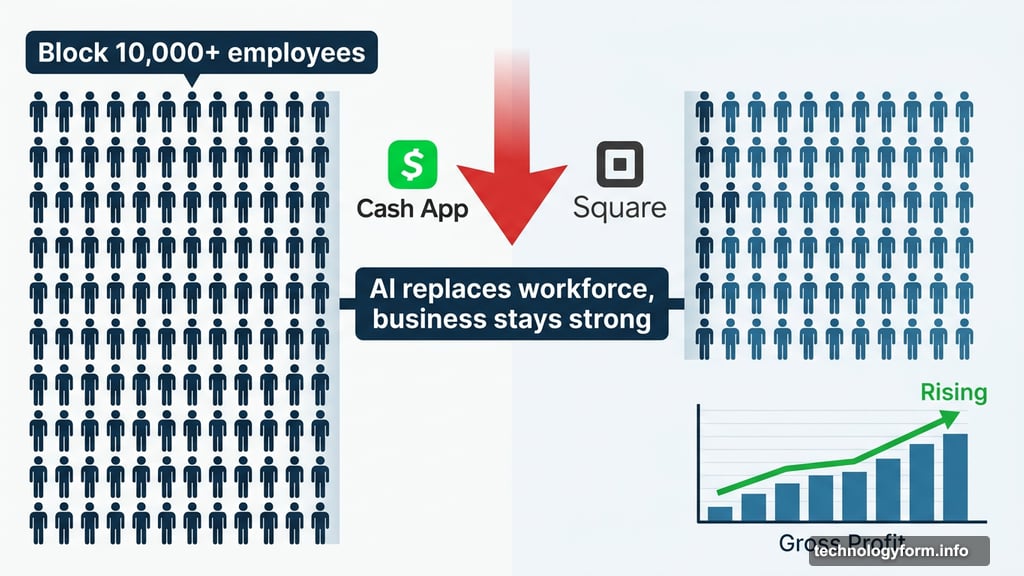
More than 4,000 people will lose their jobs. The company shrinks from over 10,000 employees to fewer than 6,000. And Dorsey is framing this as a bet on the future, not a rescue operation.
The Company Isn’t Failing. That’s What Makes This Unsettling
Usually, mass layoffs signal trouble. Revenue down, losses mounting, investors nervous. Block’s situation is different.
Dorsey was direct about it in his post on X. “We’re not making this decision because we’re in trouble,” he wrote. “Our business is strong. Gross profit continues to grow, we continue to serve more and more customers, and profitability is improving.”
So Block isn’t cutting staff to survive. It’s cutting staff because it believes it no longer needs them. That’s a meaningful distinction — and an uncomfortable one for anyone working in tech right now.
The announcement came Thursday alongside Block’s Q4 2025 earnings report.
Dorsey’s Bet on “Intelligence-Native” Fintech Companies
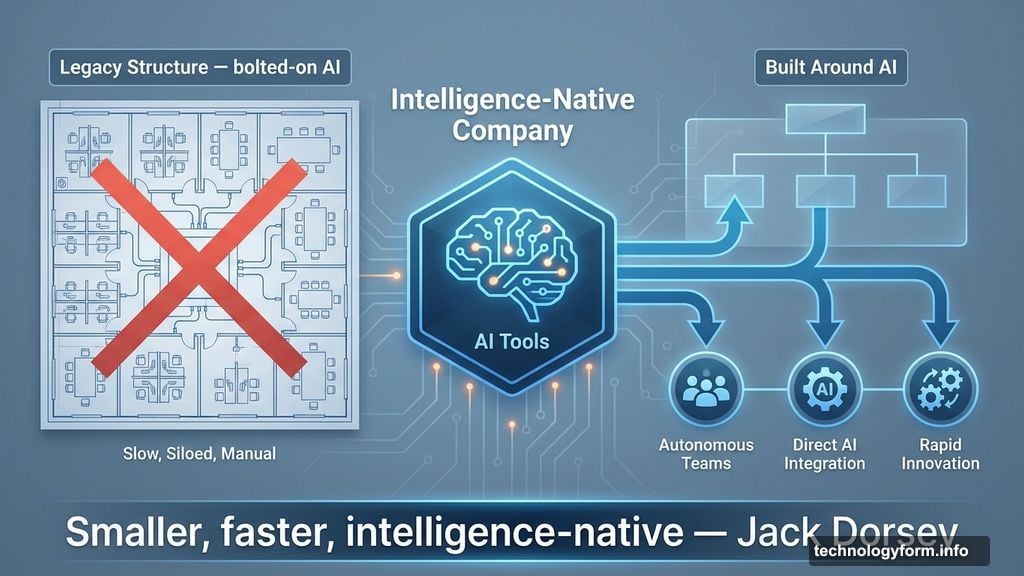
The language Dorsey chose is worth paying attention to. In the shareholder letter, he described Block’s goal as becoming a “smaller, faster, intelligence-native company.”
That phrase — intelligence-native — is new. It describes a company designed from the ground up around AI tools rather than one that bolted AI onto existing processes. Think of it like the difference between a building retrofitted with solar panels versus one built with solar integrated into its architecture.
Dorsey says Block is already seeing it work. “The intelligence tools we’re creating and using, paired with smaller and flatter teams, are enabling a new way of working which fundamentally changes what it means to build and run a company,” he wrote. “And that’s accelerating rapidly.”
The bet is that fewer people, better equipped with AI, can accomplish more than larger traditional teams.
Why Go Big Instead of Gradual?
Plenty of companies make slow, rolling cuts. A few hundred jobs here, a restructuring there. Block chose the opposite approach.
Dorsey explained his reasoning plainly. He said he’d “rather take a hard, clear action now and build from a position we believe in than manage a slow reduction of people toward the same outcome.”
In other words, he saw the destination and decided a fast route was better than a slow one. Whether that reasoning comforts the 4,000 people losing their jobs is another question entirely.
What This Means Beyond Block
Block’s move is significant because of how openly Dorsey framed it. Other companies have made AI-related cuts while describing them differently — blaming market conditions, reorganizations, or strategic pivots.
Dorsey just said it outright. AI changed what a company needs. So we’re adjusting accordingly.
That kind of honesty is rare. But it also sets a precedent. If Block’s AI-first, smaller-team model produces strong results, other fintech companies will notice. Investors will ask why their portfolio companies still employ so many people. Boards will start asking the same questions.
Square and Cash App serve millions of customers. Block’s argument is that those customers won’t notice — or care — whether 6,000 or 10,000 people sit behind the product. If AI handles what those extra 4,000 people used to do, the business outcome stays the same.
That might turn out to be true. And that’s exactly what should give the broader tech industry pause.
Block’s workforce reduction isn’t just a company story. It’s a signal about where the industry is heading. The companies calling themselves “intelligence-native” today are writing a template that others will follow. The real question isn’t whether Block’s bet pays off for shareholders. It’s what happens to the workers on the other side of that bet — and how many similar announcements we’ll see before the year is out.