ChatGPT Went Down. Thousands Got Locked Out of AI
ChatGPT stopped working this afternoon. If you tried to ask a question and got nothing back, you weren’t alone.
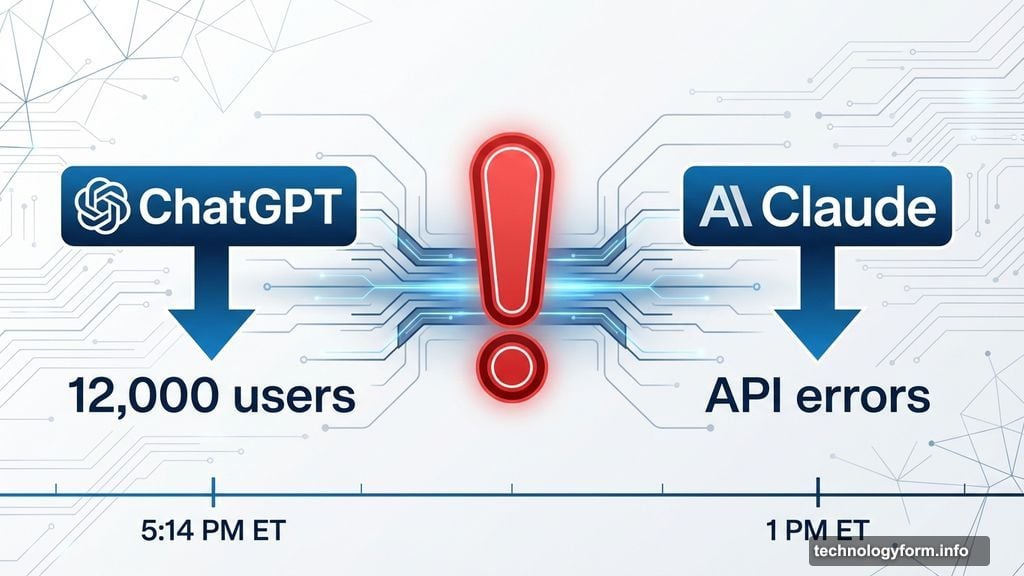
Over 12,000 people reported problems on Down Detector at the peak of the outage. That’s a lot of frustrated users hitting refresh and wondering if their internet died. Instead, OpenAI’s entire service stumbled for several hours.
What Actually Happened
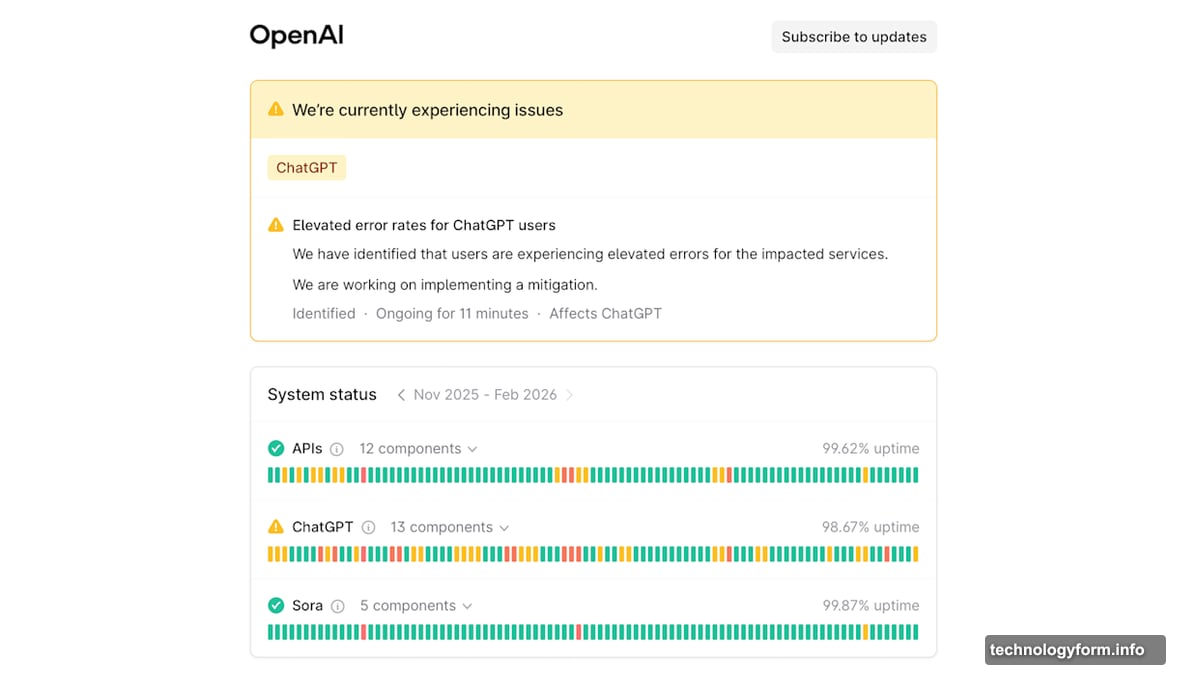
OpenAI confirmed the problem around mid-afternoon. Their status page listed “elevated error rates” hitting both ChatGPT and their API platform. Translation? The system wasn’t completely dead, but it wasn’t working right either.
Some users got error messages. Others saw their requests time out. A few lucky people experienced no issues at all. But the majority faced serious disruptions trying to access the AI assistant they’d grown dependent on.
The company marked the main issue resolved at 5:14 PM ET. However, one problem lingered. Their fine-tuning API service continued experiencing trouble even after the broader ChatGPT service came back online.
Claude Crashed Too
Here’s the weird part. Anthropic’s Claude also went down today.
Their AI chatbot hit similar technical problems around the same time. Claude’s status page showed “elevated error rate on API across all Claude models.” That issue cleared up faster though, getting fixed by 1 PM ET.
Two major AI services going down simultaneously? That’s either a massive coincidence or something systemic affecting cloud infrastructure. Neither company explained what caused their respective outages.
Why These Outages Matter More Now
ChatGPT isn’t just a curiosity anymore. Millions of people use it for actual work every day.
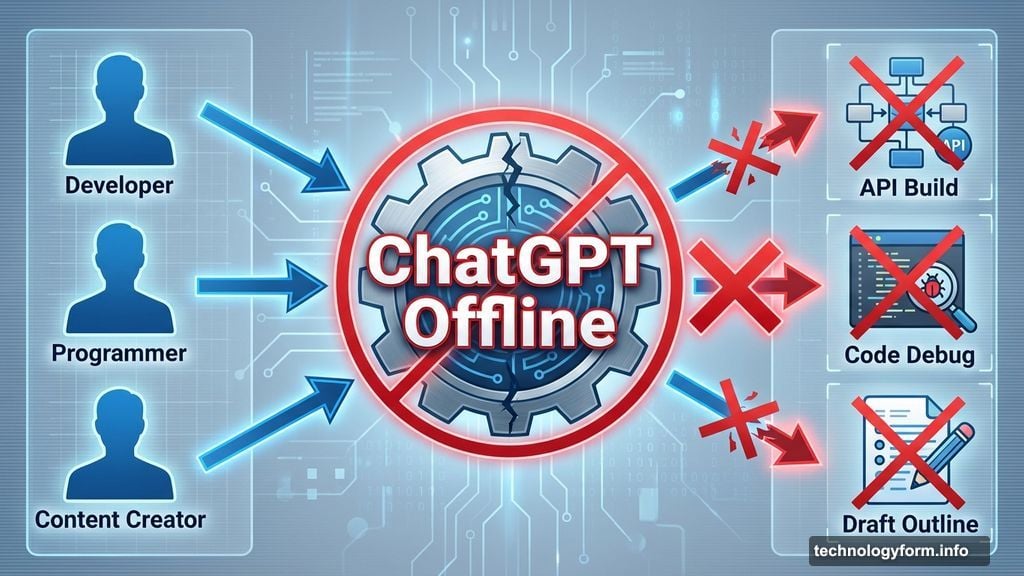
Developers build apps on top of OpenAI’s API. Content creators draft outlines. Programmers debug code. Students research papers. When ChatGPT goes offline, real workflows grind to a halt.
Plus, businesses now pay for ChatGPT Plus and Enterprise tiers. They’re shelling out $20 to $60 per month for reliable access. So when the service fails, paying customers rightfully get annoyed.
The dependency has grown fast. Most users didn’t even have backup plans when ChatGPT died today. They just waited and hoped it would come back soon.
OpenAI’s Reliability Problem
This isn’t ChatGPT’s first rodeo with downtime. The service has experienced multiple outages over the past year.
Each incident follows a similar pattern. Usage spikes, errors multiply, Down Detector lights up, OpenAI acknowledges the problem, then everything mysteriously resolves. The company rarely explains root causes or prevention measures.
That lack of transparency frustrates users who’ve come to rely on the tool. Enterprise customers especially need better communication about service stability. Yet OpenAI continues operating with startup-style incident management despite serving millions of users daily.
Meanwhile, competitors like Claude, Gemini, and Copilot wait in the wings. If ChatGPT’s reliability doesn’t improve, users might start exploring alternatives. Nobody wants to depend on a tool that randomly vanishes for hours.
The Bigger Infrastructure Question
Today’s dual outage raises uncomfortable questions about AI service resilience.
Are these systems fundamentally fragile? Do they struggle to handle peak demand? Are cloud providers the real bottleneck? OpenAI and Anthropic aren’t saying, which leaves users guessing.
What we do know is that AI chatbots consume massive computing resources. Every query burns through GPU cycles and network bandwidth. Scale that to millions of simultaneous users and you create serious infrastructure challenges.
Perhaps today’s problems stem from those scaling issues. Or maybe it was just bad luck hitting two services at once. Without transparency from the companies involved, users can only speculate while hoping for better uptime tomorrow.
For now, ChatGPT is back. Just don’t be shocked if it happens again.