Close ChatGPT and Trust Your Own Brain for These 11 Things
Let’s be real. ChatGPT is impressive. But impressive doesn’t mean infallible.
Too many people treat AI chatbots like an all-knowing oracle. They type in a question, get a confident-sounding answer, and take it as gospel. The problem? Large language models don’t actually “know” anything. They predict the next most likely word based on patterns. Sometimes that produces brilliant output. Other times it produces what the AI world calls a “hallucination” — a completely made-up answer delivered with total confidence.
For some tasks, a hallucination is annoying but harmless. For others, it can cost you money, your health, or your freedom. Here are 11 situations where you should genuinely close the tab and handle it yourself.
Diagnosing Your Physical Symptoms
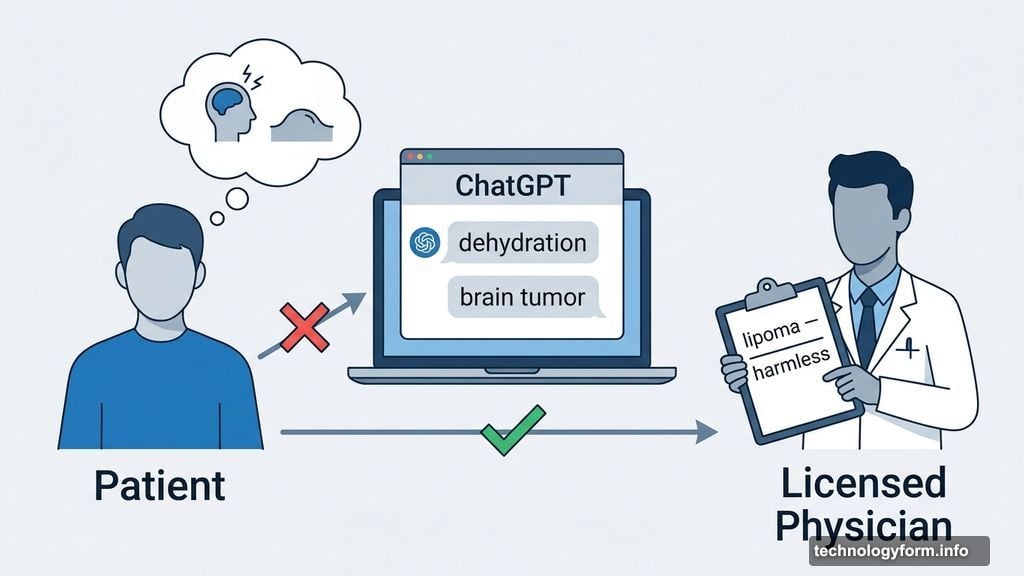
ChatGPT will tell you that your headache might be dehydration. It will also tell you it might be a brain tumor. Both with the same calm tone.
I tested this myself. I described a lump on my chest to ChatGPT and it suggested cancer as a possibility. My actual doctor told me it was a lipoma — completely harmless, and present in about one in every thousand people. That’s a dramatic difference with real emotional consequences.
ChatGPT can’t examine you, order lab tests, or carry malpractice insurance. So use it to prepare smarter questions for your doctor appointment, or to translate confusing medical jargon after you’ve been diagnosed. But never use it as a replacement for professional medical advice.
Managing Your Mental Health
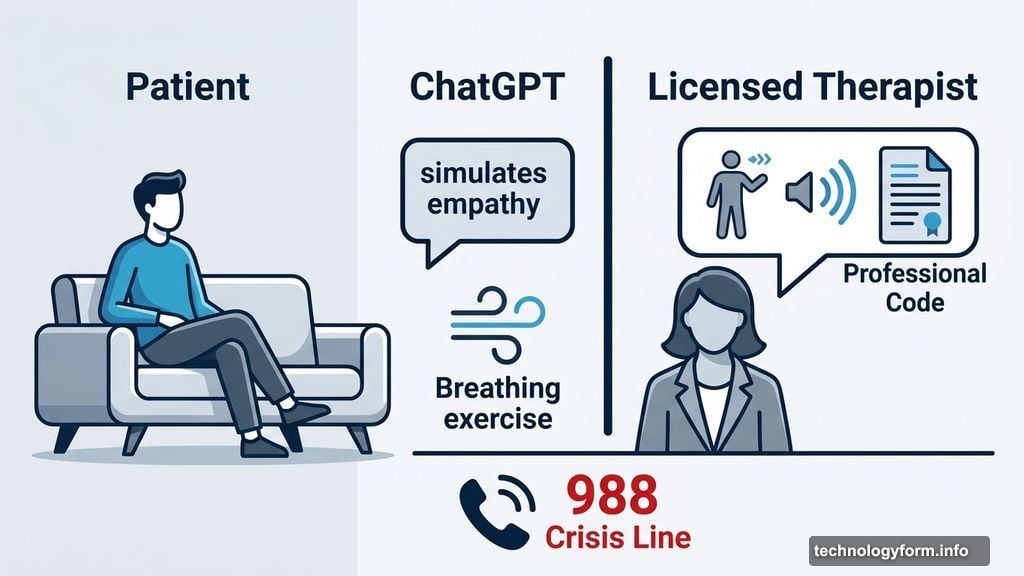
ChatGPT can walk you through a breathing exercise. It can offer a calm, patient response when you need to vent. But it cannot replace a therapist, and pretending otherwise carries real risk.
A licensed therapist reads your body language, hears your tone, and responds with genuine human empathy. ChatGPT simulates empathy. Those are very different things. Plus, therapists operate under professional codes and legal mandates designed specifically to protect you from harm.
AI advice can misfire, miss red flags, or unconsciously reinforce biases baked into its training data. The deeper, messier, more human work belongs with an actual trained professional. If you or someone you love is in crisis right now, call or text 988 in the US.
Making Emergency Safety Decisions
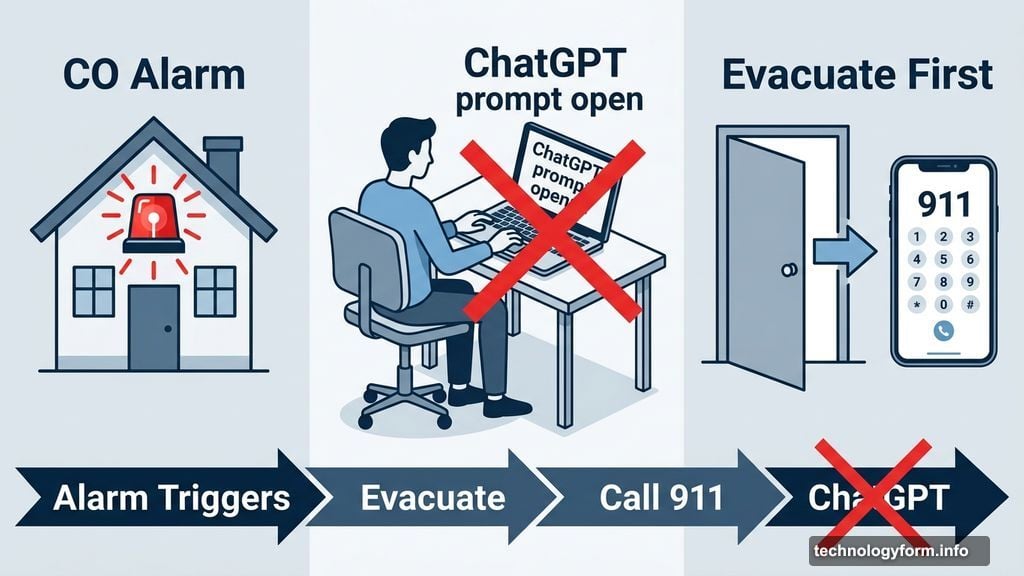
If your carbon monoxide alarm goes off, don’t open ChatGPT. Go outside first. Ask questions later.
This sounds obvious, but in a panic, people reach for familiar tools. ChatGPT cannot smell gas, detect smoke, or dispatch emergency services. Every second you spend typing a prompt is a second you could spend evacuating or calling 911. AI is useful as a post-incident explainer — not as a first responder.
Planning Your Finances or Taxes
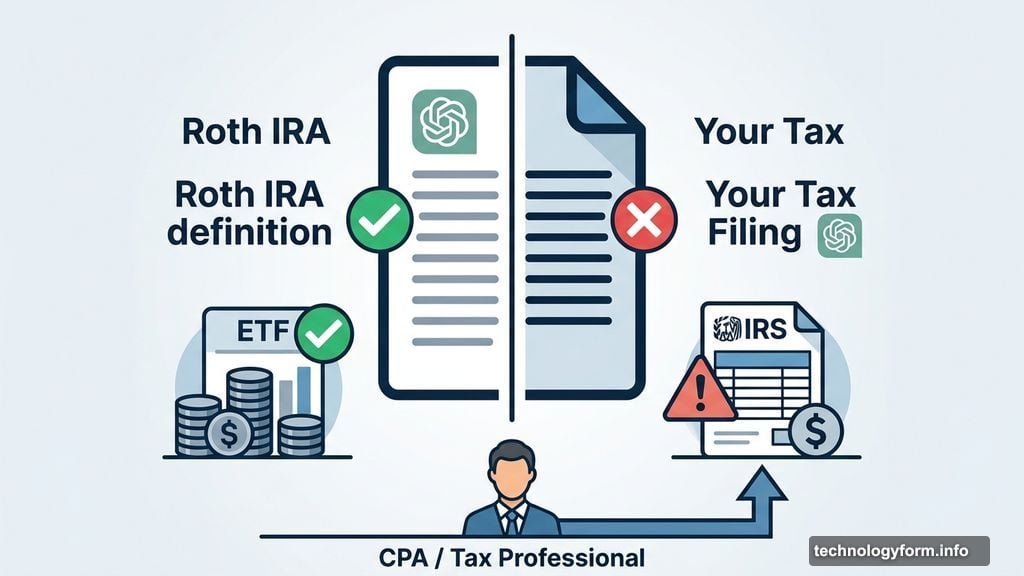
ChatGPT can explain what an ETF is. It can define a Roth IRA. But it has no idea what your debt-to-income ratio looks like, what your state tax bracket is, or what deductions you might be missing.
Its training data also has a cutoff date, which means its tax guidance can be stale before you even finish typing. A licensed CPA can catch a single hidden deduction worth several hundred dollars, or flag a filing mistake that saves you from an IRS penalty. ChatGPT cannot. And a quick reminder: anything you share in a chat prompt — income figures, Social Security numbers, bank details — may end up as training data. Keep that information offline.
Handling Confidential or Regulated Data
Think of your ChatGPT prompt window like a public forum. Whatever you paste in there leaves your control the moment you hit enter.
Client contracts, medical records, anything covered by HIPAA, GDPR, or the California Consumer Privacy Act — none of it should go into ChatGPT. The same goes for personal documents like your passport, driver’s license, or birth certificate. You can’t guarantee where that data gets stored, who reviews it internally, or whether it trains future models. If you wouldn’t post it in a public Slack channel, don’t post it in ChatGPT.
Anything Illegal
This one doesn’t need much explanation. ChatGPT won’t help you break the law, and you shouldn’t want it to.
Cheating on Schoolwork
AI-detection tools like Turnitin are getting sharper every semester. Professors are getting better at spotting AI-generated writing — the overly polished phrasing, the weirdly consistent structure, what some writers are already calling “ChatGPT voice.”
The practical risks include suspension, expulsion, and in professional programs, license revocation. But beyond getting caught, you’re robbing yourself of the actual education you’re paying for. Use ChatGPT as a study partner that helps you understand concepts, not as a ghostwriter that does the thinking for you.
Tracking Breaking News in Real Time
Since OpenAI launched ChatGPT Search in late 2024 — and opened it to everyone in early 2025 — the chatbot can pull fresh web results, stock quotes, sports scores, and gas prices with clickable citations. That’s genuinely useful.
But it doesn’t stream continuous updates. Every new development requires a new prompt. So when speed matters — breaking political news, live sports, financial market swings — dedicated news sites, push alerts, and live feeds are still your best tools.
Placing Bets or Making Gambling Picks
I’ll admit I once hit a three-way parlay during March Madness using ChatGPT’s suggestions. But I only cashed out because I verified every single claim against real-time sources. And honestly, I just got lucky.
ChatGPT regularly hallucinates player statistics, misreports injuries, and gets win-loss records wrong. It cannot predict tomorrow’s box score. Treat any sports or gambling “insights” from AI the same way you’d treat a tip from a stranger at a bar — entertaining maybe, but not worth betting real money on without doing your own homework.
Drafting Legal Documents
ChatGPT is great for explaining what a revocable living trust actually means. But the moment you ask it to draft real legal text, you’re gambling with the outcome.
Estate law, family law, and contract law vary not just by state but sometimes by county. A missing witness signature or an omitted notarization clause can invalidate an entire document. Instead, use ChatGPT to build a list of questions for your lawyer. Then pay that lawyer to turn those questions into a document that actually holds up in court.
Creating Art You’ll Call Your Own
This last one is personal opinion, not objective fact. But I think it matters.
I use ChatGPT for brainstorming and headline help. That’s supplementation — using AI as a thinking partner to sharpen my own ideas. What I don’t think is okay is generating an image, a song, or a piece of writing with AI and then presenting it as your own creative work.
Art comes from lived experience, personal struggle, and genuine expression. AI produces output based on patterns from other people’s lived experiences. Those are fundamentally different things, and collapsing that distinction doesn’t just shortchange your audience — it shortchanges you.
None of this means ChatGPT is useless. It’s remarkably good at explaining complex concepts, helping you organize your thoughts, drafting emails, writing code, and sparking ideas. The key is knowing where its limitations are before you rely on it for something that actually matters.
The people who use AI well aren’t the ones who trust it blindly. They’re the ones who know exactly when to close the tab.