
Google Just Hit $400 Billion Revenue. YouTube Earned More Than Netflix
Google’s parent company crossed a milestone nobody saw coming this fast. Alphabet pulled in over $400 billion in annual revenue for the first time ever.
That’s not just impressive. It’s a statement about where tech money flows in 2026. Plus, the breakdown reveals which parts of Google’s empire actually print cash.
YouTube Became a $60 Billion Business
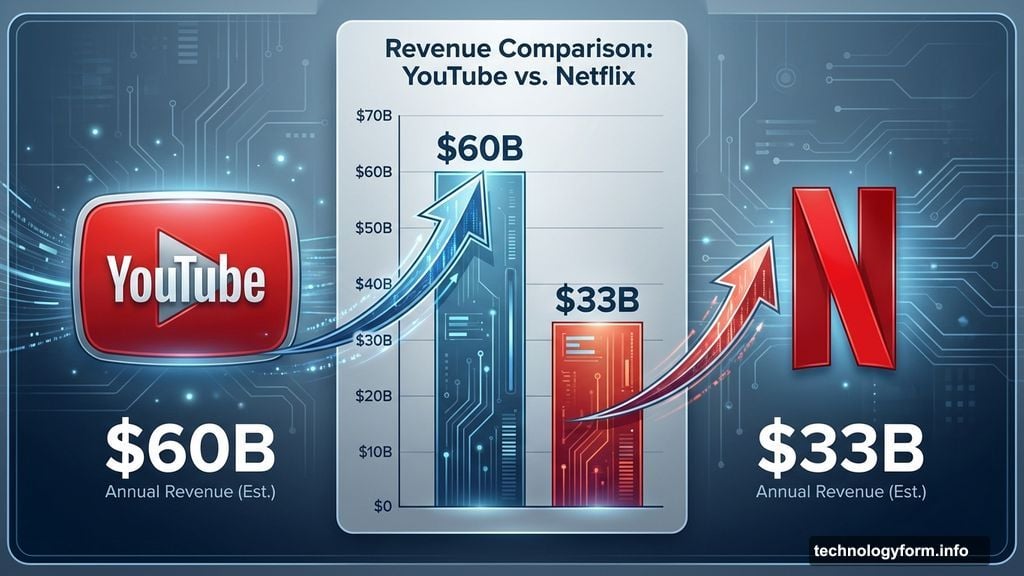
YouTube’s revenue blew past $60 billion last year. That combines advertising and subscription income from YouTube Premium.
Put that in perspective. Netflix’s entire annual revenue sits around $33 billion. So YouTube now generates nearly double what the streaming giant makes. Moreover, YouTube achieved this while remaining “free” for most users.
The platform maintains its position as the number one streamer according to Nielsen data. That’s not just bragging rights. It translates directly to advertiser dollars and premium subscriber growth.
Cloud Revenue Hit $70 Billion Run Rate
Google Cloud reached a $70 billion annual run rate in 2025. That marks serious progress in the cloud wars against Amazon Web Services and Microsoft Azure.
Cloud infrastructure generates recurring revenue with better margins than advertising. So Google’s success here matters more than the raw numbers suggest. In fact, analysts view cloud growth as crucial for Alphabet’s long-term profitability.
The shift makes sense. Companies need cloud infrastructure regardless of economic conditions. Advertising budgets get cut during downturns. Cloud spending doesn’t face the same volatility.
Gemini AI Grabbed 750 Million Users
Google’s Gemini AI app passed 750 million users after launching its Gemini 3 model in November. That’s a 100 million user jump in just a few months.
The momentum continues building. Apple plans to use a custom Gemini 3 version to power a more personalized Siri experience. So Google’s AI technology will reach millions more iPhone users soon.
Meanwhile, Google Search saw record usage over recent months. Plus, daily AI Mode queries doubled since launch. That means users actively engage with AI features rather than ignoring them.
Paid Subscriptions Crossed 325 Million
Alphabet now counts over 325 million paid subscribers across its services. Google One storage plans and YouTube Premium drive most of that growth.
The subscription model provides predictable recurring revenue. Unlike advertising that fluctuates with economic conditions, subscriptions generate stable monthly income. Therefore, Alphabet’s push toward subscription services makes strategic sense.
YouTube Premium removes ads while adding offline downloads and background playback. Those features convert enough users to generate billions annually. Google One offers cloud storage tiers that compete directly with Dropbox and Microsoft OneDrive.
AI Checkout Features Coming Soon
Google plans to build an agentic checkout feature into both Gemini and AI Mode. That means users can complete purchases directly through AI conversations.
The move signals Google’s next monetization push. Right now, Gemini helps users research products and answer questions. Soon it will handle the entire transaction without leaving the AI interface.
This changes the game for online shopping. Instead of browsing websites and filling out forms, users describe what they want. The AI finds products, compares options, and completes checkout. For Google, that means capturing transaction fees on top of advertising revenue.
The Numbers Behind the Growth
Alphabet’s revenue jumped 15 percent year-over-year. That growth came from multiple sources rather than one dominant driver.
YouTube contributed significantly with its dual revenue streams. Cloud services accelerated as enterprise adoption increased. Search maintained its dominance despite AI disruption concerns. Plus, subscriptions added recurring revenue that compounds over time.
The $400 billion milestone matters because few companies ever reach it. Apple and Microsoft operate at this scale. Amazon crossed it through e-commerce and AWS combined. Google joined this elite group primarily through advertising, cloud, and video.
What This Means for Competition
Google’s financial strength puts competitors in a tough position. The company can afford to spend billions developing AI models while others struggle with funding.
Take YouTube’s dominance over streaming services. Netflix spends heavily on original content to maintain subscribers. YouTube generates more revenue while hosting mostly user-generated content. That’s an unbeatable cost structure.
Cloud competitors face similar pressure. Google can underprice AWS and Azure because advertising revenue subsidizes infrastructure costs. Microsoft and Amazon lack that luxury. So Google’s diverse revenue streams create competitive advantages beyond just technology.
The Advertising Model Still Works

Despite concerns about ad fatigue and privacy regulations, Google’s advertising business keeps growing. Search ads remain incredibly profitable because they target users actively looking for products.
YouTube ads work differently but equally well. Users tolerate ads in exchange for free content. Advertisers pay premium rates for YouTube’s massive reach and targeting capabilities. Therefore, both sides stay happy enough to keep the model running.
The strength of advertising revenue gives Google flexibility. The company can experiment with AI, invest in moonshot projects, and weather economic uncertainty. That stability matters more than most people realize.
Looking Ahead
Google’s $400 billion milestone demonstrates the company’s continued dominance across multiple tech sectors. YouTube crushes streaming competitors. Cloud services accelerate despite tough competition. AI features gain massive adoption. Subscriptions grow steadily.
The real story isn’t just revenue growth. It’s diversification working as planned. Google no longer depends primarily on search advertising. Cloud, YouTube subscriptions, and enterprise services now contribute significantly. So the company built resilience against market changes or regulatory challenges.
Other tech giants should pay attention. Google proved that combining advertising, cloud infrastructure, consumer subscriptions, and AI creates sustainable growth. That blueprint works even as individual markets face disruption.
Expect Google to keep pushing AI integration across all services. The Gemini app’s rapid user growth shows people want AI assistance. Plus, the planned checkout features hint at new revenue opportunities. So this $400 billion milestone probably won’t be the last impressive number Google announces.