Mozilla’s New CEO Brings AI to Firefox. But You Can Turn It Off
Firefox is getting AI features whether you like it or not. But here’s the twist: Mozilla promises you won’t be forced to use them.
Anthony Enzor-DeMeo just took over as Mozilla’s CEO. His timing couldn’t be more critical. The browser wars are heating up again, and this time AI is the weapon everyone’s wielding.
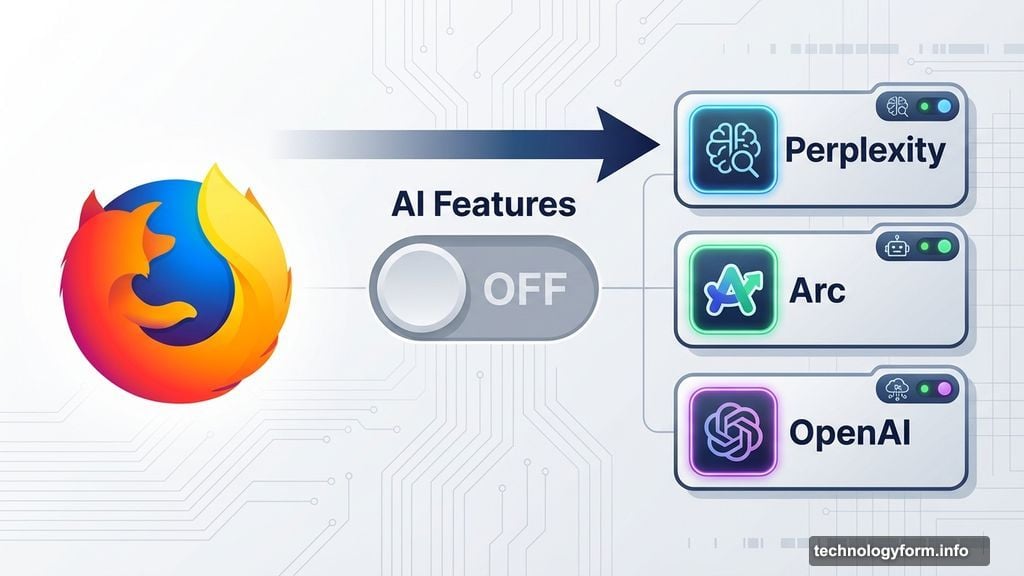
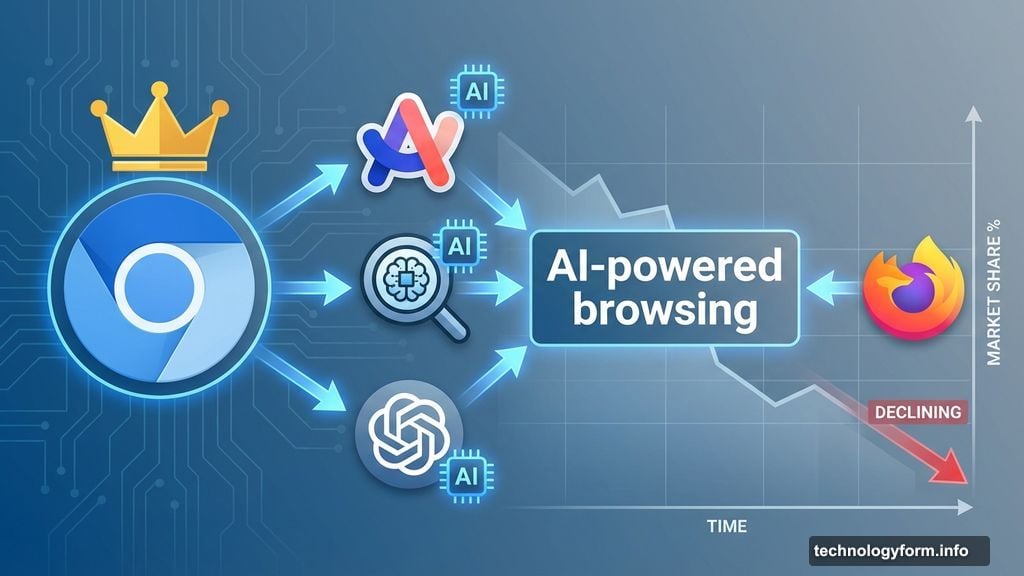
Companies like Perplexity, Arc, and OpenAI are racing to build AI directly into browsers. Meanwhile, Firefox has been losing ground for years. Now Mozilla needs to catch up without alienating the privacy-focused users who still choose Firefox precisely because it doesn’t shove AI down their throats.
The Browser Wars Are Back
Remember when browser choice seemed settled? Chrome dominated. Safari had Apple users locked in. Firefox hung on with a loyal niche audience.
Those days just ended. AI changed everything.
New browsers are popping up everywhere. They’re not just adding chatbots as sidebars. Instead, they’re reimagining how people interact with the web. AI agents that can browse for you. Models that summarize pages instantly. Search that understands context across multiple sites.
Plus, these new entrants smell blood in the water. Chrome’s dominance suddenly looks vulnerable when your browser can’t match the AI features users now expect.
Mozilla’s Rocky Road to This Moment
Firefox’s parent company has been struggling. Hard.
Last year, Mozilla laid off 30% of its workforce. The company killed its advocacy division and shut down global programs. Multiple restructurings hit employees who’d stuck with Mozilla through years of declining market share.
But the company survived. Now it faces a make-or-break decision about AI integration.
Mozilla operates through multiple organizations. The nonprofit Mozilla Foundation sets policies and oversees governance. The for-profit Mozilla Corporation builds Firefox and generates revenue. This structure complicates decision-making but also gives Mozilla flexibility other browser makers lack.
Still, Mozilla’s revenue model remains problematic. The company makes most of its money from Google for keeping Google as Firefox’s default search engine. That’s a dangerous dependency on a direct competitor.
AI Features Coming to Firefox
Enzor-DeMeo made his position clear. Firefox will integrate AI capabilities. The company won’t sit out this wave of browser innovation.
However, Mozilla promises something competitors don’t: choice.
“AI should always be a choice — something people can easily turn off,” Enzor-DeMeo wrote in his announcement. “People should know why a feature works the way it does and what value they get from it.”
That’s a direct shot at browsers that force AI features on users. Chrome, Safari, and Edge all bake in AI tools with limited opt-out options. Mozilla sees an opening to differentiate Firefox by making AI truly optional.
But will users believe them? Mozilla has burned trust before with controversial decisions. The company needs to prove it can integrate AI without compromising the privacy principles that define Firefox’s brand.
Beyond Search Revenue
Mozilla knows it can’t depend on Google forever. So Enzor-DeMeo outlined plans to diversify revenue streams and expand Firefox into “a broader ecosystem of trusted software.”
The company already develops Thunderbird email client and a VPN service. Last year, Mozilla launched an AI-powered website builder targeting small businesses.
None of these products have gained significant traction. Thunderbird serves a declining email-client market. Mozilla VPN competes in a crowded field dominated by established players. The website builder entered a mature market against giants like Squarespace and Wix.
So Mozilla’s challenge isn’t just adding AI to Firefox. The company needs to build an entire product ecosystem that generates sustainable revenue independent of Google. That’s orders of magnitude harder than integrating some AI features into a browser.
Who Is Anthony Enzor-DeMeo?
Mozilla promoted from within this time. Enzor-DeMeo previously led Firefox as general manager. He takes over from interim CEO Laura Chambers, who held the role for two years during Mozilla’s turbulent restructuring.
Before joining Mozilla, Enzor-DeMeo worked at Roofstock, Better, and Wayfair in product leadership roles. That’s a solid tech background but not the high-profile pedigree you’d expect for someone tasked with revitalizing a struggling browser company.
His appointment signals continuity rather than revolution. Mozilla chose someone who understands Firefox’s culture and existing strategy over an outsider who might shake things up too much.
The Privacy Paradox
Here’s Mozilla’s real problem: How do you integrate AI while maintaining privacy principles?
Most AI features require cloud processing. Language models are huge. They need powerful servers to run effectively. So when you ask your browser to summarize a webpage, that request usually goes to a remote server along with the page content.
That contradicts Firefox’s core value proposition. Users choose Firefox specifically because it doesn’t send their browsing data to corporate servers. AI integration threatens that promise.
Mozilla could run local AI models on users’ devices. But local models are less capable and consume significant battery and processing power. Users might prefer privacy but hate the performance trade-offs.
Alternatively, Mozilla could partner with privacy-focused AI providers or develop its own models. Both options require massive investment. Mozilla’s recent layoffs suggest the company lacks resources for that kind of moonshot project.
What This Means for Firefox Users
Expect AI features in Firefox within the next year. But you’ll probably be able to disable them completely.
Mozilla’s survival depends on walking an impossibly fine line. Add enough AI to stay competitive without alienating privacy-conscious users. Generate new revenue without selling out to advertisers or data brokers. Compete with Chrome’s resources while operating on a fraction of Google’s budget.
That’s a tall order. Mozilla has struggled for years to halt Firefox’s market share decline. Adding AI features might slow the bleeding but won’t reverse the trend unless Mozilla delivers something truly differentiated.
The company’s best bet? Lean into privacy-preserving AI harder than any competitor. Build local models that run entirely on-device. Create AI features that users actually want rather than flashy demos that impress tech blogs.
But that requires focus, resources, and technical execution Mozilla hasn’t demonstrated recently. The company talks a good game about user choice and privacy. Now it needs to prove those aren’t just marketing slogans.