Nvidia’s CES 2026 Gaming News? It’s All Software This Time
Nvidia’s CES keynote just wrapped. And if you showed up expecting shiny new GeForce GPUs, you left disappointed.
No new gaming hardware launched this year. Instead, Nvidia doubled down on software updates. DLSS 4.5 headlines the announcements, bringing smarter frame generation and better upscaling across the RTX lineup. Plus, the company expanded GeForce Now support and added cool modding tools.
Let’s break down what actually matters for gamers.
DLSS 4.5 Goes All-In on Frame Generation
Nvidia’s DLSS technology just got smarter. Version 4.5 introduces dynamic multi-frame generation that adapts in real-time.
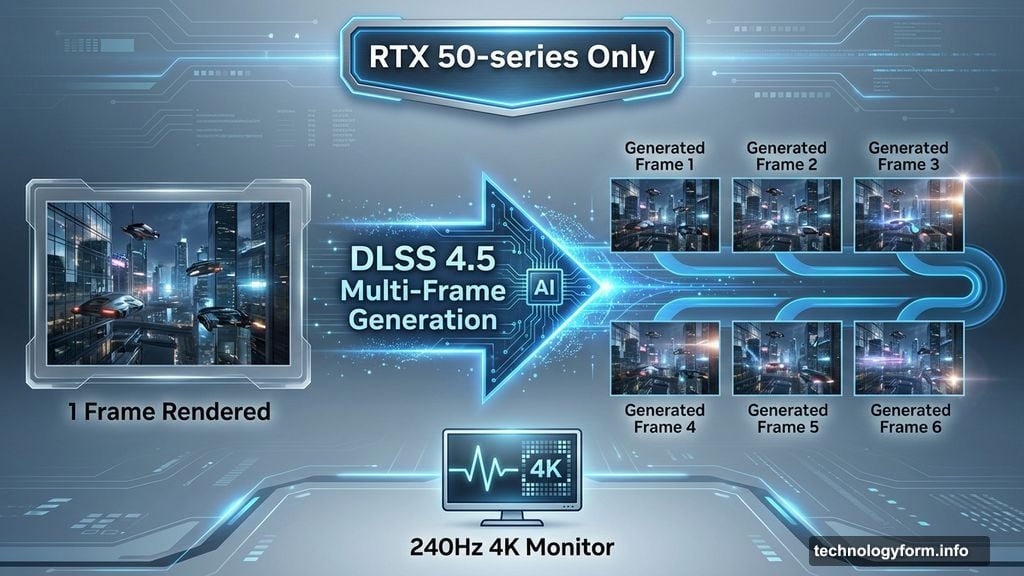
Here’s how it works. DLSS renders one frame, then extrapolates multiple frames from that single rendered frame. Previous versions maxed out at four generated frames per rendered frame. Now? DLSS 4.5 pushes that to six frames.
But the real upgrade is dynamic adjustment. The system monitors your display’s refresh rate and automatically tweaks the render-to-generated frame ratio. So if you’re gaming on a 240Hz 4K monitor, DLSS maintains consistent speed and low latency by adjusting generation on the fly.
The catch? Dynamic multi-frame generation only works on RTX 50-series cards. Older GPUs can’t handle the computational load.
Super Resolution Gets Better for Everyone
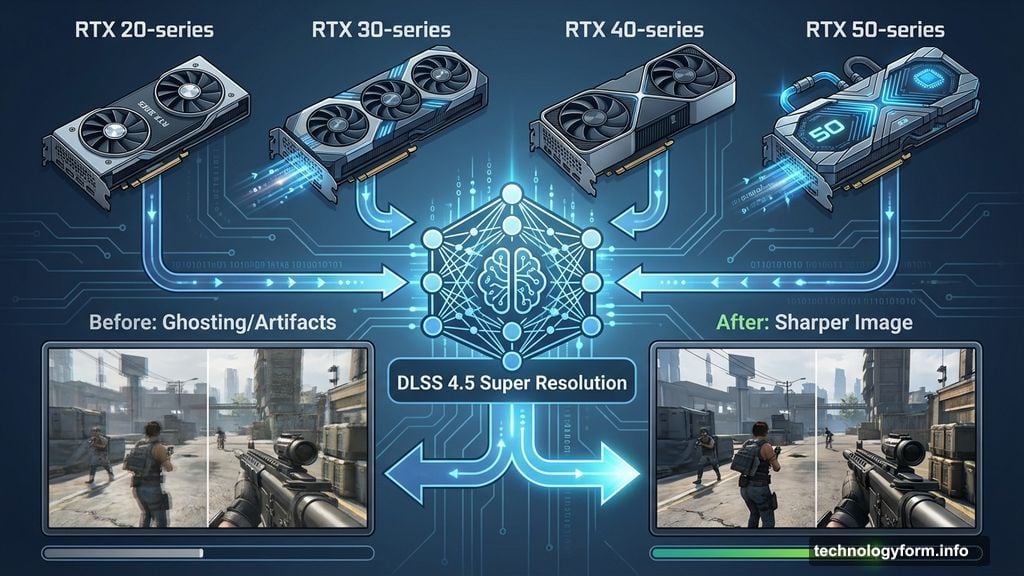
Good news for owners of older RTX cards. DLSS 4.5’s Super Resolution upscaling works across all RTX graphics cards, not just the newest generation.
Nvidia upgraded the underlying transformer model. Translation? Fewer temporal artifacts like ghosting. Better antialiasing. Sharper image clarity overall.
The company optimized specifically for high frame rate 4K gaming. That makes sense given the surge in 240Hz 4K displays hitting the market. If you invested in one of those panels, you’ll see clearer images when DLSS upscaling kicks in.
On RTX 50-series cards, the improved Super Resolution also enhances multi-frame generation quality. But RTX 40, 30, and 20-series owners still benefit from the clearer upscaling alone.
G-Sync Monitors Get Smarter About Lighting
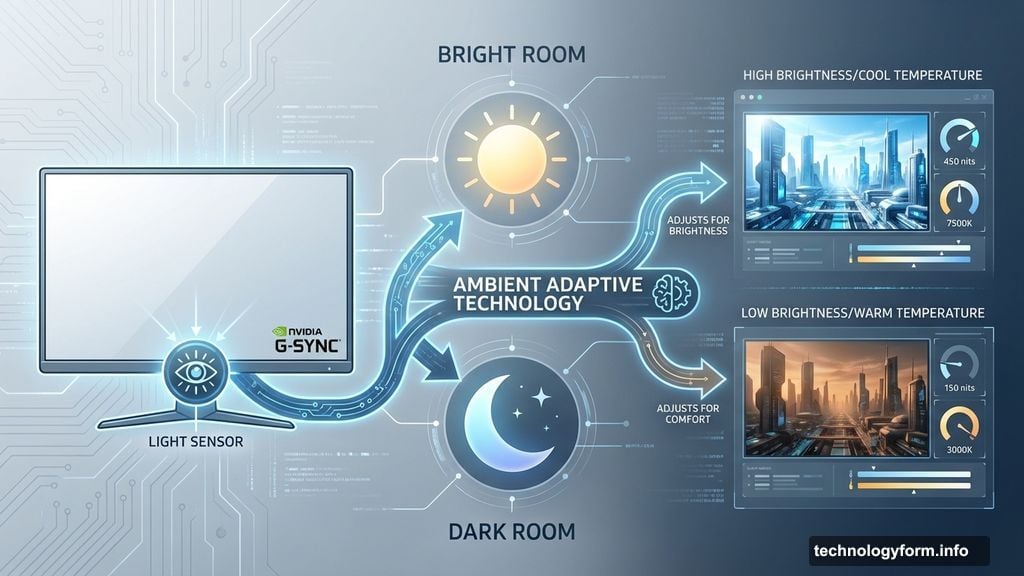
Nvidia announced Ambient Adaptive Technology for G-Sync monitors. The feature automatically adjusts color temperature and brightness based on room lighting.
There’s a requirement though. Your monitor needs a built-in light sensor. That’s rare on desktop gaming monitors but common on laptops.
So unless monitor manufacturers start adding light sensors, AAT won’t matter for most desktop gamers. It’s a nice-to-have feature searching for hardware support.
Meanwhile, Nvidia’s G-Sync Pulsar monitors from September 2024 will finally ship soon. Pulsar improves motion clarity on high refresh-rate displays during fast-paced games. Better late than never.
RTX Remix Logic Adds Game-Responsive Modding
Nvidia’s RTX Remix platform for modding classic games just got more sophisticated. The new Remix Logic feature lets games make asset decisions dynamically.
Picture this. A modded game detects rain starting in-game. Remix Logic automatically swaps in wet surface textures and rain particle effects. The weather changes, and the visual assets adapt in real-time.
Previously, modders had to manually script these transitions or use basic triggers. Now the AI handles contextual asset switching based on game state. That opens possibilities for more reactive, immersive mods.
It’s a niche feature. Most gamers won’t touch modding tools. But for the community that does, this makes sophisticated mods much easier to create.
GeForce Now Expands to Linux and Fire TV
Cloud gaming service GeForce Now launched apps for Linux PC and Amazon Fire TV.
Linux support matters for the growing Steam Deck and Linux gaming community. Previously, Linux users needed workarounds to stream games from Nvidia’s servers. Now there’s a native app.
Fire TV brings GeForce Now to more living rooms. If you own an Amazon Fire TV device, you can stream PC games to your TV without buying gaming hardware. Just pair a controller and subscribe to GeForce Now.
Nvidia’s clearly pushing cloud gaming as a path to reach gamers who don’t want to invest in expensive graphics cards. The more platforms that support GeForce Now, the larger the potential audience.
AI Tools Get More Gaming Partnerships
Nvidia showcased updated implementations of its AI tools for gaming.
RTX Video now upscales AI-generated video from low resolution to 4K. Lightricks announced integration for improving video quality in creative tools.
The company also highlighted Total War: Pharaoh’s gaming assistant, built using Nvidia’s ACE chatbot platform. The AI helper answers strategy questions and provides tips during gameplay.
These partnerships demonstrate Nvidia’s broader AI strategy. Gaming graphics matter. But the company’s betting big on AI assistants, content generation, and real-time optimization across gaming experiences.
What This Announcement Reveals
Nvidia skipped new gaming GPUs entirely at CES 2026. That’s unusual for January’s biggest tech showcase.
The focus on software updates suggests Nvidia’s maximizing the RTX 50-series generation before introducing new hardware. DLSS 4.5 squeezes more performance from existing cards through clever AI tricks rather than raw computational power.
It’s smart business. Software updates cost less than hardware launches. They extend product lifecycles and give gamers reasons to keep current-generation cards longer.
But it also signals competition isn’t pushing Nvidia hard right now. When AMD or Intel threaten market share, Nvidia responds with aggressive hardware launches. This year’s software-only announcement suggests comfortable dominance.
For gamers, that means DLSS improvements matter more than ever. If you’re not getting new GPU options, better software optimization becomes the main path to performance gains.