AI Startups Now Own 41% of Venture Capital. The Returns Are Already Rolling In
Something big is happening in venture capital right now. And the numbers finally prove it.
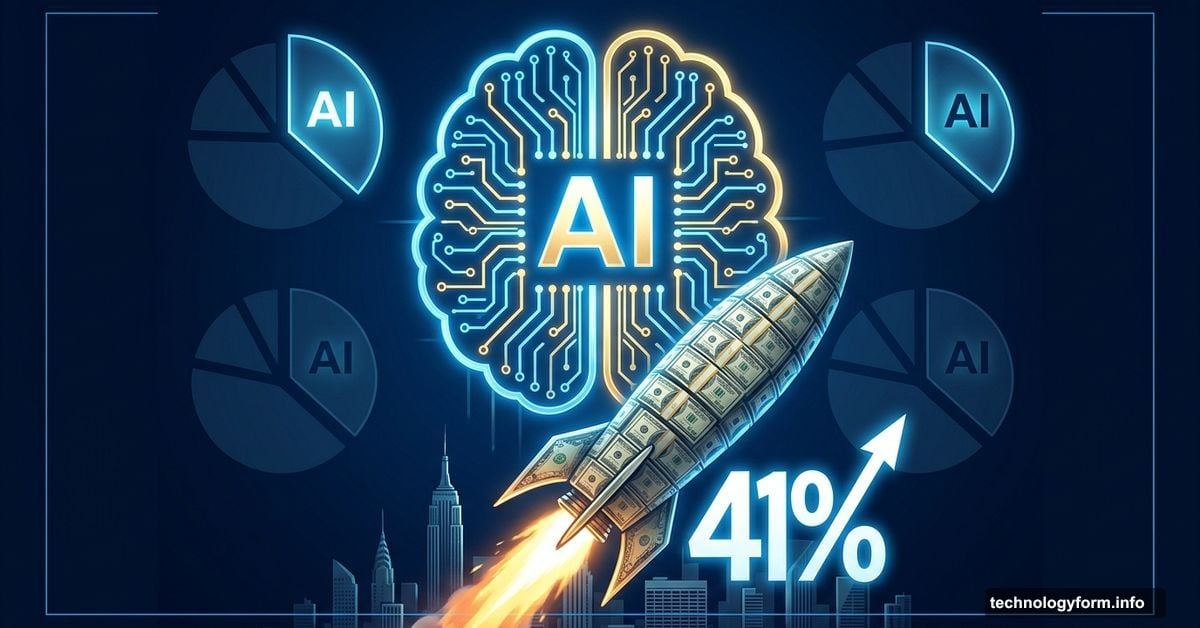
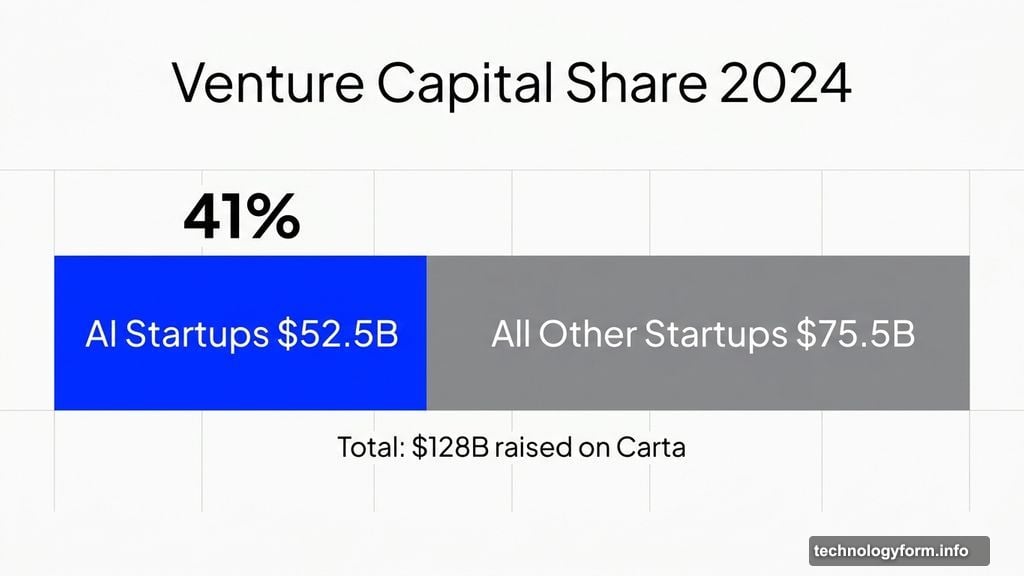
AI startups captured 41% of the $128 billion in venture dollars raised by companies on Carta last year. That’s a record-high annual share, and it shows just how completely artificial intelligence has taken over the funding conversation.
But here’s what makes this even more striking. Just 10% of startups scooped up half of all that funding. We’re talking about a handful of companies absorbing a truly staggering amount of capital.
The Mega-Rounds Keep Getting Bigger
The names dominating the headlines are familiar: Anthropic, OpenAI, and Elon Musk’s xAI. Each raised double-digit billions last year at valuations that would have seemed absurd five years ago.
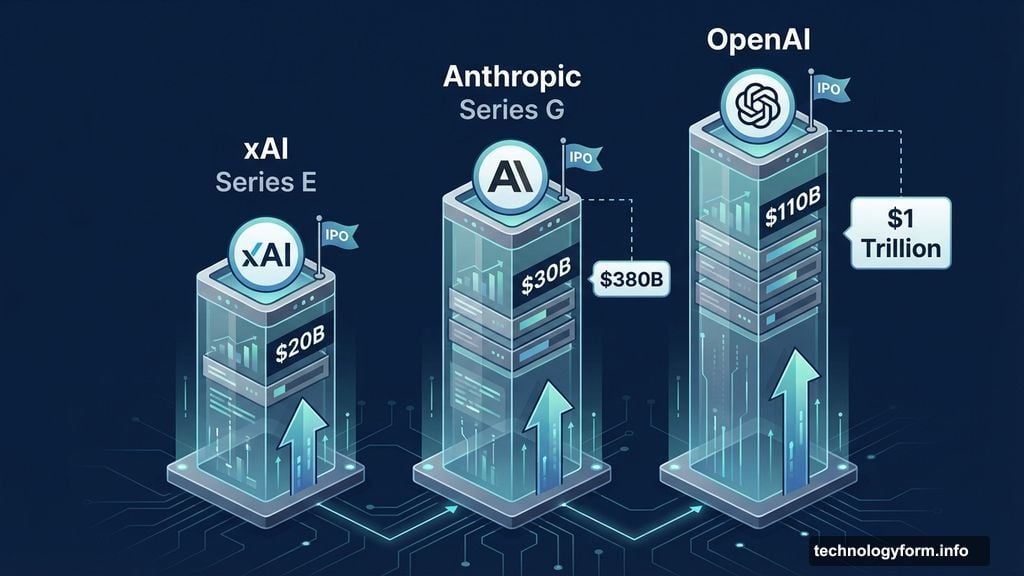
And they haven’t slowed down at all. In January, xAI closed a $20 billion Series E. Then in February, OpenAI announced a $110 billion round — one of the largest private fundraising rounds ever recorded — pushing the company toward a $1 trillion valuation. Sandwiched between those two? Anthropic raised a $30 billion Series G last month at a $380 billion valuation.
Together, OpenAI and Anthropic alone accounted for a massive chunk of the $189 billion in global venture capital raised last month. Plus, all three companies have teased IPOs for later this year, leaving investors practically giddy with anticipation.
Venture Capital Is Splitting Into Two Worlds
The honest picture of today’s venture market isn’t pretty for everyone involved. Peter Walker, head of insights at Carta, describes it as “K-shaped” — or bifurcated.
Capital concentrates in a select few large funds, which then back a tiny handful of companies. Everyone else? They’re just kind of there, working harder to raise smaller amounts.
“While funding rounds have gotten slightly harder to raise, the capital for each round has increased,” Walker told TechCrunch. “So fewer bets, but more capital.”
The reason AI startups command such enormous rounds isn’t because they employ thousands of people. Most don’t. It’s because running large AI models is genuinely expensive — the compute costs alone are breathtaking.
Early Returns Look Surprisingly Strong
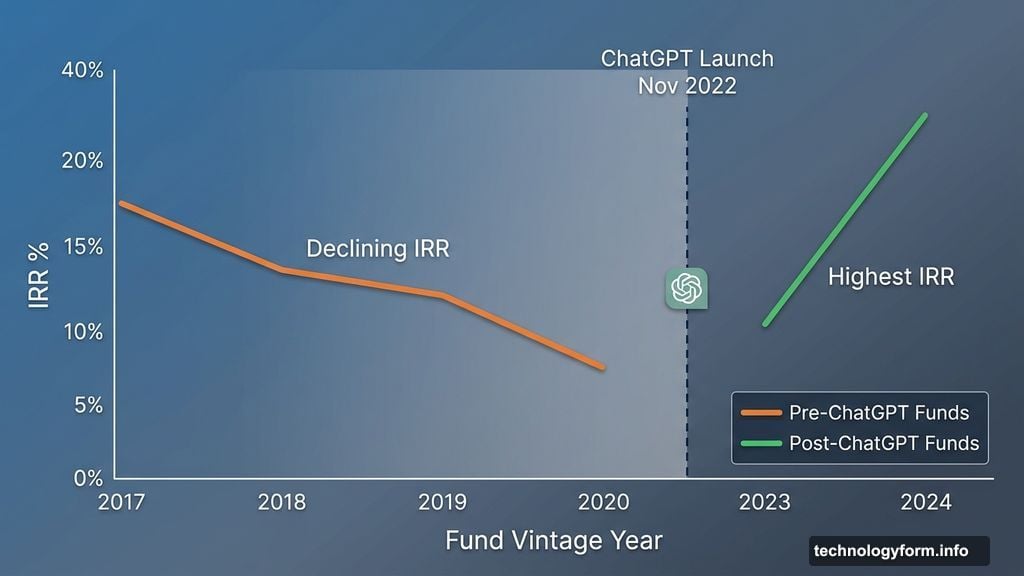
Here’s where things get genuinely interesting for investors watching from the sidelines. Carta’s latest data shows that funds raised in 2023 and 2024 — right after ChatGPT launched in late 2022 — are posting the highest internal rate of return, or IRR, compared to funds raised between 2017 and 2020, which are seeing declining IRR.
That’s a meaningful signal. It suggests the funds betting heavily on this AI moment are already seeing strong early performance on paper.
Walker calls this “promising,” though he’s careful to add important context. Newer funds can look artificially strong in the short term. If a fund invested at the seed stage and that startup later raised a Series A at a higher valuation, the IRR jumps on paper — even if no actual cash has been returned to investors yet.
“This pushes IRR up,” Walker explained. He also noted that recent vintage funds are packed with AI-native startups in a way that 2020 and 2021 funds simply aren’t. Those older funds loaded up on companies during the zero-interest-rate era, many of which have struggled since.
The Question Nobody Can Answer Yet
So everything looks great on paper. But paper returns and real returns are very different things.
The real test comes when these companies actually exit. IPOs, acquisitions, secondary sales — that’s when investors find out whether all this enthusiasm translates into actual cash distributions.
OpenAI, Anthropic, and xAI have all dropped hints about going public later this year. If those IPOs land and perform well, they’ll validate the entire thesis that AI-era venture funds placed the right bets at the right time.
If the IPOs disappoint — or if they get delayed indefinitely — the conversation will shift fast. We’ve seen this pattern before. Hype phases feel different from bubbles right up until they don’t.
Walker put it well: the strong IRR of recent vintage funds is a positive indicator for the funds backing leading startups from this AI moment. Whether that early promise survives contact with public markets is still an open question.
What’s clear is that venture capital as an industry has fundamentally reorganized itself around AI. The capital flows are unlike anything the industry has seen before. The early performance data looks encouraging. And the biggest names are still raising at an astounding velocity.
Whether this ends with a generation of exceptional returns or a very expensive lesson in timing — that part we’ll have to wait and see.