The Man Who Named the Metaverse Thinks Smart Glasses Are Creepy
Neal Stephenson coined the word “Metaverse” back in 1992. Now he says face-worn computing is dead on arrival.
That’s a pretty stunning reversal from the author whose cyberpunk novel Snow Crash inspired an entire generation of VR developers. And when the guy who literally invented the concept tells you the hardware is creepy, the industry probably should pay attention.
Snow Crash Created the Metaverse Dream
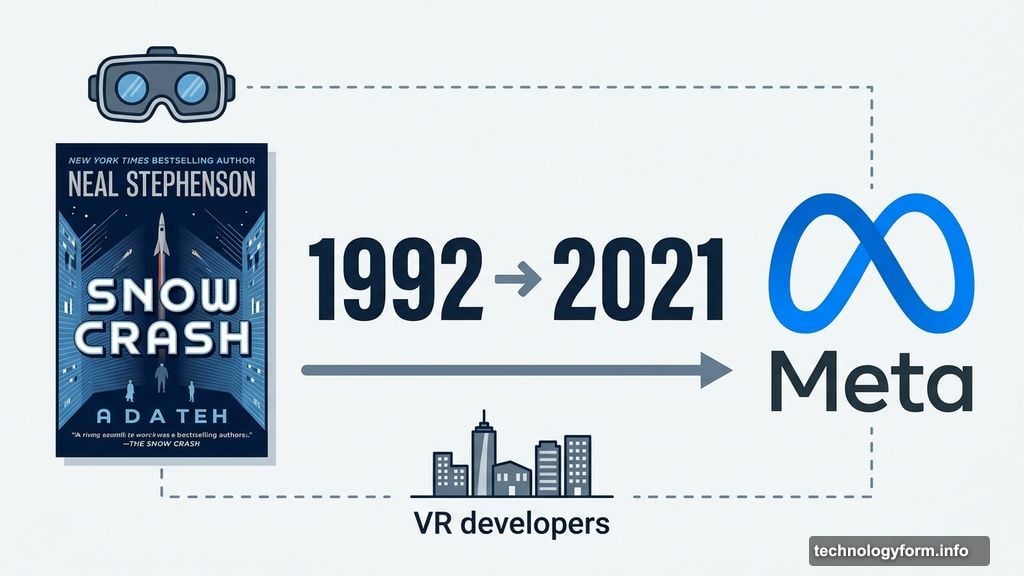
Stephenson’s 1992 novel described a virtual reality world accessed through VR goggles. That vision stuck around for decades.
It stuck so hard that in 2021, Facebook renamed its entire company to Meta to chase exactly that dream. Engineers and founders across Silicon Valley point to Snow Crash as a formative text. So Stephenson has real credibility here, not just as a writer, but as someone who shaped how the tech industry thinks about virtual worlds.
He even worked at Magic Leap, the augmented reality startup that burned through billions trying to build lightweight smart glasses. Back then, he had a standard pitch for skeptics.
He Asked the Wrong Rhetorical Question
Stephenson describes it himself in a recent blog post. Whenever people questioned his belief in face-worn computing, he had a go-to response.
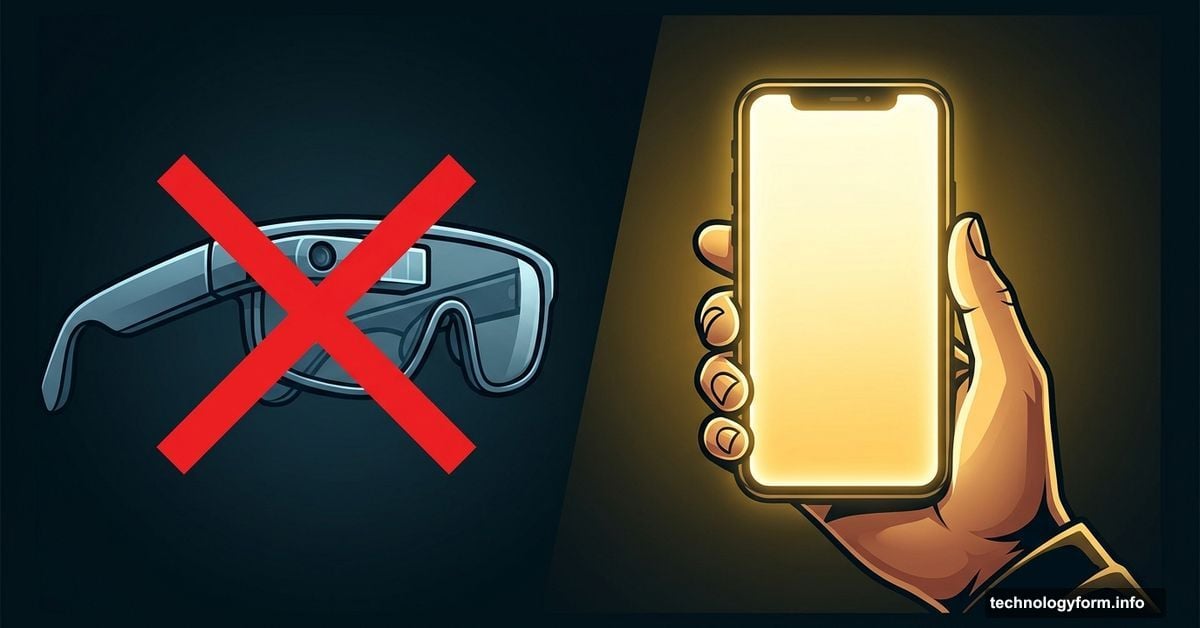
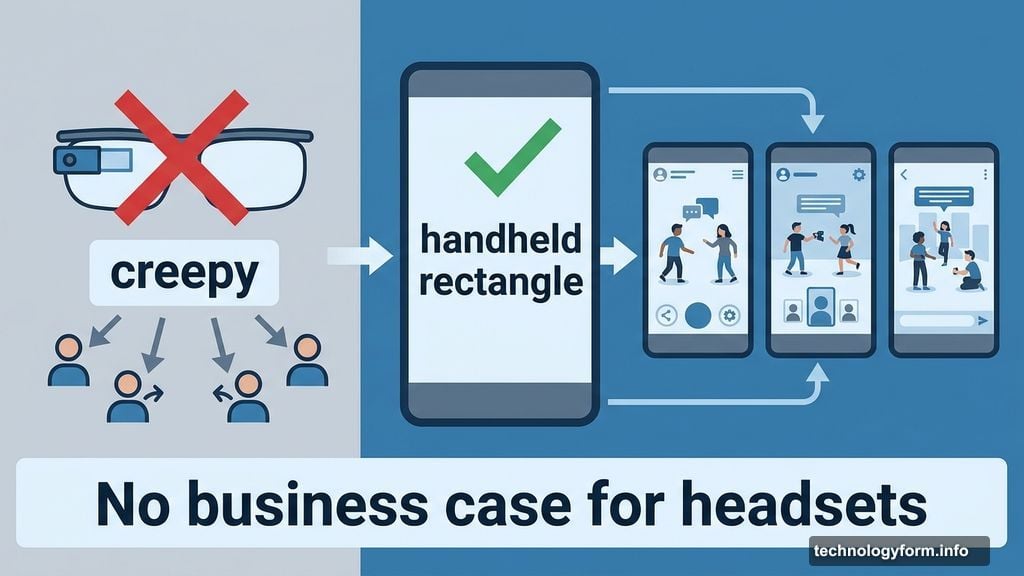
“Do you really think that twenty years from now everyone is still going to be going around all day staring at little rectangles in their hands?”
At the time, the answer seemed obvious. Of course not. Phones were a transitional technology. Glasses were the future.
But Stephenson now says he got it completely wrong. “Reader, I have changed my mind,” he writes. “Twenty years from now, everyone is still going to be staring at handheld rectangles.”
And that simple admission carries a lot of weight coming from him.
The Creepiness Problem Nobody Has Solved
So why did he flip? It comes down to one stubborn human reality.
“People don’t like wearing things on their faces and don’t trust those who do.”
That’s not a technical problem. It’s not something better processors or improved battery life can fix. It’s a social and psychological barrier that companies like Meta, Apple, and Google keep running into with every new headset launch.
Stephenson argues that shrinking goggles down to glasses-sized form won’t save the category either. The creepiness follows the hardware. Smaller glasses still look like you’re surveilling everyone around you, and people react accordingly.
He puts it plainly: “There is no business case for headsets any more.”
What the Metaverse Actually Becomes
Here’s where things get interesting for the broader tech industry.
Stephenson seems to agree, at least quietly, with Meta, Epic Games CEO Tim Sweeney, and possibly Google on one key point. The Metaverse doesn’t have to mean virtual reality anymore. It can mean simpler, flat, social gaming experiences. Shared digital spaces that live on your phone screen rather than strapped to your face.
Google is reportedly building a new category of apps that fit this looser definition. Epic has pushed this direction for years through Fortnite’s live events and social features. Meta still uses the Metaverse branding but has steadily pulled back from its VR ambitions following poor headset sales.
For those companies, Stephenson not minding the terminology shift is genuinely convenient. He coined the word. His blessing matters.
But his verdict on the hardware? That one stings. When the person who inspired your entire product category says the product category is creepy, you can’t easily shake that off with a press release.
Where That Leaves Smart Glasses
Meta has invested heavily in Ray-Ban smart glasses as a more palatable stepping stone toward the face-computing future it still believes in. The glasses look normal. They have cameras. They run Meta AI.
And they are, by many accounts, genuinely useful for certain tasks. But Stephenson’s critique applies directly here. The cameras are exactly what makes people nervous. The awareness that someone wearing ordinary-looking glasses might be recording them or running facial recognition feeds the same distrust he describes.
Apple took a different approach with Vision Pro, pricing it at $3,499 and positioning it as a premium spatial computing device rather than consumer glasses. Sales have been modest, and Apple has reportedly scaled back production.
The honest picture is that after decades of promises, face-worn computing remains a niche product with a trust problem and a comfort problem. The person who gave the entire category its most famous name now thinks smartphones already won.
That doesn’t mean smart glasses disappear. Specialized uses in enterprise, healthcare, and manufacturing will keep the technology alive. But the vision of billions of people walking around with computers on their faces? Stephenson no longer believes it. And it’s hard to dismiss him.