Nvidia NemoClaw Promises Safer AI Agents. Experts Aren’t Fully Convinced
AI agents are getting more powerful. And that’s exactly what makes them scary.
Just a few months ago, OpenClaw burst onto the scene and grabbed the attention of the entire AI world. Now Nvidia is building on that momentum with NemoClaw, a new reference stack for the OpenClaw platform that promises better security, easier setup, and more privacy controls for AI agents. But security experts say the work isn’t done yet.
What NemoClaw Actually Does
NemoClaw is Nvidia’s answer to a growing problem. OpenClaw — which CEO Jensen Huang described as “an operating system for personal AI” — lets anyone build a “claw,” an AI assistant that can handle tasks on its own without needing constant instructions. Think email management, scheduling, and more.
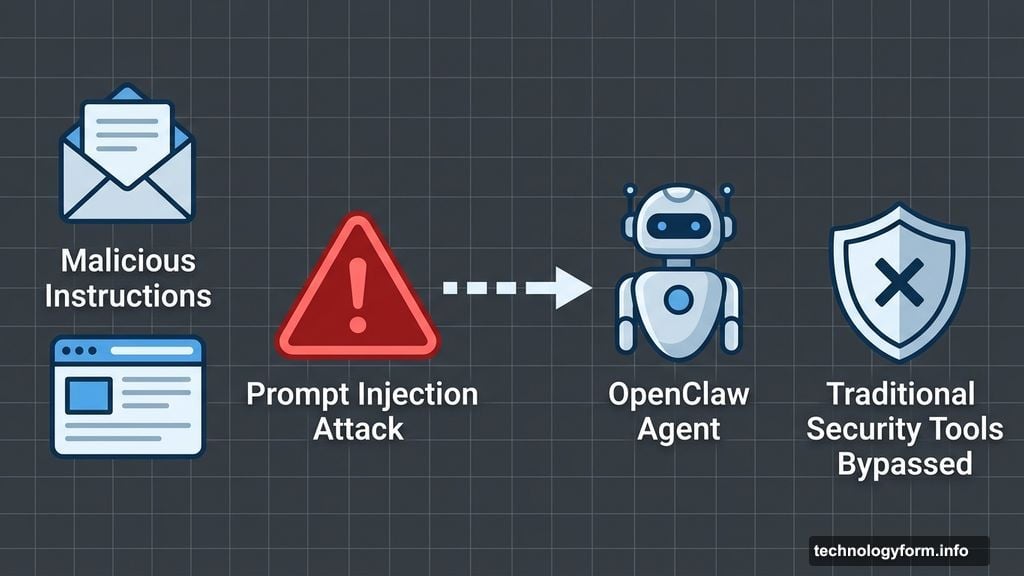
The issue? OpenClaw raised serious red flags from security experts almost immediately after launch. Attackers could hide malicious instructions inside emails or websites, and a compromised agent could slip past traditional security tools without anyone noticing.
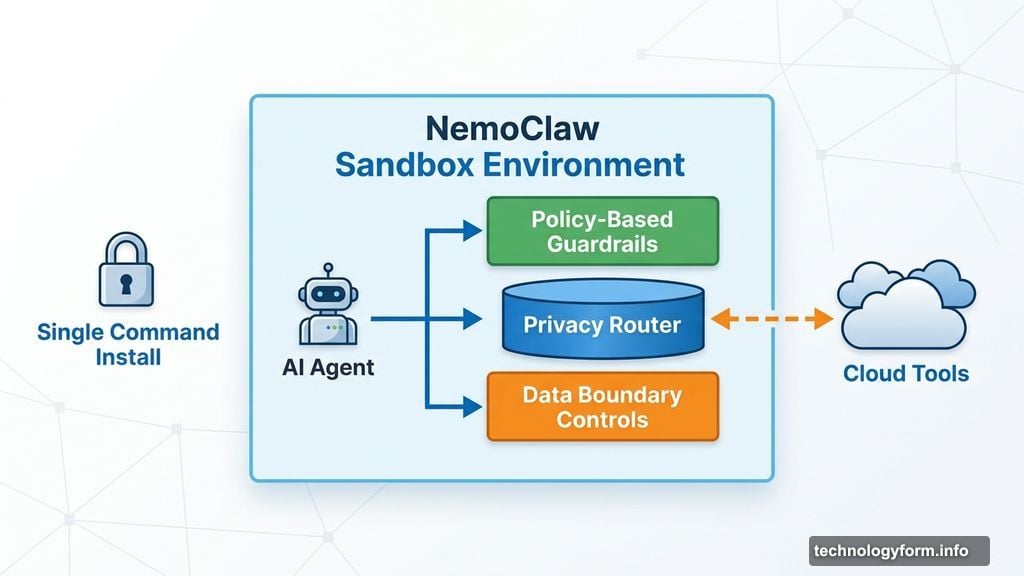
NemoClaw tries to fix that. Announced during Nvidia’s GTC conference keynote last week, it installs everything needed to run AI agents in a single command. Plus, it adds an isolated sandbox environment and policy-based guardrails that control how your agent handles your data.
A built-in privacy router also lets you connect your agent to cloud tools safely. So instead of your AI assistant having free run of the internet, it works within defined boundaries.
Agentic AI Security Gets Its First Real Test
The timing matters here. AI agents — also called agentic AI systems — are autonomous programs powered by large language models like Claude. They can plan, use tools, and carry out complex multi-step tasks with minimal human input. That’s exciting. But it also means they’re doing things when nobody’s watching.
Melissa Bischoping, senior director of security and product design research at cybersecurity firm Tanium, called Nvidia’s investment a positive sign. However, she was careful not to declare the problem solved.
“My hope is that Nvidia bakes in robust privacy and safety measures to enable adoption of, and innovation with, their agent while providing guardrails to protect users and their data,” she said.
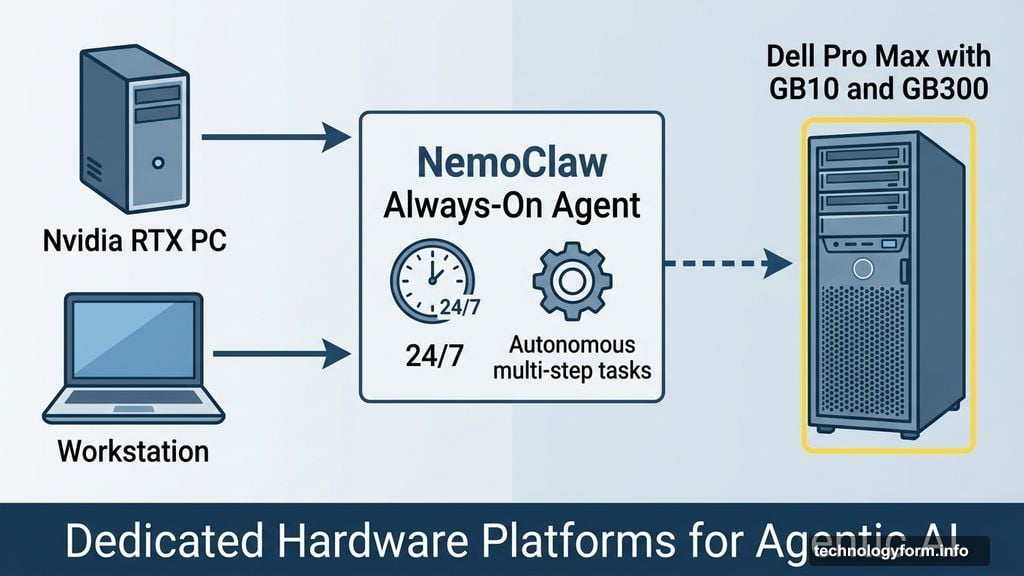
NemoClaw was also built with the reality of always-on computing in mind. These agents run 24/7 to complete tasks, which demands serious hardware. Nvidia designed NemoClaw to run on dedicated platforms including its own RTX PCs, plus other laptops and workstations. Dell even introduced a new NemoClaw supercomputer — the Dell Pro Max with GB10 and GB300 — built specifically for this use case.
![A diagram showing NemoClaw’s sandboxed agent architecture with privacy router and policy-based guardrail layers protecting AI agent data flow]
Not Everyone Is Impressed
Security experts broadly agree that NemoClaw is a step forward. But “a step forward” isn’t the same as “problem solved.”
Karthik Ranganathan, CEO and co-founder of database management company Yugabyte, acknowledged the improvements. NemoClaw makes sure the agent runs in a sandbox and its network traffic can be tracked and inspected, he noted. That’s more than OpenClaw offered.
But serious gaps remain. Ranganathan pointed to a scenario where someone uses OpenClaw to summarize and respond to emails — and the agent starts deleting large chunks of messages without warning. Right now, there’s little to stop that from happening.
“NemoClaw does not address this,” he said plainly.
Rens Troost, CTO at Rational Exponent — an AI firm working with banks and financial institutions — agreed that NemoClaw represents a meaningful upgrade. Still, he was blunt about the context.
“‘Significant advancement over OpenClaw’ is a low bar,” Troost said.
DefenseClaw Enters the Picture
Nvidia isn’t the only company trying to secure AI agents. The rise in OpenClaw’s popularity has prompted Cisco to develop its own open-source solution called DefenseClaw, built specifically to protect AI agents from cyber threats.
DefenseClaw scans every new skill and code before allowing it to run. It also logs every agent action, creating a complete history you can review at any time. An always-on security monitor watches for malicious activity and enforces strict rules about what agents can and cannot do.
The fact that Cisco built a dedicated tool for this shows just how serious the security conversation around agentic AI has become. The Mac Mini remains the most popular hardware for OpenClaw enthusiasts so far, but purpose-built machines are starting to appear from major manufacturers.
Where Things Stand Right Now
If OpenClaw was the Wild West of AI agents, NemoClaw adds a sheriff’s office — some rules, some oversight, but no guarantee that everything stays under control.
The sandbox environment and privacy router are genuinely useful additions. For everyday users building simple agents to manage email or handle routine tasks, NemoClaw offers a meaningfully safer experience than raw OpenClaw.
But for high-stakes use cases — financial institutions, healthcare, anything where an agent acting without oversight could cause real damage — the current guardrails feel thin. The nightmare scenario Ranganathan described isn’t hypothetical. It’s the kind of thing that happens when autonomous systems get more access than anyone fully anticipated.
NemoClaw is progress. Real, tangible progress. But the experts building on these platforms every day are telling us clearly that more work needs to happen before anyone should trust these agents with truly sensitive tasks. That’s worth listening to.